What Are Illegal “Ghost Plates” in U.K and Why They Are a Growing Danger on the Roads

Understanding Ghost Plates: The Basics
Ghost plates, often known as stealth plates, are number plates that have been deliberately altered so they cannot be read correctly by Automatic Number Plate Recognition (ANPR) systems. These systems are used nationwide for policing, congestion charges, clean-air zones, speed enforcement, and stolen-vehicle tracking.
To the human eye, a ghost plate may appear normal. The deception lies in subtle modifications. Drivers use reflective sprays, transparent films, infrared-absorbing coatings, or manipulated characters to confuse camera sensors. Even minor distortions can prevent ANPR from recognising the registration, allowing the vehicle to move through camera-monitored areas without being logged or charged.
Some plates use letter alterations that seem harmless on the road but are designed to mislead technology. A “B” reshaped to mimic an “8”, spacing forced wider than regulations allow, or reflective layers that bounce infrared light away from the camera are all common tricks. These methods slip past the naked eye but break down camera accuracy, turning an identifiable vehicle into one that appears invisible.
Read more: What Are the New Rules for License Plate in New York? Crackdown on ‘Ghost Plates’
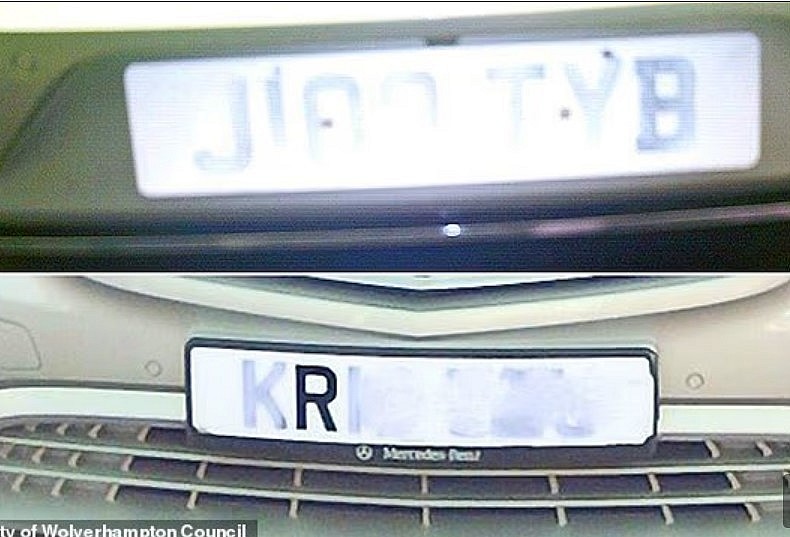 |
| The illegal number plates that are invisible to speed and ANPR cameras |
The Scale of the Problem
The rise of ghost plates has become a critical concern for police and regulators. Recent enforcement operations uncovered thousands of non-compliant plates in a matter of days, including many on vehicles that would otherwise have passed unnoticed in traffic.
In some metropolitan areas, particularly where congestion charges and low-emission zones apply, checks have shown that a startling proportion of private hire vehicles and taxis were using plates that failed basic compliance tests. Investigators reported finding clusters where up to forty per cent of plates inspected showed features consistent with ghost-plate tampering.
The national picture is equally worrying. Offences relating to illegal or altered plates have soared in the past two years. These figures include both straightforward non-compliant designs and deliberate attempts to evade ANPR. Enforcement bodies warn that the true scale is far higher, as the majority of ghost plates are designed not to be detected at all.
Why Drivers Use Ghost Plates
The motivations behind this trend are varied, yet most fall into predictable categories:
1. Avoiding fines and charges
Drivers seeking to dodge speed cameras, congestion charges, bus-lane enforcement, or clean-air-zone fees often resort to ghost plates. For some, the appeal is purely financial.
2. Concealing criminal activity
Untraceable vehicles are a gift to offenders. Stolen cars, drug transport, hit-and-run offences, and organised crime operations all benefit from number-plate evasion. A vehicle that cannot be tracked increases the difficulty for police to pursue or gather evidence.
3. Low entry cost
The materials needed to create a ghost plate are frighteningly inexpensive. Reflective sprays and films can be found online for the price of a takeaway meal. With such low barriers, some drivers gamble on the hope they will never be caught.
4. Misguided customisation
A small number of motorists unintentionally break the law through cosmetic custom changes, believing them to be harmless. Plates marketed as “show use only” or “premium reflective” often cross the line into illegality when installed on public roads.
Regardless of intent, the result remains the same: an unreadable number plate that undermines road-safety mechanisms relied upon nationwide.
The Law and Penalties
UK law is unambiguous. Number plates must follow strict standards for font, spacing, reflectivity, and character layout. Any deviation that impedes visibility or ANPR readability makes the plate illegal.
At present, the penalty for using a non-compliant plate typically carries a £100 fine. However, with ghost-plate offences climbing, lawmakers have argued that existing penalties lack deterrent effect. Proposals now under discussion include increasing the fine to £1,000 and adding six penalty points to the driver’s licence.
In more serious cases, where the plate tampering is linked to organised crime or persistent evasion, police have the power to seize the vehicle. Insurance may also be invalidated, leaving drivers exposed to significant financial risk in the event of an accident.
The message from regulators is clear: ignorance is no defence. Any driver operating a vehicle on UK roads is responsible for ensuring their plates meet legal standards.
How Authorities Are Fighting Back
Police and local authorities have begun deploying sophisticated detection technology capable of identifying ghost plates that traditional ANPR fails to capture. Recent pilots have used next-generation camera systems that analyse reflective patterns and materials, spotting inconsistencies invisible to the eye.
Officers are also being trained to recognise plate tampering during routine checks. Infrared inspection devices, handheld scanners, and updated roadside protocols now allow police to verify plate legality quickly and accurately.
Airports, collision investigation units, and road-policing teams are undergoing expanded training. This coordinated approach marks a shift in enforcement: ghost plates are no longer viewed as minor infractions but as a direct threat to public safety.
Regulators are also pushing for stricter oversight of number-plate manufacturers and suppliers. Tighter licensing could curb the flow of non-compliant products entering the market, closing off an easy route for offenders.
Why Ghost Plates Are More Than a Minor Offence
The danger of ghost plates goes far beyond unpaid fines. By masking a vehicle’s identity, they undermine every system designed to keep roads safe. ANPR helps police trace stolen cars, investigate collisions, monitor uninsured drivers, and prevent serious crime. When a driver chooses to become invisible to that network, they put others at risk.
A vehicle with a ghost plate can speed without consequence, drive uninsured, avoid environmental regulations, or flee an accident scene without being traced. Honest motorists bear the cost through higher insurance premiums, stricter enforcement, and reduced trust in automated systems that depend on reliable identification.
Ghost plates erode fairness. They reward evasion and penalise compliance. Left unchecked, they risk undermining public confidence in traffic enforcement altogether.
What Drivers Should Do
-
Check your plates. Ensure they meet all legal standards. If you have added any films, coatings, or decorative elements, remove them.
-
Buy only from approved suppliers. A legitimate seller will verify your documents and follow production rules.
-
Report suspicious plates. Vehicles with odd spacing, unusually glossy coatings, or distorted characters may be using ghost-plate techniques.
-
Stay informed. New enforcement technologies mean offenders are more likely than ever to be detected. Compliance protects both you and other road users.
FAQs
Are all customised plates illegal?
No. Many personalised or 3D-style plates are legal, provided they meet UK registration standards. The issue arises when modifications interfere with camera readability.
Can a driver be unaware that their plate is illegal?
Yes, especially when buying decorative plates online. However, the law places responsibility on the driver, regardless of intention.
Do ghost plates work on all cameras?
They may confuse older systems, but modern enforcement technology is catching up quickly. New detection methods can identify tampering with high accuracy.
Is using ghost plates worth the risk?
No. The potential penalties, insurance consequences, and criminal implications far outweigh any short-term benefit.
Will regulations become stricter?
Almost certainly. With offences rising, government bodies are pushing hard for tougher penalties and stronger manufacturing controls.
Final Word
Ghost plates are not clever, harmless hacks. They are illegal, dangerous, and corrosive to the trust that keeps traffic systems functioning. As enforcement tightens and public awareness grows, the era of the invisible number plate is drawing to a close. Responsible drivers should stay on the right side of the law, support fair enforcement, and help ensure the UK’s roads remain safe, accountable, and transparent.
 Why Do License Plates Feature The Gold Star Family or Mother in the US Why Do License Plates Feature The Gold Star Family or Mother in the US In the United States, car license plates with the words Gold Star Family or Gold Star Mother are common, and the driver or car owner ... |
 Top 10+ Weirdest License Plates In the World Top 10+ Weirdest License Plates In the World You'll understand why drivers dislike standard license plates after looking at the list of the strangest license plates ever. Take a look and enjoy yourself! |
 Top 15 Most Pricey License Plates Ever Sold Top 15 Most Pricey License Plates Ever Sold At a Dubai auction in April, a license plate sold for a record $15 million (55 million dirhams). This is not, however, the priciest license ... |