Iran Continues Attacks on U.S. Targets in Gulf

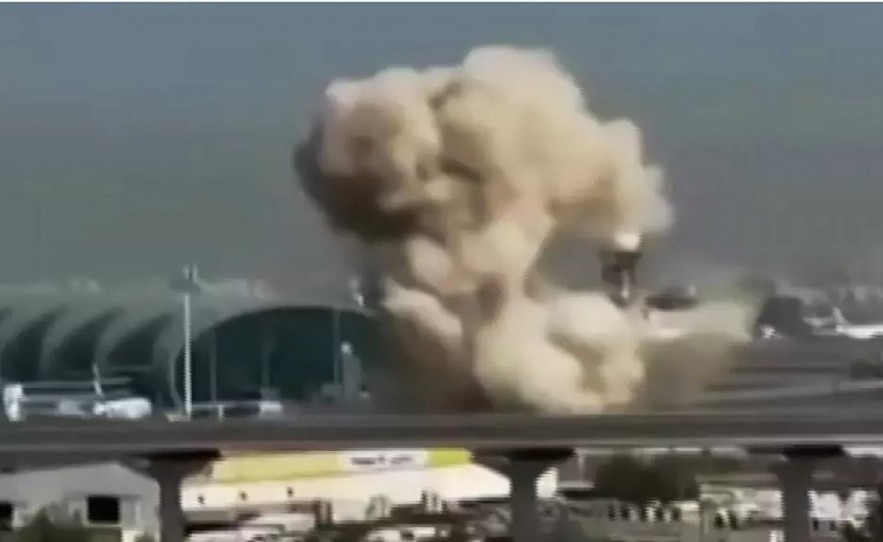 |
| Kuwait airport, Saudi Arabia targeted as Iran presses Gulf attacks |
Iran has continued launching missile and drone strikes targeting U.S. military assets across the Persian Gulf, escalating tensions in a conflict that is rapidly spreading across the Middle East.
Explosions were reported in Qatar, the United Arab Emirates, and Kuwait as Iran intensified retaliatory strikes following recent U.S. and Israeli attacks on Iranian territory. Residents in several Gulf cities reported loud blasts and air-raid sirens, while air defense systems attempted to intercept incoming missiles and drones.
Read more: Iranian Attacks on Gulf Countries Continue: Missiles, Drones, and Oil Disruptions
Explosions Reported Near U.S. Military Sites
In Qatar’s capital Doha, witnesses saw smoke rising from an industrial district as blasts shook the city during a new wave of Iranian strikes. Similar explosions were heard in Dubai and Abu Dhabi in the UAE, as well as in Kuwait, where air defenses were activated near areas hosting American military facilities.
Iran’s Revolutionary Guard Corps (IRGC) said the attacks were part of a broader campaign targeting U.S. bases and military infrastructure across the Gulf. Analysts say Tehran is using a combination of ballistic missiles, cruise missiles, and long-range drones to strike American positions while avoiding a direct confrontation with Gulf governments.
Several key U.S. installations have been affected by the strikes, including Al Dhafra Air Base in the UAE, a major hub for American air operations in the region. UAE officials said most incoming missiles were intercepted, though falling debris caused fires and damage in nearby residential areas.
Read more: How Big Is Iran Compared With the US, Israel, and Iraq? Size, Maps, and Key Facts
Large-Scale Missile and Drone Campaign
Since the conflict began in late February, Iran has launched hundreds of missiles and drones toward U.S. and allied positions across the Gulf. Targets have included American military bases in Qatar, Bahrain, Kuwait, Jordan, and Saudi Arabia, according to regional defense officials.
In Kuwait alone, authorities say dozens of ballistic missiles and hundreds of drones have been intercepted since the first wave of strikes began, highlighting the scale of the ongoing military campaign.
The attacks have also disrupted civilian life and regional travel. Qatar temporarily closed its airspace during the initial strikes, forcing flight cancellations at Hamad International Airport and causing delays across major Gulf transport routes.
Regional Security and Oil Markets Under Pressure
Beyond the immediate military impact, the continued attacks are raising serious concerns about regional stability and global energy supply.
The Gulf region hosts some of the largest U.S. military bases outside North America and plays a critical role in global oil production and shipping routes. Escalating strikes have increased risks for energy infrastructure, commercial aviation, and shipping lanes, particularly near the Strait of Hormuz, a key route for global oil exports.
Security analysts warn that continued Iranian strikes on U.S. targets could draw more countries into the conflict if attacks expand further across Gulf states.
For now, Iran insists its operations are limited to retaliation against American military assets, but the growing number of explosions across Gulf cities shows how easily the conflict could spiral into a wider regional war.