Iranian Attacks on Gulf Countries Continue: Missiles, Drones, and Oil Disruptions

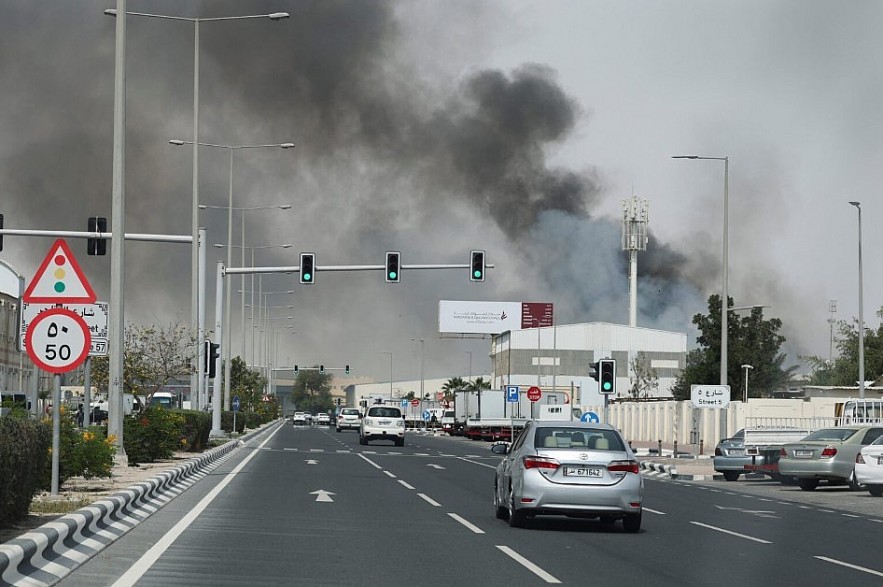 |
| Iranian missile attacks as seen from Doha, Qatar |
Iran Expands Missile and Drone Strikes Across the Gulf
Iranian attacks on Gulf states are continuing despite diplomatic signals suggesting Tehran might scale back the escalation. Missile and drone strikes have hit or threatened several countries in the region, including Saudi Arabia, Kuwait, the United Arab Emirates, Qatar, and Bahrain, raising fears that the conflict could widen into a full regional war.
The attacks began after the United States and Israel launched large-scale airstrikes on Iranian targets on February 28, 2026, triggering immediate retaliation from Tehran. Iran responded by firing ballistic missiles and hundreds of drones at U.S. bases and allied infrastructure across the Persian Gulf.
Since then, Gulf air-defense systems have been under near-constant pressure. Saudi Arabia, Kuwait, and the UAE have repeatedly intercepted incoming drones and missiles, while explosions and air defense activity have been reported in several cities.
Read more: How Big Is Iran Compared With the US, Israel, and Iraq? Size, Maps, and Key Facts
Kuwait and Saudi Arabia Hit in Latest Attacks
The latest wave of strikes targeted critical infrastructure in Kuwait and Saudi Arabia. According to defense officials, drones struck fuel storage tanks at Kuwait International Airport, while Kuwaiti air defenses intercepted additional ballistic missiles entering the country’s airspace. Two military officers were reported killed during the attack response.
Saudi Arabia also reported intercepting multiple drones east of Riyadh. These incidents underline the continuing threat facing Gulf states, many of which host U.S. military installations that Tehran considers legitimate targets.
Kuwait has already intercepted dozens of ballistic missiles and hundreds of drones since the conflict began, illustrating the scale of Iran’s campaign.
Meanwhile, earlier strikes targeted strategic infrastructure, including an Iranian drone attack on the Ras Tanura refinery, one of Saudi Arabia’s largest oil facilities. Although the refinery sustained limited damage, the incident forced temporary export disruptions and contributed to global oil price spikes.
Tel Aviv Devastated by Iranian Missile and Drone Attacks:
Massive Barrage of Missiles and Drones
The numbers behind the attacks reveal the intensity of the campaign. Gulf defense ministries say hundreds of projectiles have already been launched since the start of the war.
For example, the United Arab Emirates reported detecting over 170 ballistic missiles and nearly 700 drones, with most intercepted by air defense systems.
Across the region, the scale of the assault includes:
-
Hundreds of Iranian drones launched toward Gulf states
-
Dozens to hundreds of ballistic missiles fired
-
Cruise missiles targeting military bases and ports
While many of the weapons were intercepted, falling debris and occasional impacts have damaged civilian infrastructure and caused casualties.
Gulf States Warn Iran as Diplomatic Efforts Struggle
Diplomatic tensions are rising as Gulf governments warn Iran against further attacks. Saudi Arabia has reportedly told Tehran that continued strikes on its territory could trigger retaliation and potentially allow U.S. forces to operate from Saudi bases.
Iranian President Masoud Pezeshkian recently issued a rare apology to neighboring countries, saying Iran does not intend to target them directly and will halt attacks if their territory is not used for operations against Iran. However, strikes have continued, suggesting divisions between political leadership and military commanders.
Analysts warn that the attacks could have the opposite effect of what Tehran intends. Instead of distancing themselves from Washington, Gulf states are strengthening defense coordination and intelligence sharing with the United States and Western allies.
Read more: Inside Iran’s Nuclear Fortress Fordow: The Truth About the Mountain-Deep Centrifuge Halls
Energy Markets and Global Shipping Under Threat
Beyond the military dimension, the conflict is already affecting global energy markets. Kuwait has declared force majeure and cut oil production, citing disruptions to shipping and threats to maritime safety.
The crisis has also disrupted traffic through the Strait of Hormuz, a narrow shipping route that carries roughly 20% of the world’s oil and liquefied natural gas supply. If the disruption continues, analysts warn it could trigger a global energy shock.
Energy infrastructure across the Gulf remains vulnerable. Oil refineries, ports, desalination plants, and airports are all within range of missiles and drones, making them potential targets in future attacks.
Read more: Nuclear Sites in Iran: Latest Discoveries, Strategic Threats & Military Options
Iran Says Strikes Target U.S., Not Gulf States
On Sunday, the United States, Bahrain, Jordan, Kuwait, Qatar, Saudi Arabia, and the UAE issued a joint statement condemning Iranian attacks across the region and reaffirming their right to self-defense. The countries warned they would take “all necessary measures” to protect their security, territory, and citizens, including possible retaliation.
Iranian Foreign Minister Abbas Araghchi rejected claims that Tehran is confronting its Gulf neighbors. In an interview with Al Jazeera, he said Iran maintains friendly relations with countries across the Persian Gulf and has no intention of attacking them.
According to Araghchi, Iran’s current military actions are retaliation for U.S. aggression. He stressed that Iran is targeting American military interests in the region, not Gulf nations.
“We are not attacking our brothers in the Persian Gulf,” Araghchi said. “Our operations are directed at American targets.”
Risk of a Wider Regional War
Security analysts increasingly warn that the conflict could escalate beyond the Gulf if strikes continue. Iran has signaled it will keep targeting U.S. assets and allied infrastructure in the region, while the United States and Israel have pledged to continue military operations against Iranian forces.
With missiles and drones flying across multiple countries and global energy supply already under strain, the ongoing attacks highlight a growing risk: the Middle East conflict is no longer confined to one battlefield but is rapidly becoming a regional war.