From Oil to Water: Iran Strikes Bahrain Desalination Plant

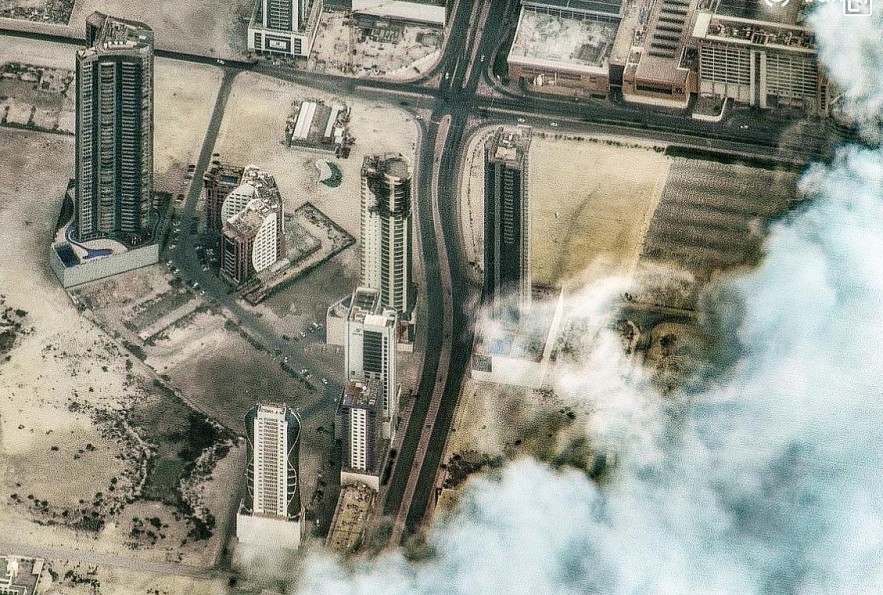 |
| A drone attack on a high-rise apartment building in Bahrain's capital Manama |
The escalating confrontation between the United States and Iran has entered a dangerous new phase as desalination plants—critical sources of drinking water in the Persian Gulf—become targets in the conflict.
According to regional security reports, Iran launched UAV strikes on March 8 targeting a desalination plant in Bahrain, marking a direct response after U.S. forces reportedly struck an Iranian desalination facility earlier this month. While details of the damage are still emerging, analysts warn that attacks on water infrastructure could trigger severe humanitarian risks across the region.
For decades, oil infrastructure dominated the strategic landscape of Middle East conflicts. Refineries, pipelines, and shipping lanes were considered the most critical targets because of their influence on global energy markets.
But the Gulf’s reality is changing.
Today, desalination plants are just as strategically important as oil facilities, because they provide the freshwater that sustains life in one of the driest regions on Earth.
Read more: Iranian Attacks on Gulf Countries Continue: Missiles, Drones, and Oil Disruptions
The Gulf’s Lifeline: Desalinated Water
Countries in the Gulf Cooperation Council (GCC) depend heavily on desalination to meet their water needs. The region holds around 60% of global desalination capacity and produces roughly 40% of the world’s desalinated water, according to regional water studies.
More than 400 desalination plants operate across the Gulf.
For several countries, desalinated water is not just a supplement—it is the primary source of drinking water.
-
Kuwait: about 90% of drinking water comes from desalination
-
Oman: about 86%
-
Saudi Arabia: around 70%
-
United Arab Emirates: about 42%
This heavy dependence means that any disruption to desalination plants could lead to water shortages within days in some Gulf cities.
Saudi Arabia: The World’s Largest Producer
Saudi Arabia remains the largest producer of desalinated water globally. The kingdom has invested more than $80 billion in desalination infrastructure and aims to reach a production capacity of 8.5 million cubic meters per day.
Most desalination plants are located along the coastline and are often integrated with power generation facilities. This makes them high-value but vulnerable targets for drones or missile attacks.
A Dangerous Escalation
Security analysts say the shift from oil infrastructure to water facilities represents a serious escalation in regional tensions.
While attacks on oil infrastructure mainly disrupt markets and energy supply chains, attacks on desalination plants directly threaten civilian survival.
In the Gulf, where natural freshwater is extremely limited, the consequences could be immediate.
“Oil fuels the region’s economy,” one regional analyst said, “but desalinated water keeps its cities alive.”
As tensions between Washington and Tehran continue to rise, the latest strikes suggest that future conflicts in the Middle East may increasingly revolve not only around energy—but around water, the most essential resource of all.