Who Is Mojtaba Khamenei, Iran’s New Supreme Leader: Bio, Education, Family Life, And Career

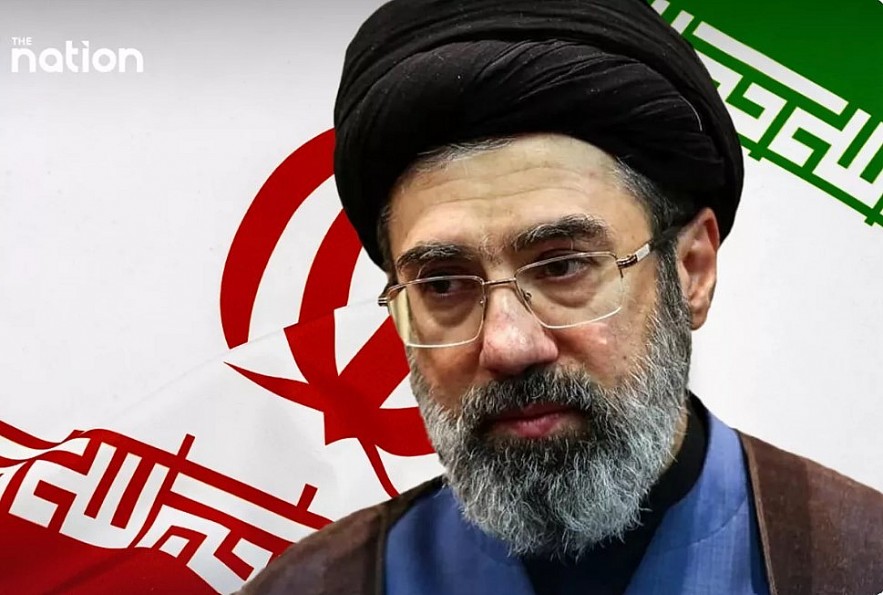 |
| Mojtaba Khamenei has succeeded his father, Ayatollah Ali Khamenei, who was assassinated in joint US-Israel attacks |
Mojtaba Khamenei has emerged as Iran’s new supreme leader following the assassination of his father, Ayatollah Ali Khamenei, in reported joint US–Israel attacks. His rise marks one of the most dramatic leadership transitions in the Islamic Republic since the 1979 revolution.
For years Mojtaba Khamenei was known as a powerful but discreet figure operating behind the scenes of Iranian politics. Now, with the country facing war and regional tension, he has moved from the shadows to the center of power.
Early Life and Childhood
Mojtaba Hosseini Khamenei was born on September 8, 1969, in Mashhad, one of Iran’s most important religious cities. He grew up during a period of political upheaval as the Iranian Revolution reshaped the country’s political system.
His father, Ali Khamenei, was a revolutionary cleric who later became Iran’s second supreme leader in 1989. Mojtaba’s mother, Mansoureh Khojasteh Bagherzadeh, came from a religious family in Mashhad and played a traditional role in raising the children.
Growing up in a household deeply involved in revolutionary politics, Mojtaba was exposed early to religious scholarship and political debate. The family lived modestly during the early years of the revolution, reflecting the austere image many clerics sought to project.
Read more: How Many U.S. Troops Have Died in the Iran War? 6 Killed, 18 Wounded
Family Background
Mojtaba Khamenei is one of six children in the Khamenei family.
His brothers include Mostafa Khamenei, Masoud Khamenei, and Meysam Khamenei. He also has two sisters, Boshra and Hoda Khamenei. Most members of the family have largely stayed out of public political life, although they remain connected to Iran’s religious and academic institutions.
Mojtaba married Zahra Haddad-Adel, the daughter of prominent conservative politician Gholam-Ali Haddad-Adel, a former speaker of Iran’s parliament and a close ally of the Khamenei family. The marriage strengthened Mojtaba’s ties to influential conservative networks within Iran’s political establishment.
The couple is believed to have several children, though details about their lives are rarely disclosed due to the family’s strict privacy.
Education and Religious Training
Like many figures within Iran’s ruling clerical class, Mojtaba pursued religious education in the seminaries of Qom, the country’s main center of Shia Islamic scholarship.
He studied Islamic jurisprudence and theology under several conservative clerics and eventually attained the clerical rank of Hojjatoleslam. This rank places him below senior ayatollahs but still within the recognized hierarchy of Shia scholars.
In addition to his studies, Mojtaba has reportedly taught religious classes in Qom, further strengthening his credentials within the clerical establishment.
Before fully entering religious study, he is believed to have served briefly with forces linked to the Islamic Revolutionary Guard Corps during the final stage of the Iran–Iraq War in the late 1980s. That experience helped him build connections with military networks that later became crucial to his political influence.
A Career Built Behind the Scenes
Unlike many Iranian leaders, Mojtaba Khamenei never held a major public office. Instead, he developed a reputation as a behind-the-scenes strategist within his father’s political circle.
For years he was considered one of the key figures managing access to the supreme leader’s office. Analysts often described him as a gatekeeper who coordinated relations between senior clerics, government officials, and powerful security institutions such as the Revolutionary Guard.
His influence became widely discussed during the disputed 2009 presidential election in Iran, when mass protests erupted across the country. Critics accused him of supporting the government’s crackdown on demonstrators. While Mojtaba rarely responded publicly to such claims, the events cemented his reputation as a hardline figure aligned with the security establishment.
In 2019 the United States imposed sanctions on him, accusing him of helping enforce policies that suppressed political opposition.
Read more: Iranian Attacks on Gulf Countries Continue: Missiles, Drones, and Oil Disruptions
Rise to the Supreme Leadership
Following the death of Ali Khamenei, Iran’s Assembly of Experts moved to appoint a new supreme leader at a moment of extreme geopolitical tension. Mojtaba’s deep ties to conservative clerical circles and to the Revolutionary Guard reportedly helped secure support among key power centers.
His appointment signals continuity with his father’s ideological approach and a commitment to maintaining the structure of the Islamic Republic.
Yet his leadership is also controversial. Critics inside and outside Iran argue that his succession resembles dynastic politics, something the 1979 revolution originally sought to eliminate.
A Leader Facing Immediate Challenges
As Iran’s new supreme leader, Mojtaba Khamenei now holds the most powerful position in the country. The role gives him authority over the armed forces, the judiciary, state broadcasting, and key aspects of foreign policy.
He assumes leadership during a period marked by war, sanctions, and economic pressure. How he navigates these challenges may define not only his own legacy but also the future direction of Iran and its role in the Middle East.