Minimum Wage in 2026: Which U.S. States Are Raising Pay and Who Benefits

 19 Most Important New Laws Taking Effect in New York 2024 19 Most Important New Laws Taking Effect in New York 2024 |
 How Many States Have a $15 Minimum Wage in 2025? How Many States Have a $15 Minimum Wage in 2025? |
 |
| Which states increased minimum wage in 2026 |
As of January 1, 2026, minimum wage rates increased in many U.S. states, continuing a multi-year trend toward higher pay floors for hourly workers. While headlines often frame this as a national change, the reality is more complex. The federal minimum wage has not moved, but state and local laws are driving real increases for millions of workers.
Here’s what changed in 2026, where wages went up, and who actually benefits.
The federal minimum wage remains unchanged
The federal minimum wage in 2026 is still $7.25 per hour, a rate that has not increased since 2009. This federal floor applies only in states that have not set a higher minimum wage of their own.
In practice, relatively few workers are paid exactly $7.25 an hour today. Most states and many cities have adopted higher standards through legislation or voter-approved initiatives.
Read more:
- Minimum Wage in 2026: Do Tipped Workers Get a Raise in Restaurants, Salons, and Service Jobs?
- Minimum Wage Increases in 2026: How Much More Workers Actually Earn Each Month
- Should I Change Jobs After the Minimum Wage Increase in 2026?
States that raised minimum wage in 2026
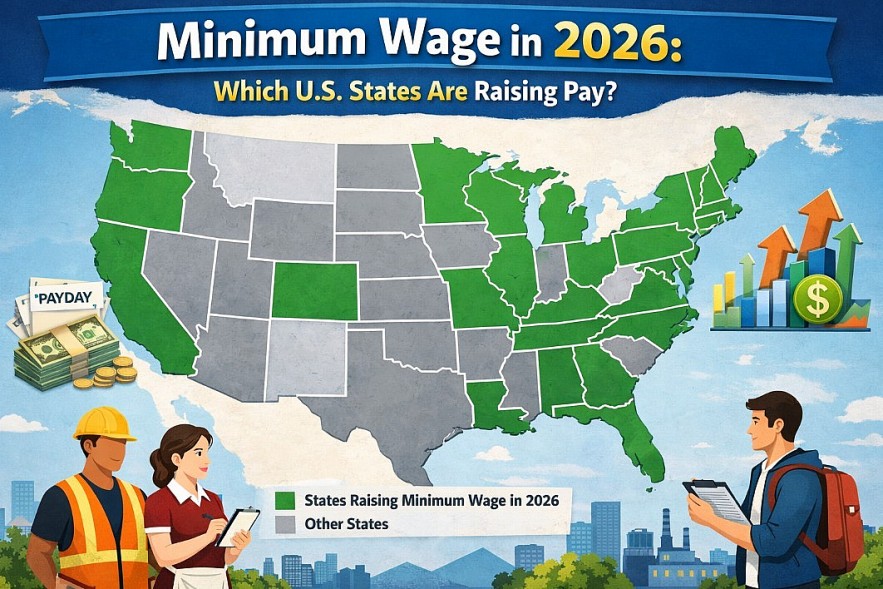
Roughly 20 states implemented minimum wage increases on January 1, 2026. In most cases, these increases were not new policy decisions, but scheduled adjustments written into law years earlier.
Common reasons for increases include:
-
Pre-set annual raises
-
Inflation indexing tied to cost-of-living data
-
Voter-approved wage timelines
Notable examples include:
-
California
California continued its statewide wage schedule, keeping it among the highest in the nation. Many cities within the state enforce even higher local minimums. -
New York
New York maintains tiered minimum wages. Workers in New York City, Long Island, and Westchester earn more than those in upstate regions, though all saw increases in 2026. -
Washington
Washington’s minimum wage, indexed to inflation, rose again in 2026 and remains the highest statewide minimum wage in the U.S. -
Florida
Florida’s increase followed a constitutional amendment approved by voters, with wages rising incrementally each year toward a long-term target.
Across states, most 2026 increases ranged from $0.50 to just over $1.00 per hour, depending on local inflation and statutory formulas.
Who qualifies for the higher minimum wage?
In general, the new 2026 minimum wages apply to:
-
Hourly workers
-
Full-time and part-time employees
-
Most service and retail workers
-
Many tipped workers, depending on state law
If you are paid hourly and work in a state with a higher minimum wage than the federal level, your employer must pay at least the state minimum.
What about salaried employees?
Employees paid on a salary basis are not directly affected unless their pay falls below the hourly equivalent of the new minimum wage. However, higher minimum wages often influence broader pay scales, especially in lower-wage industries.
Tipped workers
Rules for tipped workers vary widely:
-
Some states require employers to pay the full minimum wage before tips.
-
Others allow a lower cash wage, provided tips bring total pay up to the legal minimum.
In 2026, states that raised their base minimum wage generally adjusted tipped wage thresholds as well, though not always at the same rate.
Read more: Minimum Wage Increases in 2026: How Much More Workers Actually Earn Each Month
Local minimum wages may be higher
State minimum wages are not always the highest applicable rate. Many cities and counties enforce local minimum wages that exceed state law.
For example, major metro areas in California, New York, and Washington often set their own wage floors. Employers are required to follow the highest applicable minimum wage, whether local, state, or federal.
Workers should check city or county labor department websites to confirm the correct rate.
Why these increases matter
Minimum wage increases affect more than just entry-level jobs. They can:
-
Raise baseline earnings for millions of households
-
Reduce income volatility for hourly workers
-
Put upward pressure on wages slightly above the minimum
At the same time, higher wages do not automatically offset rising housing, healthcare, and transportation costs. In high-cost states, many workers still struggle to keep up, even with annual increases.
What workers should do next
If you’re unsure whether you’re being paid correctly in 2026:
-
Confirm your state and local minimum wage
-
Review your pay stub and hourly rate
-
Ask your employer for clarification if needed
-
Contact your state labor agency if discrepancies remain
Minimum wage laws are enforceable, and most states provide formal complaint processes for workers.
Read more: Top 10 States in America With the Highest Average Wages
Full list: U.S. states raising minimum wage in 2026
As of January 1, 2026, the following states implemented scheduled minimum wageincreases, either through inflation indexing, voter-approved laws, or pre-set legislative timelines.
These increases were largely predetermined and not the result of new legislation passed in 2026.
States with minimum wage increases effective January 1, 2026
-
Alaska
-
Arizona
-
California
-
Colorado
-
Connecticut
-
Delaware
-
Florida
-
Hawaii
-
Illinois
-
Maine
-
Maryland
-
Massachusetts
-
Michigan
-
Minnesota
-
Missouri
-
Montana
-
New Jersey
-
New York
-
Ohio
-
South Dakota
-
Vermont
-
Washington
Important notes for readers
-
Some states apply different minimum wages by region or employer size.
-
Cities and counties may enforce higher local minimum wages than the state rate.
-
Employers must follow the highest applicable wage (local, state, or federal).
Because wage laws can vary at the local level, workers should confirm rates with their state or city labor department.
Bottom line
The minimum wage did not change nationwide in 2026, but for millions of workers, pay increased because of state and local laws. Knowing your local rate and your rights is the key to making sure you benefit from those changes.