Why the Hernández Pardon Doesn’t Save Nicolás Maduro


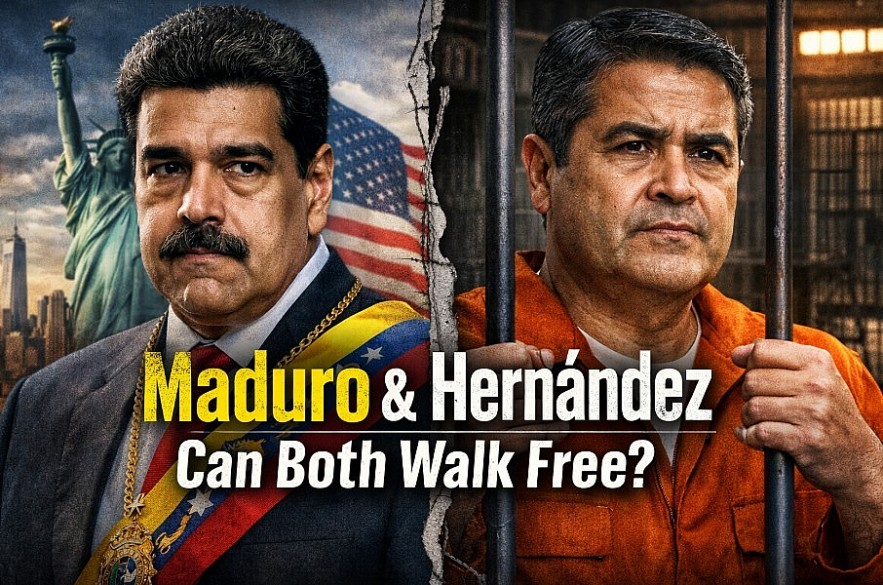 |
| Does the Hernández pardon mean Maduro will be pardoned too |
Why the Hernández Pardon Changed the Conversation — but Not the Math
In December 2025, U.S. President Donald Trump granted clemency to Juan Orlando Hernández, Honduras’ former leader who had been sentenced in 2024 to life in prison for facilitating the trafficking of an estimated 400 tons of cocaine into the United States.
That decision shattered a long-held assumption that life sentences for foreign leaders convicted of narcotics crimes are irreversible. It established a narrow truth: the presidency can override the courtroom.
But precedent does not equal probability.
Read more: Can Nicolás Maduro Ever Walk Free? What U.S. Prosecutors Hold Against Him
Maduro’s Case Is Structurally Harsher
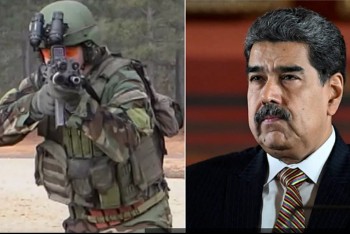
U.S. prosecutors accuse Nicolás Maduro of leading or protecting a narco-terrorism enterprise that fused large-scale cocaine trafficking with armed violence and coordination with designated militant groups. The distinction matters.
Maduro’s indictment triggers:
-
Mandatory minimum sentences starting at 20 years
-
Statutory maximums of life imprisonment
-
Guideline enhancements for leadership role, scale, and use of weapons
In practical terms, a conviction on even one top-tier count exposes him to 30 years to life. At his age, that is functionally permanent incarceration.
By contrast, Hernández’s case, while massive, did not combine the same terrorism-linked statutes now attached to Maduro.
Read more: Who Could Be Venezuela’s Next President? Delcy Rodríguez or María Machado
Why Bail, Immunity, and Delay Won’t Save Him
There are no soft exits here.
-
Bail: Effectively impossible due to flight risk, access to resources, and national-security considerations.
-
Immunity: Weak. U.S. courts are likely to assess whether Maduro is recognized as a sitting head of state at the time of proceedings. Without recognition, immunity defenses collapse.
-
Delay tactics: Federal courts move slowly, but time does not soften mandatory minimums.
Maduro’s leverage will not come from procedure; it would have to come from outcomes.
The Three Theoretical Paths to Freedom — and Why Each Is Narrow
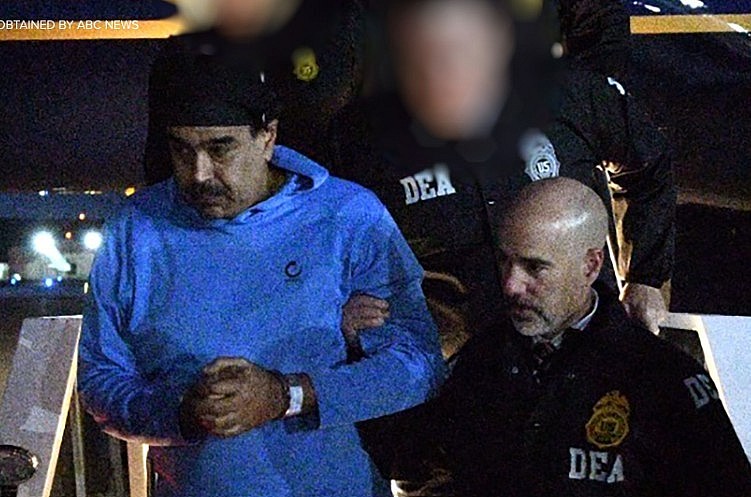 |
| Ousted Venezuelan President Nicolás Maduro is scheduled to appear in Manhattan federal court on Monday to face narco-terrorism charges, following his U.S. military capture that has plunged the oil-rich nation into uncertainty. |
1) Acquittal
This is the cleanest path and the least realistic. Narco-terrorism cases are built over years, often relying on cooperating witnesses, financial records, and corroborated trafficking routes. Full acquittals at this level are rare.
2) An Extraordinary Deal
Plea agreements can reduce sentences — but not erase them. To approach release, Maduro would need to deliver cooperation of exceptional value: verified intelligence, asset recovery at scale, or actions that materially reshape Venezuela’s political transition. Even then, freedom would be unlikely.
3) Presidential Pardon
Legally possible. Politically explosive. A pardon would have to outweigh the optics of forgiving terrorism-linked narcotics crimes and the message it sends to prosecutors, allies, and rivals. The Hernández case proves it can happen; it does not suggest it will happen often.
The historical counterweight is Manuel Noriega — captured, tried in New York, sentenced to decades, and never pardoned.
| Manuel Noriega was Panama’s military ruler in the 1980s. Captured by U.S. forces during the 1989 invasion, he was tried in New York on drug trafficking charges, sentenced to decades in prison, and never received a presidential pardon. |
Why Maduro Is a Harder Political Case Than Hernández
There is a decisive difference: timing and power. Hernández was no longer in office when clemency arrived. Maduro’s fate is intertwined with an ongoing geopolitical crisis involving oil markets, migration, sanctions, and regional stability.
Any clemency for Maduro would be read globally as a strategic concession — not a humanitarian act. That raises the political price dramatically.
The Bottom Line
Could Nicolás Maduro ever walk free like Juan Orlando Hernández? Yes, in theory. U.S. law allows it.
But the legal architecture of Maduro’s case, the terrorism-linked statutes, and the geopolitical consequences make such an outcome extraordinarily unlikely. Short of acquittal or a seismic political bargain, the most realistic endpoints remain multiple decades or life in U.S. custody.
In this case, history suggests the courtroom — not precedent — will decide.
FAQs
Does the Hernández pardon mean Maduro will be pardoned too?
No. It proves possibility, not likelihood.
What sentence is most realistic if Maduro is convicted?
30 years to life, effectively permanent imprisonment.
Can a plea deal free him?
Unlikely. Deals reduce sentences; they rarely eliminate them.
Who controls a pardon?
Only the U.S. president.
What precedent cuts against clemency?
Manuel Noriega’s decades-long imprisonment without a pardon.