Will the Pentagon Really Cut U.S. Troops in Europe and South Korea?

 Top 10 Largest U.S Military Bases In the World - Total 750 Bases (2023/2024) Top 10 Largest U.S Military Bases In the World - Total 750 Bases (2023/2024) The United States has the biggest and strongest military in the world. Scroll down to read the full list and top 10 largest military bases ... |
 Why Is US Military The Strongest In The World? Why Is US Military The Strongest In The World? Out of the 140 nations taken into consideration for the yearly GFP review, the United States is ranked first. How to Retain 'American Military Dominance' ... |
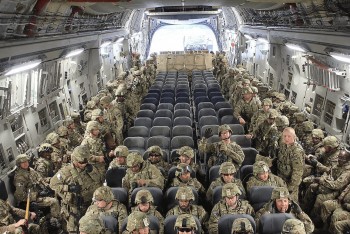 Where are US Military Deployments in the World and How Many Bases Are There Where are US Military Deployments in the World and How Many Bases Are There As of June 2023, there were over 30,000 American troops stationed in the Middle East alone, out of approximately 170,000 total troops stationed outside of ... |
Is the Pentagon preparing for a major overseas pullback?
For months, rumors and internal discussions suggested the Pentagon was weighing cuts to U.S. forces stationed in Europe and South Korea — two regions where American troops have anchored stability for decades. The idea was bold enough to ignite immediate concern among allies and analysts. But the bigger shock came when Congress stepped in and froze the plan before it could advance.
What began as an internal force-posture review suddenly turned into a national debate:
Is the United States rethinking its role as a global security guarantor, or was this simply a misjudged attempt at budget tightening?
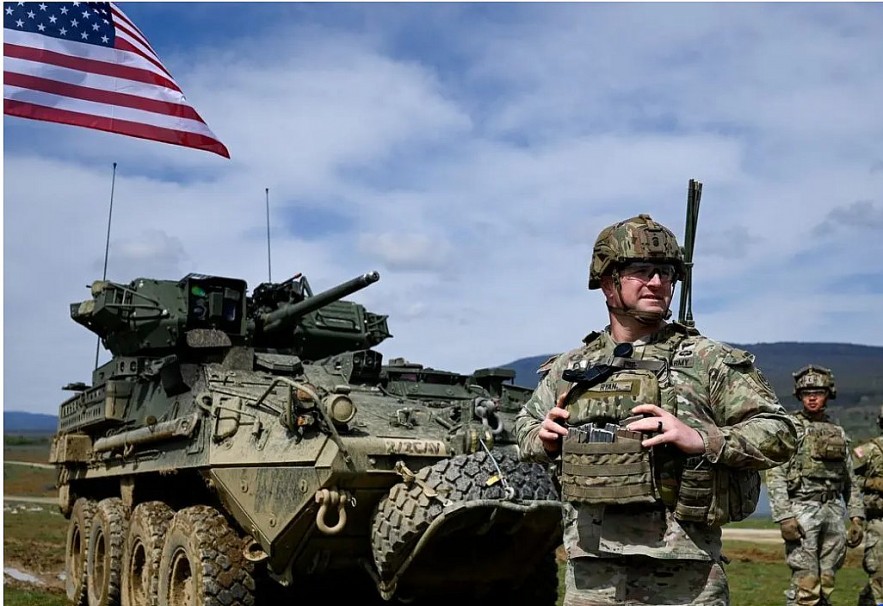 |
| Pentagon from cutting US troops in Europe |
What the Pentagon wanted to change
1. Shrinking the U.S. footprint in Europe
Planners believed Europe had become more capable of defending itself. Since the war in Ukraine, defense budgets across NATO have surged, and several European armies have expanded their active-duty forces. This led U.S. defense officials to consider trimming certain deployments in Eastern Europe, especially rotational units positioned near Russia’s borders.
The proposal would have brought troop levels below the long-standing benchmark of 76,000, a symbolic threshold widely viewed as the backbone of U.S. deterrence on the continent.
2. A significant cut in South Korea
The Pentagon also reviewed scenarios that involved pulling roughly 4,500 troops from the U.S. Forces Korea mission. The move was tied to long-term plans to redirect more resources toward the Indo-Pacific, where concerns about China’s military rise continue to shape U.S. strategy.
3. Budget pressure and restructuring
Deep internal cuts ordered earlier this year pushed Pentagon leaders to examine every major overseas deployment. Forward bases are expensive to maintain, and planners argued that modern threats — drones, hypersonics, cyber warfare — demand a different kind of investment.
To them, reducing certain troop commitments wasn’t retreat. It was adaptation.
Why the idea triggered a political storm
Even before Congress acted, the prospect of pulling back troops sparked anxiety.
-
European allies feared that any reduction would signal declining American interest at a dangerous moment.
-
South Korea worried it would embolden North Korea and create space for miscalculation.
-
Defense analysts warned of security vacuums that adversaries could exploit faster than allies could adapt.
The loudest reaction, however, came from Washington itself.
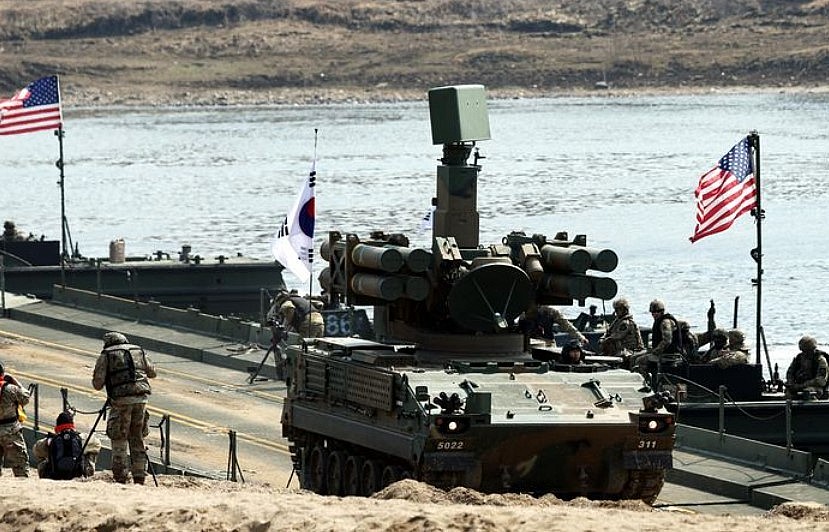 |
| Pentagon dismisses USFK troop cut report as 'not true,' reaffirms US' firm commitment to South Korea |
Congress slams the brakes
In the latest defense bill, lawmakers inserted strict conditions that prevent the Pentagon from cutting troops in Europe or South Korea without meeting tough national-security certification requirements. The law effectively locks in current levels: around 76,000 troops in Europe and 28,500 in South Korea.
Congress wasn’t subtle. The message was plain:
No sudden retreat. No unilateral restructuring. No surprises.
The Pentagon’s proposed drawdown — not yet finalized, not yet approved — was dead on arrival.
What this means for U.S. global strategy
Short-term: Stability through status quo
Troops stay where they are. Allies breathe easier. Military planners must adjust their restructuring plans without touching core deployments.
Medium-term: More pressure on allies
Even though Congress blocked cuts, the original rationale hasn’t disappeared. Washington still wants Europe to carry more of NATO’s burden by 2027. South Korea is also expected to keep upgrading its defense capabilities. The freeze buys time but not relief.
Long-term: The debate only gets louder
America is divided between two visions:
-
a forward-deployed superpower that stays everywhere,
-
or a leaner global actor that focuses on fewer, more strategic fronts.
The Pentagon’s scrapped proposal may have been the first real test of this debate — not the last.
Why Congress Moved to Stop the Pentagon’s Plan
Placed where you requested — at the bottom of the article, as a deeper explanatory section:
1. Fear of weakening NATO
Lawmakers worried a reduced U.S. presence would undermine deterrence along the eastern flank at a time when Russia remains unpredictable and the war in Ukraine is unresolved.
2. Risks on the Korean Peninsula
Even modest changes in troop numbers could send the wrong signal to North Korea. Congress saw the Pentagon’s plan as too risky for a region that has no margin for error.
3. Oversight and trust
Several legislators felt the Pentagon was moving too fast without a full strategic review. By imposing legal guardrails, Congress reasserted control over decisions with long-term geopolitical consequences.
4. Avoiding mixed messages to allies
At a moment when Washington urges allies to trust U.S. commitments, a sudden troop cut would contradict that message. Congress chose clarity over experimentation.
FAQs
Q: Does the freeze completely prevent troop cuts?
No. Reductions are still legally possible but must pass strict national-security reviews that are intentionally difficult to satisfy.
Q: Is the Pentagon abandoning its restructuring plans?
Not entirely. It must now revise those plans without relying on drawdowns in Europe or South Korea.
Q: Will allies eventually expect reductions after 2027?
Possibly. If Europe and South Korea build enough independent capability, Washington could revisit the issue — but with far more caution.
Q: Is the U.S. global presence shrinking overall?
Not yet. Congress has made sure the most sensitive regions remain fully staffed.