Susan Rice Biography: Career, Family, Net Worth - and the Trump-Netflix Clash

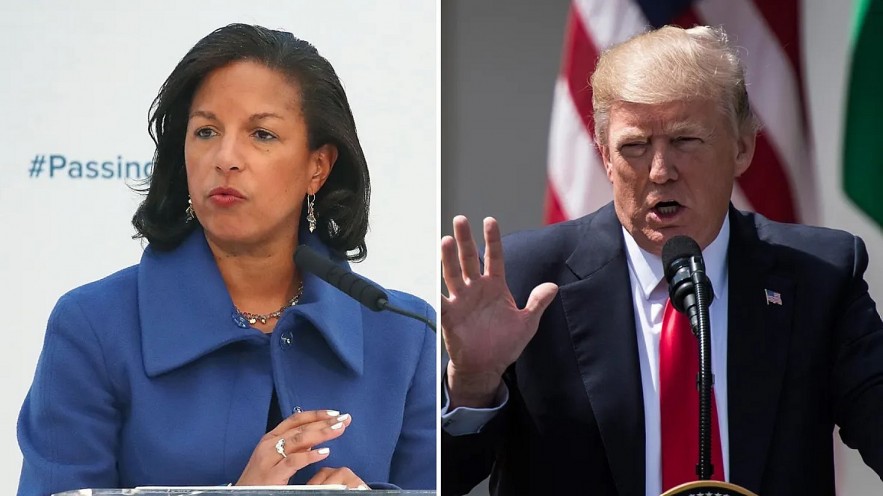 |
| Who Is Susan Rice and Why Trump Wants Her Removed From Netflix’s Board |
The dispute has pulled one of America’s most experienced foreign policy figures into a high-stakes clash at the intersection of politics, media, and corporate governance.
But who is Susan Rice — and why is she suddenly at the center of a battle involving one of the world’s largest streaming companies?
Why Trump Is Targeting Rice
Trump’s demand followed comments Rice made suggesting that corporations perceived as aligning with Trump could face scrutiny if Democrats regain power. Conservative activists amplified her remarks online, and Trump responded on Truth Social by calling for her removal from Netflix’s board.
The confrontation comes at a sensitive moment. Netflix is reportedly pursuing a major acquisition involving Warner Bros. Discovery assets — a deal that would require federal regulatory approval. Critics argue Trump’s public pressure could complicate that process.
There is no allegation of wrongdoing by Rice in her role at Netflix. The controversy is political, not corporate.
Early Life and Education: Elite Academic Foundations
Susan Elizabeth Rice was born on November 17, 1964, in Washington, D.C., into a family deeply rooted in public service and education.
-
Her father, Emmett J. Rice, served as a Federal Reserve governor and was an economics professor.
-
Her mother, Lois Dickson Rice, was a respected education policy advocate.
Rice graduated as valedictorian of the National Cathedral School. She went on to earn:
-
B.A. in History from Stanford University (Phi Beta Kappa)
-
MPhil and DPhil in International Relations from Oxford University, where she studied as a Rhodes Scholar
Her academic credentials placed her on a fast track into U.S. foreign policy circles.
Government Career: From Africa Policy to the White House
Rice’s career spans three Democratic administrations and some of the most consequential foreign policy debates of the past 30 years.
Key Roles:
-
Assistant Secretary of State for African Affairs (Clinton administration)
-
U.S. Ambassador to the United Nations (Obama administration)
-
National Security Advisor (2013–2017)
-
Director of the White House Domestic Policy Council (Biden administration, 2021–2023)
As National Security Advisor, Rice was central to decisions on Iran nuclear negotiations, Ebola response coordination, and counterterrorism strategy. Supporters describe her as disciplined and strategic. Critics argue she is politically combative and highly partisan.
That divide has followed her into the corporate world.
Transition to Corporate Leadership: Joining Netflix
Rice first joined Netflix’s board of directors in 2018 after leaving the Obama administration. She later rejoined following public service under President Biden.
Board members at publicly traded companies are responsible for governance oversight, executive accountability, and long-term strategy. In Netflix’s case, Rice brings experience in:
-
Global risk assessment
-
Regulatory navigation
-
International policy strategy
For a company operating in more than 190 countries, that expertise is significant.
Personal Life: Family, Privacy, and Public Scrutiny
Rice is married to Canadian-born former ABC News executive producer Ian Cameron. The couple has two adult children and maintains a relatively private family life despite Rice’s high-profile roles.
Friends and colleagues often describe her as disciplined, intensely prepared, and protective of her family’s privacy. Unlike many political figures, she has kept her children largely out of public view.
She is also known for her competitive athletic background — she was a standout student-athlete in high school — and for maintaining close relationships within academic and diplomatic circles.
Net Worth and Financial Standing
Public financial disclosures during her government service indicated that Rice and her husband held diversified investments, including mutual funds, retirement accounts, and real estate in Washington, D.C.
Estimates of her household net worth have ranged in the multi-million-dollar bracket, largely reflecting long careers in senior government service, media leadership (in her husband’s case), book royalties, and board compensation. Exact figures fluctuate depending on asset valuation and market performance.
There is no public evidence suggesting financial irregularities.
Public Reaction
Reaction has split largely along partisan lines:
-
Trump supporters argue Rice’s past political comments make her an inappropriate corporate director.
-
Critics warn that pressuring a private company over a lawful board appointment sets a troubling precedent.
Netflix has not announced any changes to its board.
The Bottom Line
Susan Rice is not a newcomer to controversy. Over three decades, she has operated at the highest levels of diplomacy, national security, and policy strategy. Her move into corporate governance followed a common path for former senior officials.
What makes this moment different is the direct involvement of a sitting president demanding her removal from a publicly traded company.
Whether Netflix stands firm or responds will shape not only Rice’s corporate future — but also the broader relationship between politics and corporate power in 2026.