Full List of 13 Countries Facing Up to $15,000 U.S. Visa Bonds




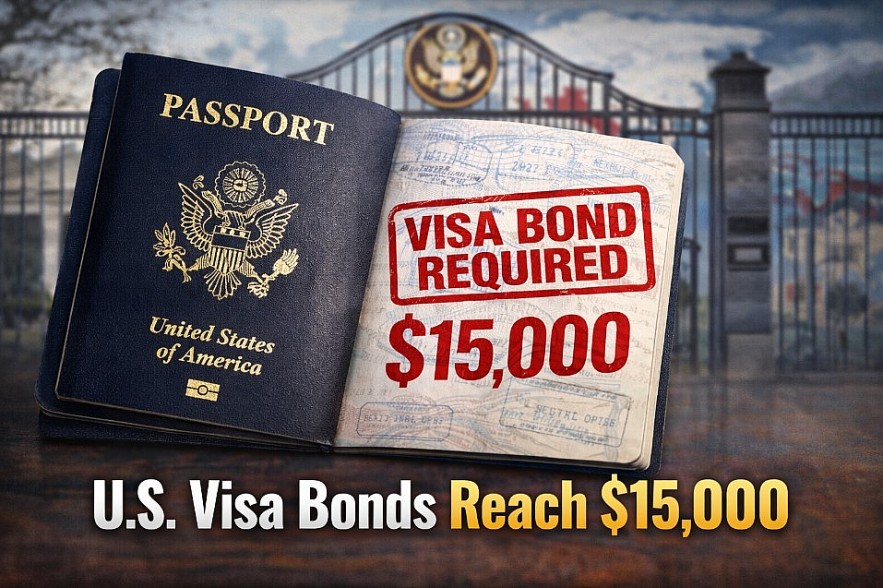 |
| U.S. Visa Bonds Reach $15,000 |
The United States Tightens Visa Rules With High-Cost Bonds
The United States has expanded a little-known but powerful immigration tool: visa bonds of up to $15,000. Under this policy, applicants from certain countries may be required to post a refundable bond before receiving a nonimmigrant visa.
The move, implemented under policies associated with Donald Trump, is designed to curb visa overstays. But critics say it effectively prices many travelers out of the U.S. visa system.
As of late 2025, 13 countries are now subject to this requirement.
Read more: Full List of Countries That Have Banned or Suspended Visas for U.S. Citizens
What Is a U.S. Visa Bond?
A visa bond is a cash deposit paid to the U.S. government before a visa is issued. The bond is:
-
Refundable if the traveler follows visa rules
-
Forfeited if the traveler overstays or violates visa conditions
-
Set between $5,000 and $15,000, depending on risk assessment
The bond applies mainly to tourist, business, and short-term visitor visas, not immigrant visas.
Why the U.S. Is Using Visa Bonds
According to U.S. officials, the policy targets countries with:
-
High historical visa overstay rates
-
Weak travel document controls
-
Limited cooperation on immigration enforcement
The stated goal is deterrence, not punishment. Still, immigration advocates argue that the policy disproportionately affects travelers from developing nations.
Full List: 13 Countries Subject to U.S. Visa Bonds
Here is the complete and updated list of countries whose citizens may be required to post a visa bond when applying for a U.S. visa:
| Region | Country |
|---|---|
| Africa | Botswana |
| Africa | Central African Republic |
| Africa | Guinea |
| Africa | Guinea-Bissau |
| Africa | Namibia |
| Asia | Bhutan |
| Asia | Laos |
| Central Asia | Turkmenistan |
| Caribbean | Haiti |
| Caribbean | Dominica |
| Caribbean | Antigua and Barbuda |
| Latin America | Honduras |
| Africa | Sierra Leone |
Note: Not every applicant from these countries will automatically face a bond. The decision is made on a case-by-case basis by U.S. consular officers.
Read more: List of 30 Nations Under Review as Trump Administration Weighs Expanded Travel Ban After National Guard Shooting
How Much Is the Bond?
-
Minimum: $5,000
-
Maximum: $15,000
-
Payment timing: Before visa issuance
-
Refund timeline: After lawful departure and visa compliance
Failure to depart on time may result in the full loss of the bond.
Who Is Most Affected?
The policy most strongly impacts:
-
Students attending short programs
-
Small business travelers
-
Tourists visiting family
-
Applicants without strong financial or travel histories
For many, the bond exceeds annual income, making travel to the U.S. financially impossible.
Practical Advice for Visa Applicants
If you are from a listed country:
-
Prepare financial documentation early to demonstrate ties to your home country.
-
Ask your embassy directly whether a bond may apply to your case.
-
Avoid overstays at all costs, even by one day.
-
Consider alternative destinations if the bond is unaffordable.
-
Keep proof of exit to ensure bond reimbursement.
Frequently Asked Questions
Is the visa bond permanent?
No. The policy can be expanded, reduced, or revoked by the U.S. government.
Do all applicants pay $15,000?
No. The amount varies by individual risk assessment.
Is the bond refunded automatically?
Generally yes, but delays are possible. Documentation is critical.
Does this apply to green cards?
No. Visa bonds apply only to nonimmigrant visas.
Final Takeaway
The U.S. visa bond policy marks a significant shift toward financial enforcement of immigration rules. While officials see it as a compliance tool, its real-world effect is clear: travel to the United States is becoming far more expensive for citizens of certain countries.
For affected travelers, preparation and awareness are no longer optional.