Full List of Countries That Have Banned or Suspended Visas for U.S. Citizens

A Growing Cycle of Travel Restrictions
The global travel landscape shifted sharply in late 2025 after Donald Trump expanded a controversial U.S. travel ban inspired by his first term in the White House. On December 16, the administration added 20 more countries and the Palestinian Authority to existing restrictions, bringing the total to 39 countries facing either full entry bans or partial visa limits when traveling to the United States.
What followed was swift diplomatic backlash. Several affected governments condemned the move as unfair or outdated. Two countries went further, announcing reciprocal actions that directly affect American travelers.
Read more: List of 30 Nations Under Review as Trump Administration Weighs Expanded Travel Ban After National Guard Shooting
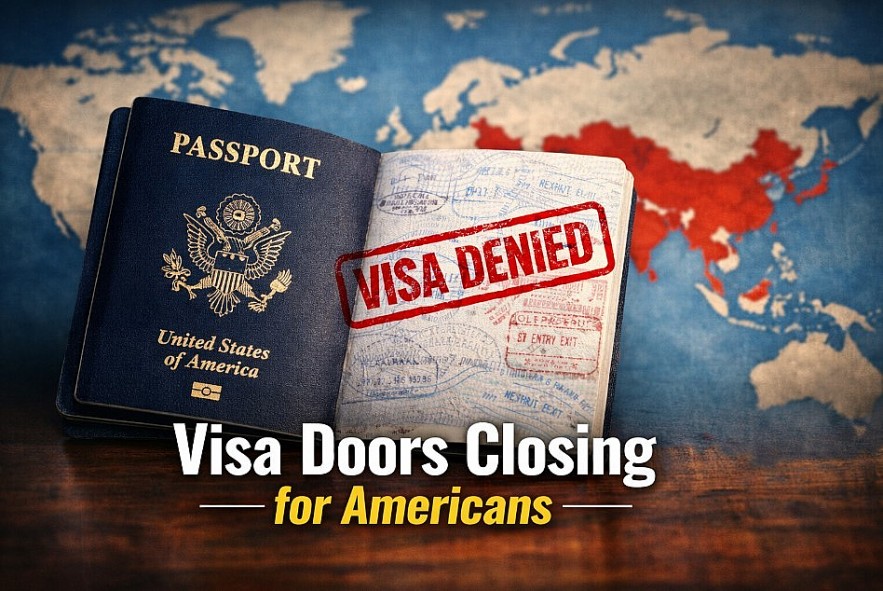 |
| Which Countries Are Canceling Visas for Americans After the U.S. Travel Ban Expansion |
What the Expanded U.S. Travel Ban Includes
The U.S. restrictions now fall into two main categories:
1. Total Entry Ban to the U.S.
Citizens from the following countries are completely barred from entering the United States:
-
Mali
-
South Sudan
-
Niger
-
Burkina Faso
-
Syria
-
Palestinian Authority
2. Student and Business Visa Restrictions
Applicants from these countries are blocked from receiving U.S. student and business visas:
-
Angola
-
Antigua and Barbuda
-
Benin
-
Dominica
-
Gabon
-
Gambia
-
Ivory Coast
-
Malawi
-
Mauritania
-
Nigeria
-
Senegal
-
Tanzania
-
Tonga
-
Zambia
-
Zimbabwe
They join countries already restricted earlier in 2025, including Burundi, Cuba, Laos, Sierra Leone, Togo, Turkmenistan, and Venezuela.
Countries That Have Cancelled or Suspended Visas for Americans
So far, two countries have taken direct reciprocal action against U.S. citizens.
Niger: A Full and Indefinite Visa Ban
Two weeks after being added to the U.S. travel ban, Niger announced the most severe response.
According to a government representative speaking to the Associated Press, Niger is:
“Completely and permanently prohibiting the issuance of visas to all U.S. citizens and indefinitely banning entry to its territory for nationals of the United States.”
Niger, a landlocked West African nation with over 25 million people, cited the need for diplomatic reciprocity. The White House had justified Niger’s inclusion by pointing to visa overstay rates exceeding 13% for business visas and 16% for student visas, along with security concerns related to militant activity.
Although U.S. travel to Niger has been minimal due to long-standing “do not travel” advisories, the decision marks a major escalation in bilateral relations.
Chad: Suspending All New Visas for Americans
Earlier in 2025, Chad took a similar stance after the first version of the U.S. ban was announced.
Chad’s government halted:
-
All new visas for U.S. citizens
-
All visa applications already in process
While not framed as “permanent,” the suspension remains in effect pending changes to U.S. policy.
Table: Countries Canceling or Suspending Visas for Americans
| Country | Type of Action | Scope | Status |
|---|---|---|---|
| Niger | Full visa cancellation | All U.S. citizens | Indefinite / Permanent |
| Chad | Visa suspension | New & pending visas | Ongoing |
 |
| why H-1B visa processing takes longer |
Diplomatic Pushback Beyond Visa Bans
Other countries have not canceled U.S. visas but issued strong public criticism.
Antigua and Barbuda’s Prime Minister Gaston Browne said his government was “deeply disappointed” by claims that its citizenship-by-investment program lacks oversight, calling the U.S. justification outdated and inaccurate.
Diplomats from several African and Caribbean nations are reportedly exploring collective responses through regional blocs rather than unilateral bans.
What This Means for American Travelers
For most Americans, these developments will not affect everyday travel plans. However, they matter if you:
-
Travel for humanitarian or diplomatic work
-
Hold dual citizenship
-
Plan long-term stays in Africa or the Caribbean
-
Work for NGOs, energy firms, or mining projects in the region
Even if a country has not canceled visas, processing times and approval rates may change quickly.
Read more: Why the U.S. Is Tightening Vetting for H-1B Visa Applicants (and What It Means for Workers and Employers)
Practical Advice for U.S. CitizensCheck official embassy sources before booking flights. Policies can change without notice. Avoid assumptions about reciprocity. Not every U.S.-banned country will respond the same way. Prepare alternative routes or destinations if your work depends on regional access. Register with the U.S. State Department’s STEP program if traveling to politically sensitive areas. Monitor advisories closely, especially for countries already under “Level 3” or “Level 4” warnings. |
FAQs
Are all countries on the U.S. travel ban canceling visas for Americans?
No. Only Niger and Chad have formally canceled or suspended visas for U.S. citizens so far.
Can Americans still travel to Niger or Chad?
No. Niger has banned entry entirely for U.S. nationals. Chad has halted visa issuance, making legal entry extremely difficult.
Is this likely to spread to more countries?
It is possible. Diplomatic sources suggest other nations are considering reciprocal steps if the U.S. ban expands further.
Does this affect Americans with dual citizenship?
It depends. Entry rules may differ if you travel using a non-U.S. passport, but this should be confirmed with the destination country’s embassy.
Are tourist visas also affected?
Yes. In Niger’s case, the ban applies to all visa categories, including tourism.
Final Thoughts
The expanding U.S. travel ban has triggered more than symbolic criticism. With Niger and Chad taking concrete retaliatory steps, American travelers are seeing the real-world impact of visa diplomacy.
For now, these cases remain limited. But they signal a broader shift toward reciprocity in global travel policy, one that could reshape mobility for Americans if tensions continue.
 How H‑1B Visa Changes Impact Workers in 2025/2026 How H‑1B Visa Changes Impact Workers in 2025/2026 Discover how the new $100,000 H‑1B visa fee affects foreign workers, U.S. employees, and industries. Learn who’s impacted, what’s changing, and how to adapt. |
 New H‑1B Visa Fee Rule: Who Must Pay and Who Is Exempt New H‑1B Visa Fee Rule: Who Must Pay and Who Is Exempt A new presidential proclamation has introduced sweeping changes to the H‑1B visa program, including a controversial $100,000 petition fee for certain applicants. |
 H-1B Visas Under Trump: Stricter, Faster, and Paving a Path to Citizenship H-1B Visas Under Trump: Stricter, Faster, and Paving a Path to Citizenship What’s really changing in U.S. immigration for skilled workers—and how you can still succeed under tougher rules |
 December 2025 U.S. Visa Bulletin: What Indian Applicants in EB-1 & EB-2 Need to Know December 2025 U.S. Visa Bulletin: What Indian Applicants in EB-1 & EB-2 Need to Know The December US Visa Bulletin offers fresh movement for Indian applicants in EB-1 and EB-2. Cut-off dates inch forward, giving some long-waiting professionals a clearer ... |