US University Rankings 2026: Stability at the Top, Public Universities on the Rise

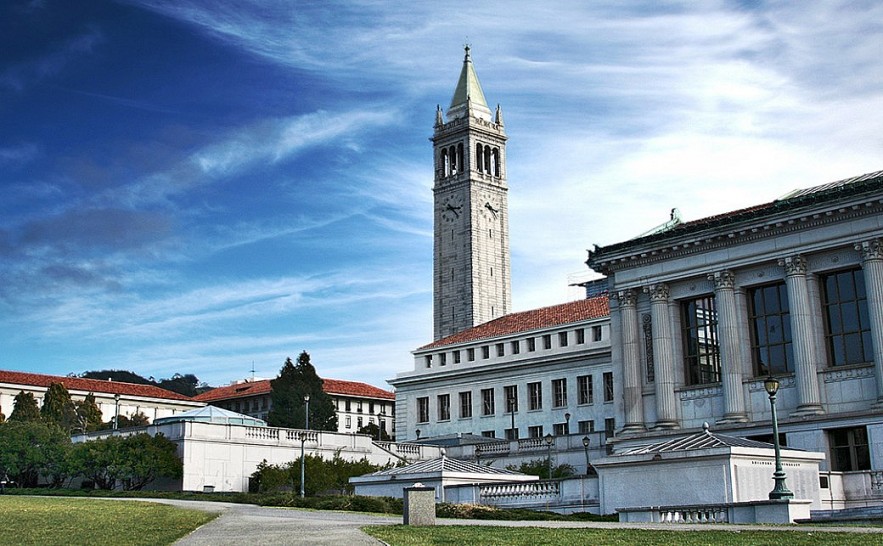 |
| University of California at Berkeley |
Public research universities are holding their ground inside the top 20, while “industry” and “research quality” scores increasingly separate the leaders from the rest. Here’s what changed, what stayed the same, and what applicants should actually do with this ranking.
Read more: Top 10 Most Prestigious Universities in the World 2025 (Times Higher Education)
The 2026 Top 20, at a glance
THE’s US list is derived from the World University Rankings2026 and scores institutions across teaching, research environment, research quality, industry income, and international outlook.
US Top 20 (2026):
-
MIT
-
Princeton
-
Harvard (tied)
-
Stanford (tied)
-
Caltech
-
UC Berkeley
-
Yale
-
University of Pennsylvania
-
University of Chicago
-
Johns Hopkins
-
Cornell (tied)
-
UCLA (tied)
-
Columbia
-
University of Michigan–Ann Arbor
-
Carnegie Mellon
-
University of Washington
-
Duke
-
Northwestern
-
NYU
-
Georgia Tech (tied)
-
University of Illinois Urbana-Champaign (tied)
Two things jump out immediately: (1) MIT remains America’s No.1 in this methodology, and (2) the bottom of the top 20 is now shared (a tie at No.20), which is usually a sign that scores among the “just inside vs just outside” group are getting tighter.
Check full list Here!
What’s changed vs last year (and what it signals)
The “global context” is shifting, and US leaders are adjusting
THE’s World University Rankings 2025 highlights emphasized movement driven by industry engagement and teaching improvements, and specifically noted that MIT rose to No.2 globally while Stanford slipped in that cycle.
Fast-forward to the US 2026 table and you can see the effect of that ongoing pressure: the top US institutions are not just winning on reputation, but on the components that tend to move rankings year-to-year, especially research quality and industry scores. (In 2026, several top schools post extremely high industry and research-quality figures.)
What this means: if a university is climbing or holding steady, it’s often because it’s converting research into influence (citations, collaboration) and real-world uptake (industry income), not because it suddenly became “more famous.”
Public universities aren’t “breaking in” anymore — they’re entrenched
THE explicitly flags strong public representation in 2026, with UC Berkeley, Michigan, and UCLA all in the top 20.
That’s not a novelty; it’s a pattern. The more interesting development is that these schools are no longer the “exceptional publics” in an otherwise private club. They are structural competitors: massive research output, deep funding ecosystems, and global-scale labs.
Applicant takeaway: don’t treat “public” as a synonym for “less elite.” In this ranking model, flagship publics can be more research-intensive than many prestigious private peers, and that affects everything from lab access to publication opportunities.
Read more: Top 20 Best Public Universities in the US, Ranked by US News
The bottom of the top 20 is becoming more STEM-and-scale oriented
Look at who anchors the No.20 tie: Georgia Tech and UIUC — two institutions known for engineering, computing, and high-volume research ecosystems.
That mirrors a broader labor-market reality: technical fields and industry collaboration are increasingly rewarded, both by employers and by ranking indicators.
This aligns with THE’s separate employability-focused reporting for 2026, where US institutions with strong tech and innovation pipelines feature prominently among employer-perceived leaders.
What this means: the “top 20 conversation” is slowly widening beyond legacy prestige into measurable research-to-industry strength.
Read more: Top 10 of the World's Best Universities by Times Higher Education
Public Universities on the Rise: A Clear Shift in US Higher EducationIn recent US university rankings, one change stands out clearly: public universities are rising fast and gaining real influence at the top. Schools that were once seen as strong but secondary options are now competing directly with the most prestigious private universities in the country. Leading this shift are institutions like University of California, Berkeley and University of California, Los Angeles. Both consistently rank among the top universities in the US, thanks to their high-quality research, strong international reputation, and close ties to industry. Their large size allows them to attract major research funding and support a wide range of academic fields. In the Midwest, University of Michigan–Ann Arbor shows how a public university can match private peers in both academic depth and student outcomes. Michigan is especially well known for engineering, business, and public policy, and is often described as a “Public Ivy.” Technology-focused public universities are also gaining attention. Georgia Institute of Technology and University of Illinois Urbana-Champaign stand out for their strengths in computer science, engineering, and artificial intelligence. Strong partnerships with companies help graduates move smoothly into the workforce. |
Recommendations for students (especially international applicants)
Pick by program strength first, ranking second. A top-20 university can be merely “good” in your niche, while a school ranked slightly lower can be world-class in your exact subfield. Use rankings to build a list, then verify via department outcomes, faculty, labs, and internships.
Public flagships can be your best ROI play. If cost matters, schools like Berkeley, UCLA, Michigan, Washington, Georgia Tech, and UIUC can deliver elite research ecosystems with broader access and scale.
If your goal is employment, triangulate. Pair THE’s overall ranking with employability-focused lists and concrete outcomes (internship pipelines, co-ops, placement reports).
Use “International Outlook” as a proxy for global experience — but verify the reality. A high score can signal international collaboration and diversity, yet your day-to-day experience depends on your department, city, and support services.
Bottom line
The 2026 top 20 doesn’t rewrite the hierarchy, but it does sharpen the trendline: research quality, industry relevance, and public-university scale are increasingly central to who leads and who threatens to break further upward. For applicants, the smartest strategy is simple: let rankings open doors, then let fit and outcomes close the deal.