What Really Happened in the Alex Pretti Shooting? Look at the Video Evidence

 |
| CNN showed the shocking footage showing when Pretti was fatally shot by the officer |
The fatal shooting of Alex Jeffrey Pretti, a 37-year-old ICU nurse, by federal agents in Minneapolis has become one of the most closely scrutinized law enforcement incidents of the year. As official statements, eyewitness accounts, and multiple videos continue to circulate, a central question remains unresolved: what actually happened in the moments before Pretti was killed?
A review of the available footage does not deliver a single, definitive answer. Instead, it reveals a fast-moving, chaotic encounter that has fueled sharply different interpretations.
Read more: New Video Suggests Alex Pretti Was Disarmed Before Minneapolis Border Patrol Shooting?
The Official Federal Narrative
The Department of Homeland Security has said Pretti approached Border Patrol officers during a federal enforcement operation while carrying a 9 mm semiautomatic handgun. According to DHS, officers issued commands, attempted to disarm him, and one agent fired in self-defense after perceiving an imminent threat.
Officials confirmed that Pretti legally owned the firearm and held a valid Minnesota concealed-carry permit. A handgun and ammunition were recovered at the scene. However, authorities have not publicly stated that Pretti pointed the weapon, nor have they explained why the gun is not clearly visible in most bystander footage.
Alex Pretti disarmed before shooting?
Video One: The Distant, Wide-Angle View
The first widely circulated video is filmed from across the street. In this footage, Pretti appears stationary and holding a cellphone, filming or observing federal agents during tense street activity.
At this distance, no firearm is visible. The video captures officers advancing, yelling commands, and deploying pepper spray. Moments later, Pretti is taken to the ground.
This video supports the view that Pretti was not overtly threatening in the seconds before physical contact began. However, its distance and angle limit what can be seen around his waist or inside his clothing.
Read more: Trump Defends Federal Agents After Alex Pretti Shooting in Minnesota
Video Two: The Mid-Range Street-Level Clip
A second video, recorded from much closer, shows the confrontation escalating. Pretti is seen assisting a woman who appears to have been pushed or sprayed by officers. As agents approach, they focus on Pretti, not the surrounding crowd.
This clip shows pepper spray being deployed and multiple agents tackling Pretti almost simultaneously. The struggle is intense and brief, with officers shouting warnings. Once again, no firearm is clearly visible in Pretti’s hands.
Critics argue this suggests Pretti did not pose an immediate threat. Supporters of the federal account counter that a concealed weapon would not necessarily be visible from this angle.
 |
| Pretti was pronounced dead at the scene |
Video Three: The Close-Up, Disputed Frames
The most controversial footage consists of short, close-range clips that have been slowed, zoomed, and analyzed frame by frame.
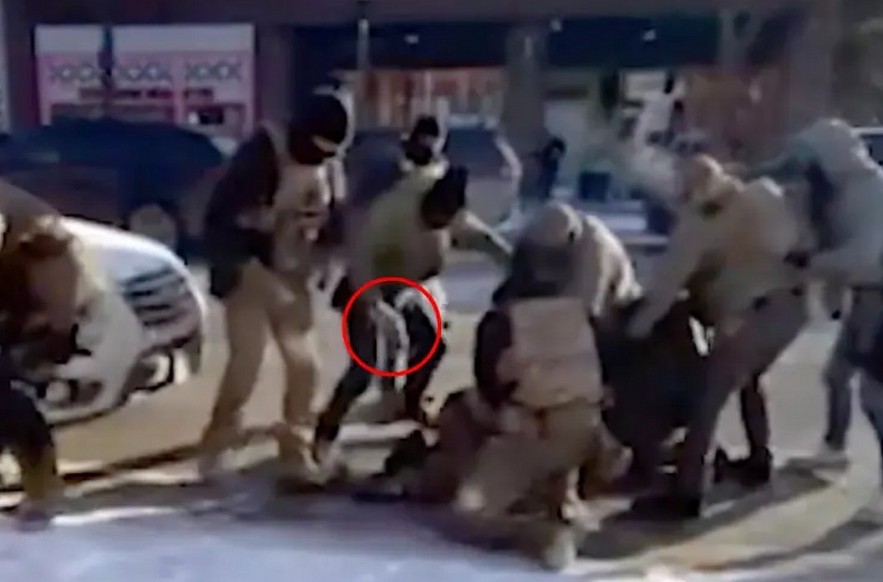
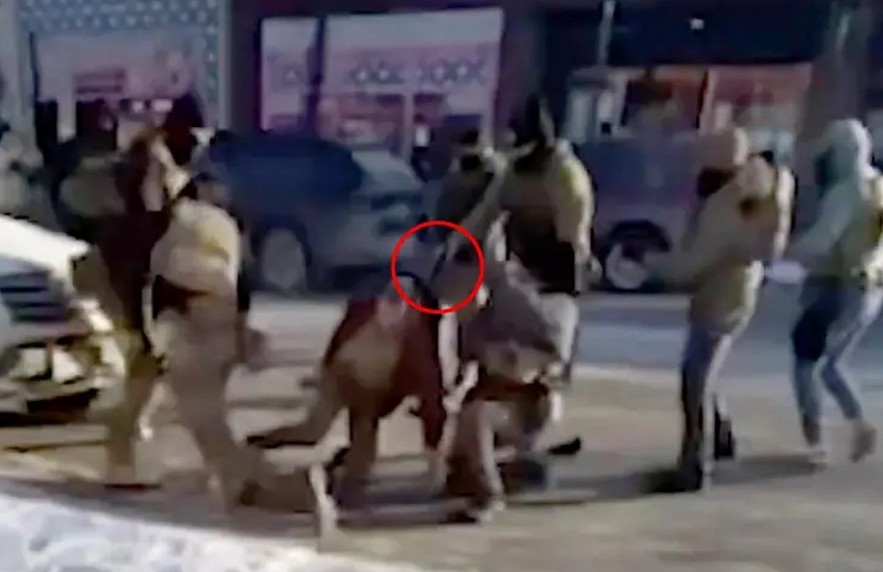
In these moments, an agent appears to reach toward Pretti’s waistband while another officer shouts that he has a gun. In one frame, an agent is seen holding a handgun, raising the possibility that the weapon had already been pulled away from Pretti.
This is where interpretations diverge sharply:
-
One view holds that agents were in the act of disarming Pretti when they feared he could regain control of the weapon.
-
Another view suggests Pretti may have already been restrained or disarmed when lethal force was used.
The video does not clearly show who had control of the gun at the exact moment shots were fired.
Video Four: Audio Without Clarity
Several clips capture audio more clearly than visuals. Officers can be heard shouting warnings and calling out the presence of a gun. Gunshots follow within seconds.
However, audio alone does not establish whether the threat was still active. Legal standards for deadly force hinge not on whether a weapon exists, but whether there is an immediate, unavoidable danger at the moment force is used.
The Shooting Itself: Seconds That Matter
Shots are fired shortly after the physical struggle intensifies. Some footage suggests shots continued after Pretti collapsed to the ground. Other angles obscure whether those shots occurred as he was falling or once he was down.
Without synchronized, continuous footage, the precise sequence remains uncertain.
Federal agents involved were not wearing publicly released body cameras, leaving bystander video as the primary evidence.
Who Alex Pretti Was — and Why That MattersCourt records show Pretti had no criminal history. Minneapolis police said his only prior law-enforcement interactions involved minor parking violations. Family members confirmed he legally owned a handgun but said he rarely carried it. They also stated that Pretti had attended protests and was filming events with his phone. These facts do not determine whether force was justified, but they shape public perception and raise questions about proportional response. Read more: Who Was Alex Jeffrey Pretti - ICU Nurse Fatally Shot by Federal Agents in Minneapolis – Latest Updates |
Why the Videos Don’t Settle the Case
Video evidence can clarify events, but it can also mislead when fragments are mistaken for the whole. In the Pretti case:
-
No single video captures the entire encounter
-
Key moments are blocked or obscured
-
Angles change interpretations
-
Audio and visuals are often misaligned
Experts note that reasonable people can watch the same footage and reach different conclusions.
What Remains Unknown
Critical unanswered questions include:
-
Was Pretti fully disarmed before shots were fired?
-
Did officers clearly communicate during the struggle?
-
Why has federal body-camera footage not been released?
-
Did agents follow use-of-force policy precisely?
Multiple investigations remain ongoing.
A Case Defined by Perspective, Not Proof
The Alex Pretti shooting is not defined by a lack of evidence, but by conflicting evidence. Each video adds context, but none provide certainty. Until all footage and official records are released, the case will remain suspended between competing narratives — a reminder that in moments of chaos, truth is often fragmented.