From Rumor to Reality Check: Why Erika Kirk’s “Dating History” Became the Internet’s Latest Obsession

 Charlie Kirk Memorial: Donald Trump, Erika Kirk, JD Vance & Full Speaker Line-Up Detailed Charlie Kirk Memorial: Donald Trump, Erika Kirk, JD Vance & Full Speaker Line-Up Detailed |
 Who Is Erika Kirk? Biography, Career, Family, and New Role After Charlie Kirk’s Assassination Who Is Erika Kirk? Biography, Career, Family, and New Role After Charlie Kirk’s Assassination |
In the age of TikTok timelines and X threads that travel faster than facts, it takes very little for a private name to become a public headline. That’s exactly what happened to Erika Kirk, whose name exploded across social platforms after posts claimed overlapping or sequential relationships involving Cabot Phillips and Tyler Massey.
The claims, amplified by screenshots, speculation, and reaction videos, created a perfect storm: recognizable names, implied timelines, and the irresistible pull of “receipts.” But as the conversation ballooned, so did the confusion. What’s actually known? What’s inferred? And why did this particular story catch fire?
This article unpacks the trend—carefully, responsibly, and without adding fuel to the rumor mill.
How the story went viral
The spark came from short-form videos and posts asserting that Erika Kirk had dated Cabot Phillips and Tyler Massey in close succession, or with overlap. Within hours, creators stitched the claims, added commentary, and invited audiences to “decide for themselves.”
Algorithms did the rest.
Searches for “Erika Kirk dating history” spiked. Threads multiplied. Some posts treated the claims as fact; others questioned their accuracy. A few called for proof. Many simply shared the drama.
This pattern is familiar. Viral stories thrive on simplicity (two or three recognizable names), ambiguity (no clear confirmation), and participation (audiences can weigh in). The result is momentum—even when evidence is thin.
Who is Erika Kirk?
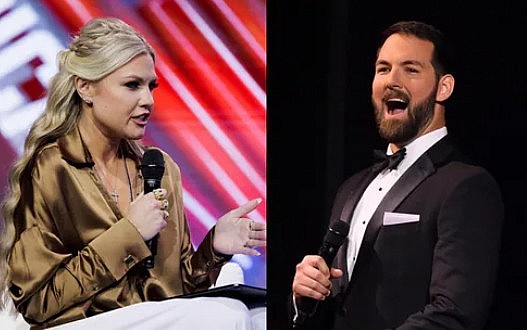 |
| Erika Kirk and Cabot Phillips. |
Despite the volume of chatter, Erika Kirk is not a celebrity with an extensive public record. She appears to be a private individual or low-profile online presence whose name surfaced primarily through association with public figures.
That distinction matters. Unlike entertainers or elected officials, private individuals do not typically maintain detailed public timelines of their relationships. When rumors fill that vacuum, speculation can quickly be mistaken for confirmation.
To date, there has been no comprehensive, on-the-record statement from Kirk verifying the claims as presented online. The absence of confirmation hasn’t slowed the conversation—but it should slow conclusions.
The public figures named in the claims
Cabot Phillips
Cabot Phillips is known for his commentary and media appearances. His public footprint makes him a recognizable anchor for viral speculation, even when personal details are not publicly discussed.
Tyler Massey
Tyler Massey has also been mentioned across threads and videos, often without context beyond screenshots and secondhand accounts.
In both cases, no verified statements have confirmed a relationship timeline matching the viral narratives. As with many internet trends, names travel faster than facts.
What evidence is being shared—and what it proves
Most viral posts rely on:
-
Cropped screenshots of messages or comments
-
Photos without dates or context
-
Anonymous claims presented as insider knowledge
These artifacts can suggest connections, but they rarely prove timelines or exclusivity. Without dates, corroboration, or direct statements, they remain fragments—easy to misinterpret and impossible to verify conclusively.
This is where online audiences often conflate plausibility with truth.
Why this story resonated
Three forces pushed this topic into the spotlight:
-
Parasocial curiosity
Audiences feel invested in the lives of public figures—and by extension, the people linked to them. -
The “receipt culture” era
Screenshots are treated as evidence, even when incomplete. The format feels authoritative. -
Algorithmic reward
Platforms reward engagement, not accuracy. Each reaction video boosts visibility, regardless of verification.
The result is a feedback loop: attention creates more content, which creates more attention.
The cost of viral speculation
While trending stories can feel harmless, they carry real consequences—especially for people without public relations teams.
For private individuals:
-
Online speculation can affect personal relationships and employment
-
Inaccurate claims can linger indefinitely in search results
-
Silence is often interpreted as guilt or confirmation, even when it’s simply a choice for privacy
For readers, the risk is subtler but real: mistaking popularity for truth.
Separating fact from narrative
Here’s what can responsibly be stated at this point:
-
Erika Kirk’s name trended due to unverified dating claims involving Cabot Phillips and Tyler Massey
-
The claims are based largely on circumstantial online material, not confirmed statements
-
No authoritative timeline has been publicly established
-
The viral conversation says more about internet dynamics than about proven personal history
That doesn’t make the story uninteresting—but it does change how it should be read.
Why “dating history” trends keep winning
Stories like this thrive because they sit at the intersection of:
-
Celebrity adjacency
-
Mystery
-
Low barrier to participation
They invite readers to connect dots, even when the dots are faint. In that sense, the Erika Kirk trend isn’t an anomaly—it’s a case study in how digital narratives form.
FAQs
Why is Erika Kirk trending?
Her name went viral after social media posts claimed romantic links to Cabot Phillips and Tyler Massey.
Are the dating claims confirmed?
No. There are no verified public statements confirming the timelines as described online.
Is Erika Kirk a public figure?
She appears to be a private individual whose visibility stems from viral association, not independent public work.
Why do stories like this spread so fast?
They combine recognizable names, uncertainty, and high engagement formats that algorithms amplify.
What should readers keep in mind?
Viral does not mean verified. Context and confirmation matter.
The takeaway
The Erika Kirk trend isn’t just about who dated whom. It’s about how quickly narratives form online—and how easily speculation can harden into “truth” without ever being proven.