What Is Bella 1? Inside the Chase, Disappearance, and Seizure of a Sanctioned Oil Tanker

 What Comes Next for Venezuela? What Comes Next for Venezuela? |
 Who Could Be Venezuela’s Next President? Delcy Rodríguez or María Machado Who Could Be Venezuela’s Next President? Delcy Rodríguez or María Machado |
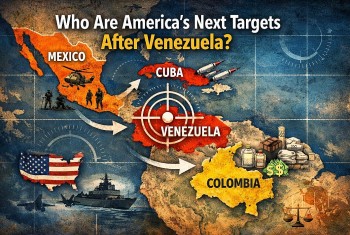 Who Could Be Next After Venezuela? US Strategy in the Western Hemisphere Who Could Be Next After Venezuela? US Strategy in the Western Hemisphere |
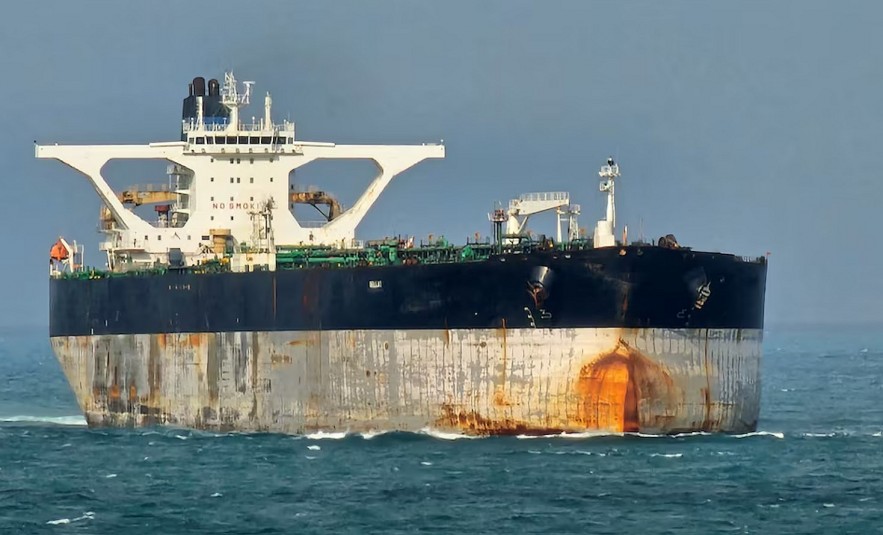 |
| US seizing Venezuela-linked, Russian-flagged oil tanker after weeks-long pursuit |
In the final days of 2025, a Venezuela-linked oil tanker quietly left the Caribbean and set off one of the most unusual maritime enforcement operations in recent years. First known as Bella 1, later sailing as Marinera, the vessel became the focus of a transatlantic chase involving U.S. forces, a mid-voyage identity change, and reported Russian naval involvement.
A tanker under sanctions scrutiny
According to U.S. officials cited by the New York Post and Reuters, Bella 1 was a large crude oil tanker suspected of transporting oil linked to Venezuela in violation of U.S. sanctions. By December 2025, Washington had intensified efforts to intercept vessels believed to be part of what officials often call a “shadow fleet” — tankers with opaque ownership and irregular tracking behavior used to move sanctioned oil.
U.S. Coast Guard units operating near Venezuelan waters identified Bella 1 as a vessel of interest and prepared to board it for inspection, a standard enforcement step under U.S. sanctions authorities, according to CBS News.
The failed boarding and sudden escape
In late December 2025, Coast Guard assets moved to approach Bella 1. The boarding never occurred. Instead, the tanker altered course and sped away from Venezuelan waters, heading into the open Atlantic, U.S. officials told the New York Post.
At that stage, the incident could have ended as another failed interdiction. Instead, U.S. authorities decided to continue tracking the vessel.
Disappearance — and a new identity
Shortly after leaving the Caribbean, Bella 1 disappeared from routine tracking systems. When it re-emerged days later, it was no longer sailing under its original name.
Reporting by The Maritime Executive and later confirmed by Reuters said the tanker had:
-
Changed its name to Marinera
-
Re-registered under a Russian flag
-
Updated its identification data while already underway
Maritime experts quoted by those outlets noted that while ships can legally change flags, doing so mid-voyage — especially while under pursuit — is highly irregular and widely viewed as an attempt to evade enforcement. U.S. officials rejected the legitimacy of the reflagging, saying it did not shield the vessel from sanctions action.
A weeks-long Atlantic pursuit
Rather than disengage, U.S. agencies expanded the operation. Surveillance aircraft, satellite monitoring, and naval coordination were used to follow the tanker as it crossed thousands of miles of ocean, according to the Wall Street Journal.
By early January 2026, Marinera was operating in the North Atlantic, far from Venezuelan waters and closer to Europe than the Americas. Officials familiar with the operation told U.S. media that allowing a sanctioned tanker to escape simply by renaming itself would undermine sanctions enforcement.
Russian naval presence raises stakes
As the tanker moved north, reports emerged of Russian naval activity in the same region. Reuters reported that Russia had deployed surface vessels and at least one submarine near the tanker’s route.
Moscow argued that the ship was legally Russian-flagged and therefore entitled to protection, and it lodged diplomatic objections to U.S. actions. Washington disputed that claim, maintaining that the reflagging was invalid and that the tanker remained subject to sanctions enforcement.
Despite the tension, neither side reported direct confrontation at sea.
Boarding in international waters
The pursuit ended in early January 2026. According to the New York Post and Reuters, U.S. forces — including Coast Guard and military personnel — boarded the tanker in international waters between Iceland and the British Isles.
The boarding was described as controlled and professional. There were no reports of resistance from the crew. Once aboard, U.S. authorities secured the vessel, reviewed documentation, and placed it under U.S. control pending legal proceedings.
Investigation continues
Following the seizure, U.S. authorities began examining the tanker’s ownership structure, the legality of its mid-voyage reflagging, and the origin and destination of its cargo, according to Reuters. Legal proceedings are expected to determine whether the vessel and its cargo will be forfeited.
Both U.S. and Russian officials declined to release detailed operational information, citing legal and security considerations.
A rare public case
Sanctions enforcement at sea is often opaque. The Bella 1 — later Marinera — episode stands out because of its duration, geographic scope, and the involvement of a major naval power.
From a near-miss off Venezuela to a boarding in the icy North Atlantic, the tanker’s journey illustrates how modern sanctions enforcement can stretch across oceans — and how quickly a commercial vessel can become entangled in global geopolitics.