Who Will Lead Iran Next After Khamenei’s Death? The Key Contenders

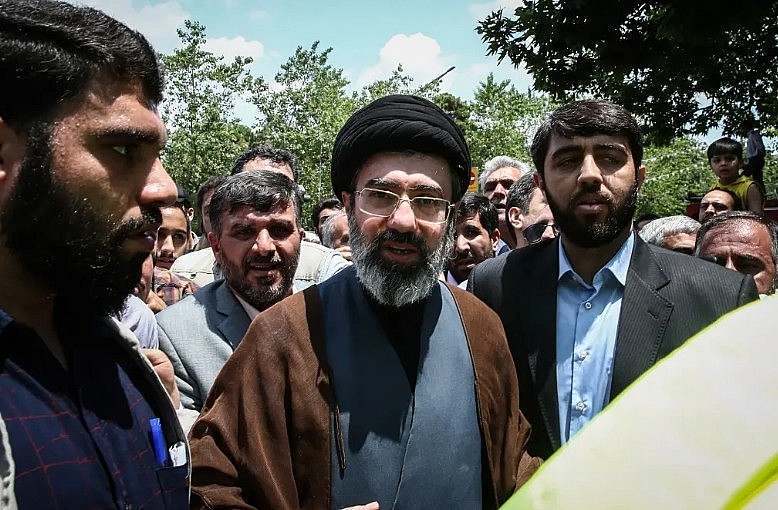 |
| Mojtaba Khamenei, 56, is considered a potential successor to the Islamic Republic, ruling like his father would. picture alliance via Getty Images |
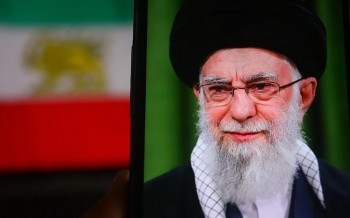
Iran is entering one of the most consequential political transitions in its modern history. On February 28, 2026, reports confirmed that Ayatollah Ali Khamenei, Iran’s Supreme Leader since 1989, has died at age 86 amid a joint U.S.–Israeli military operation that struck Iran’s leadership centers. His death ends nearly four decades of rigid theocratic rule and raises urgent questions: Who will lead Iran next? What is the process for succession? And how might this change Iran’s future at home and in world affairs?
Why the Succession Matters
As Supreme Leader, Khamenei wielded extraordinary authority — controlling Iran’s military, the powerful Islamic Revolutionary Guard Corps (IRGC), intelligence agencies, and key economic sectors. He was more than a religious figure; he shaped foreign policy, nuclear strategy, and internal security. His death leaves a vacuum at the top of a state where power is tightly centralized and political space is limited.
This moment is not a routine leadership change. It comes amid heightened regional conflicts, sustained economic stress, and popular dissatisfaction seen in anti-government protests in recent years. The next leader will determine not just Iran’s domestic course, but also its posture toward the U.S., Israel, the nuclear impasse, and neighbours across the Middle East.
Iran’s Succession System: How the Next Leader Is Chosen
Unlike presidential politics in many countries, Iran’s Supreme Leader is selected by a clerical panel, not by popular vote. The Constitution specifies that:
-
An Assembly of Experts — an 88-member body of elected Shiite clerics — is responsible for choosing the new Supreme Leader.
-
This Assembly also has the constitutional authority to remove a supreme leader, though it has never exercised that power.
-
Members of the Assembly are elected by the public, but all candidates must first be approved by the Guardian Council, another clerical body.
Iranian law also allows for a temporary leadership council to take over if the Assembly of Experts cannot immediately appoint a new Supreme Leader. This transitional body includes the President, the head of the judiciary, and a representative of the Guardian Council.
In the current moment, that could involve Iran’s President Masoud Pezeshkian (a more moderate figure elected in 2024) and justice chief Gholamhossein Mohseni Ejei working collectively as a placeholder team, though this is a temporary measure.
Who Are the Key Contenders?
Predicting Iran’s next Supreme Leader is challenging because succession deliberations are usually secretive, and clerical politics are opaque. Nevertheless, analysts and regional media have highlighted several potential figures:
1. Senior Clerics Within the Theocratic Establishment
According to multiple reports, figures with substantial religious credentials and ties to Iran’s clerical elite include:
-
Ayatollah Alireza Arafi – A senior cleric with significant standing within the religious establishment.
-
Ayatollah Mohsen Araki – Another experienced figure within the system’s conservative circles.
-
Ayatollah Hashem Hosseini Bushehri and Ayatollah Gholam Hossein Mohseni Ejei – Both considered influential in clerical and state structures.
-
Hojjat-ol-Eslam Mohsen Qomi – A cleric with security and political ties.
These names reflect the likelihood that the Assembly of Experts may choose someone able to balance religious legitimacy and political stability.
2. Khamenei’s Family and Protégés
In the past, state media and some analysts have suggested that Mojtaba Khamenei, a son of the late Supreme Leader, could be considered, although he has never held formal government office. A direct family succession could provoke controversy, as it would resemble a hereditary dynasty more than a theocratic appointment.
3. Hybrid or Compromise Leaders
Some sources argued before Khamenei’s death that he had privately identified preferred successors, including powerful clerics like Gholam-Hossein Mohseni-Ejei, his chief of staff Ali Asghar Hejazi, or more moderate figures like Hassan Khomeini (a grandson of the Islamic Republic’s founder).
If the Assembly seeks to ease internal tensions and present a different face to the world, a candidate with some reformist ties might be appealing. But that outcome would face resistance from hard-liners and security elites.
What Comes Next and Why It’s Uncertain
Selecting a new Supreme Leader is both a clerical and political process. The Assembly of Experts must convene urgently, but timing and outcome are uncertain. Iran’s constitution mandates swift action, yet infighting, factional rivalries, and external pressures complicate the decision.
Beyond the formal mechanisms, power blocs such as the IRGC — which wields enormous influence in security and political spheres — could shape the transition behind the scenes. Historically, the IRGC has acted as a guardian of the regime’s core interests and could oppose any candidate who might weaken its position.
The Road Ahead
What happens after Khamenei will shape Iran’s direction on nuclear policy, regional alliances, and domestic governance. If the next leader tilts toward moderation, it may open avenues for diplomacy. If hard-liners consolidate power, tensions with the West and neighbouring states could deepen.
At this moment of historic transition, Iran’s succession process reveals both the resilience and fragility of the Islamic Republic’s structure — and the world is watching closely as clerics and power elites decide who will steer Iran into its next chapter.