Why New York’s Airports Are Hit Hardest by Winter Storms as 1,800 Flights Are Cancelled


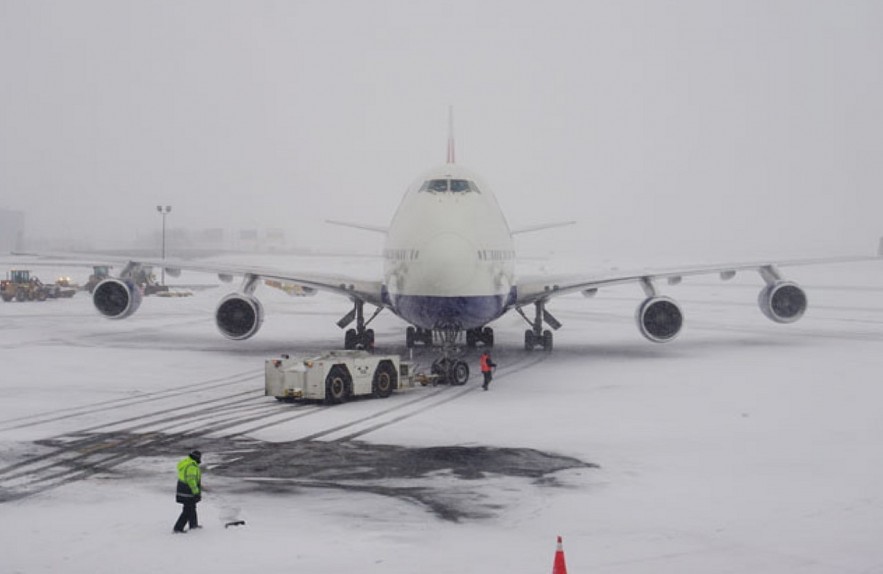 |
| A winter storm cancelled over 1,800 US flights. Here’s why New York’s airports suffer the most and how snow in NYC ripples across the entire air travel network. |
When a winter storm barrels through the Northeast, flight cancellations are expected. What surprises many travelers is how quickly New York City’s airports grind to a halt compared to other major US hubs.
On Friday afternoon, as winter storm warnings stretched from New York City through northeast New Jersey and into southern New England, airlines cancelled 1,802 flights and delayed more than 22,000 nationwide, according to FlightAware. Nearly half of those cancellations were tied to New York’s three major airports: LaGuardia, JFK, and Newark Liberty.
Detroit and Boston also saw significant delays, but the disruption was far more concentrated in the New York region. The reason is not just snow. It is how New York’s airports are built, scheduled, and interconnected with the rest of the US air system.
Read more: What Travelers Can Still Do When Winter Storms Cancel Hundreds of Flights
A perfect storm of congestion and geography
Unlike many large US airports, New York’s airports operate with little margin for error even on clear days.
LaGuardia Airport is one of the most space-constrained major airports in the country. Its short runways, limited taxiways, and lack of room for aircraft to park during disruptions mean even light snow can cause cascading delays. JFK, while larger, handles a massive mix of international and domestic flights, making rescheduling during weather events far more complex. Newark Liberty, a critical United Airlines hub, sits at the intersection of some of the busiest air corridors on the East Coast.
When snow reduces runway capacity, the entire system backs up almost immediately.
“In New York, you don’t need a blizzard to cause chaos,” said a former airline operations manager familiar with Northeast weather disruptions. “You just need reduced visibility and steady snowfall during peak hours.”
Snowfall timing matters more than snowfall totals
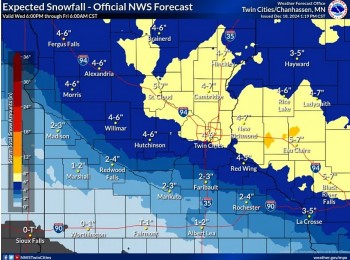
According to the National Weather Service, some areas in the storm’s path could receive up to 10 inches of snow in the heaviest bands. But aviation experts say timing is often more disruptive than accumulation.
This storm arrived during the Friday afternoon and evening rush, when airports are operating at or near maximum capacity. De-icing queues grow longer, aircraft turnaround times increase, and crews begin to time out under federal duty limits.
By contrast, cities such as Detroit are designed for frequent winter weather. Runways are longer, snow-removal fleets are larger, and flight schedules tend to have more built-in flexibility.
“Detroit gets hit harder by snow, but New York gets hit harder by consequences,” said an aviation consultant.
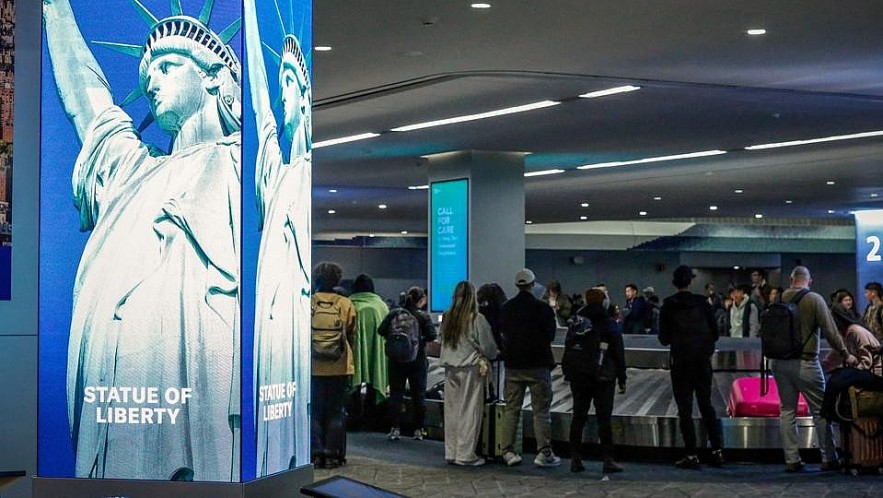 |
| New York City’s John F. Kennedy International Airport is the hardest hit, with more than 300 flights scheduled for Friday already cancelled |
Why New York amplifies nationwide delays
New York’s airports are not just local facilities. They are national choke points.
Flights into LaGuardia, JFK, and Newark feed passengers and aircraft into destinations across the country. When those inbound flights are cancelled or delayed, planes and crews fail to arrive where they are needed next. A grounded jet in Newark can mean a delayed departure hours later in Florida, Texas, or California.
This ripple effect explains why airlines often cancel New York flights preemptively during winter storms. It is a strategic move to prevent wider network collapse.
FlightAware data showed that while Detroit and Boston experienced notable disruptions, the concentration around New York far exceeded other cities. The impact radiated outward, affecting schedules nationwide.
The airspace problem most travelers never see
Another hidden vulnerability is airspace congestion.
The airspace over the Northeast is among the most complex in the world. Flights arriving and departing from New York share crowded corridors with Boston, Philadelphia, and Washington, DC. When weather reduces spacing between aircraft, air traffic control must slow the entire region.
Snow removal on runways is only part of the equation. Reduced arrival rates, holding patterns, and ground delay programs all contribute to cancellations long before planes reach the gate.
This is why travelers sometimes see flights cancelled even when conditions at their departure airport seem manageable.
Why airlines cancel instead of delay
To passengers, cancellations feel extreme. But from an airline’s perspective, they are often the least damaging option.
Delays stack unpredictably during winter storms. Crews exceed duty limits. Aircraft miss maintenance windows. Passengers misconnect across the network. Cancelling early allows airlines to reposition planes and crews once conditions improve.
New York flights are often first on the chopping block because cancelling one JFK or Newark flight can prevent multiple downstream disruptions elsewhere.
Could this get worse in the future?
Climate experts warn that winter storms in the Northeast are becoming more volatile. While overall snowfall averages may decline, extreme events with heavy, fast-falling snow are becoming more common.
For airports already operating near capacity, that volatility poses growing risks. Infrastructure upgrades, expanded de-icing facilities, and schedule reforms could help, but those changes are slow and expensive.
Until then, New York’s airports will remain especially vulnerable whenever winter weather collides with peak travel periods.
FAQs
Why are New York airports hit harder than other cities during winter storms?
Because they operate at extremely high capacity, have limited space, congested airspace, and serve as key national hubs. Even small disruptions quickly escalate.
How many flights were cancelled during this storm?
As of Friday afternoon, 1,802 flights were cancelled and more than 22,000 were delayed nationwide, according to FlightAware.
Does heavier snowfall always mean more cancellations?
Not necessarily. Timing, wind, visibility, and airport design often matter more than total snowfall amounts.
Why do airlines cancel flights early instead of waiting?
Early cancellations help airlines prevent larger network disruptions, crew shortages, and aircraft misplacement across the country.
Which airports were most affected?
LaGuardia, JFK, and Newark Liberty accounted for nearly half of all cancellations, with Detroit and Boston also seeing significant impacts.