Where Are the Chagos Islands? Why a Remote Archipelago Matters to the US, UK, and Trump

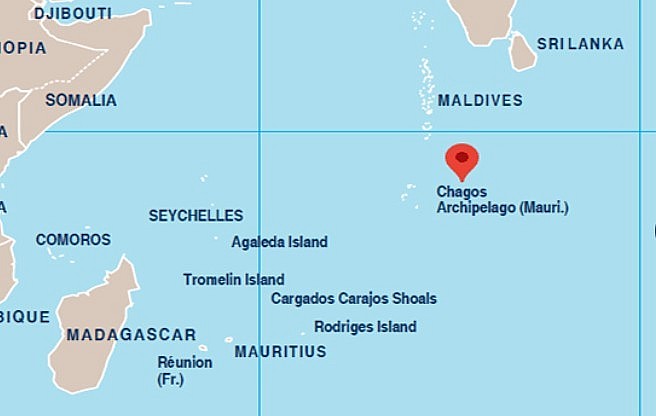 |
| The Chagos Archipelago has been part of the territory of the Republic of Mauritius since at least the eighteenth century when the Republic of Mauritius was a French colony and was known as Ile de France |
The Chagos Islands are among the world’s least-visited territories, yet they sit at the crossroads of global power politics. This scattered group of coral atolls in the middle of the Indian Ocean has become a flashpoint again after Donald Trump criticized Britain’s plan to transfer sovereignty of the islands to Mauritius, calling the move reckless and dangerous.
To understand why a remote archipelago has drawn such strong reactions, it helps to look beyond the map and into the military, legal, and human history tied to the islands.
Where exactly are the Chagos Islands?
The Chagos Archipelago lies in the central Indian Ocean, roughly halfway between Africa and Indonesia. It is about 500 kilometers south of the Maldives and more than 2,000 kilometers east of mainland Africa. Despite this isolation, the islands sit close to major sea lanes linking the Middle East, Asia, and Africa.
Geographically, the archipelago consists of more than 60 low-lying islands grouped into several atolls. The most important is Diego Garcia, the largest island and the only one with permanent human presence today.
For decades, the islands were administered by the UK as the British Indian Ocean Territory, even though Mauritius has long claimed they were unlawfully separated during the colonial era.
Why does the US have a military base on Diego Garcia?
The short answer is location. The longer answer is strategy.
Diego Garcia hosts a major US–UK military base that has played a quiet but central role in American power projection since the Cold War. From this island, US forces can reach the Middle East, South Asia, East Africa, and Southeast Asia without relying on host nations or unstable regional politics.
The base has supported operations during conflicts in Iraq, Afghanistan, and the broader Middle East, serving as a logistics hub for bombers, naval forces, surveillance aircraft, and pre-positioned equipment. Its remoteness is a feature, not a flaw. There are no nearby cities, no civilian air traffic, and minimal political risk compared with bases on foreign soil.
This is why US officials across administrations have viewed Diego Garcia as one of the most secure overseas military locations in the world.
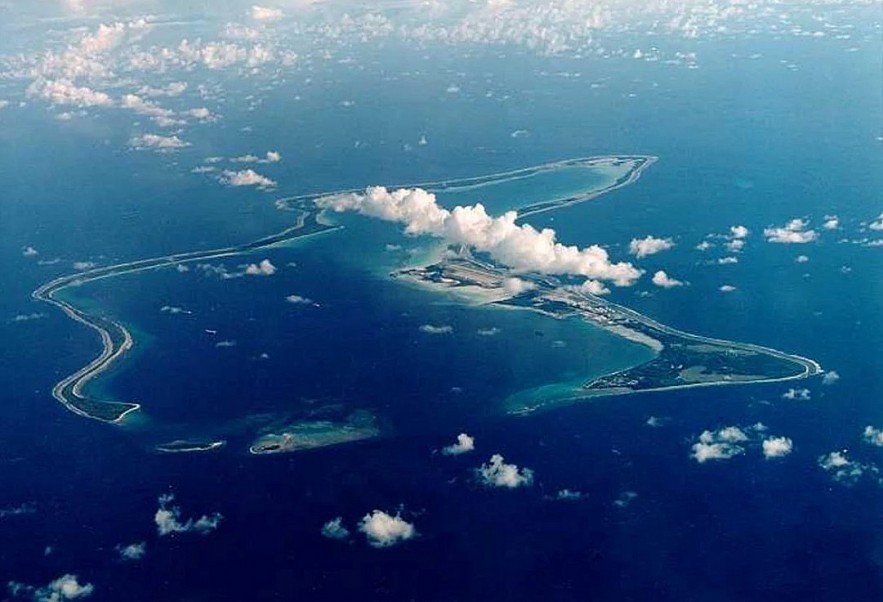 |
| A military base on the Chagos Islands |
Why is Britain handing the islands to Mauritius?
Britain’s decision did not emerge overnight. It followed years of mounting legal and diplomatic pressure.
In 2019, the International Court of Justice issued an advisory opinion stating that the UK’s continued control of the Chagos Islands was unlawful and that sovereignty should be returned to Mauritius. While the ruling was not legally binding, it carried significant weight. The UN General Assembly later echoed that position.
Facing isolation and the risk of losing influence over the islands altogether, the UK negotiated a deal with Mauritius. Under the proposed arrangement, sovereignty would transfer to Mauritius, while the US and UK would lease Diego Garcia for roughly 99 years, preserving military access.
British officials argue this is the safest way to secure the base long term. Critics say it sets a precedent and weakens Western strategic control in the Indian Ocean.
Why did Trump oppose the move?
Trump’s criticism reflects a broader concern among some US security figures: that transferring sovereignty could eventually threaten American access or invite rival powers into the region.
Although the lease protects the base on paper, skeptics argue that future governments in Mauritius could renegotiate terms under pressure from other global players. For Trump, the issue fits into a familiar narrative about allies making concessions that could undermine US security interests.
Supporters of the deal counter that ignoring international law would have created even greater risks, including sanctions, legal challenges, or forced withdrawal under worse conditions.
The human story behind the strategy
Any discussion of the Chagos Islands is incomplete without acknowledging the Chagossians, the original inhabitants.
Between the late 1960s and early 1970s, the islanders were forcibly removed to make way for the military base. Many were resettled in Mauritius and the UK, often in poverty. Their struggle for the right to return has lasted decades and remains unresolved.
While the sovereignty deal addresses international law, critics say it still leaves Chagossians without clear guarantees of resettlement or compensation.
FAQs: Chagos Islands explained
Where are the Chagos Islands located?
They are in the central Indian Ocean, south of the Maldives and far from any continental mainland.
Who controls the Chagos Islands now?
They are currently administered by the UK, but a transfer of sovereignty to Mauritius is planned.
Why is Diego Garcia so important to the US?
Its location allows the US military to operate across multiple regions without relying on unstable host countries.
Will the US lose its military base after the handover?
Under the proposed deal, no. The base would remain under a long-term lease.
Can Chagossians return to the islands?
That remains uncertain. Sovereignty transfer does not automatically guarantee resettlement rights.