UK Fans Going to World Cup 2026: The U.S. & Canada Visa Reality You Shouldn’t Ignore





There’s a version of the World Cup that lives in your head long before kickoff.
Flights penciled in. Fixtures circled. A vague idea of where you’ll be when England play their first match. It all feels simple, almost inevitable.
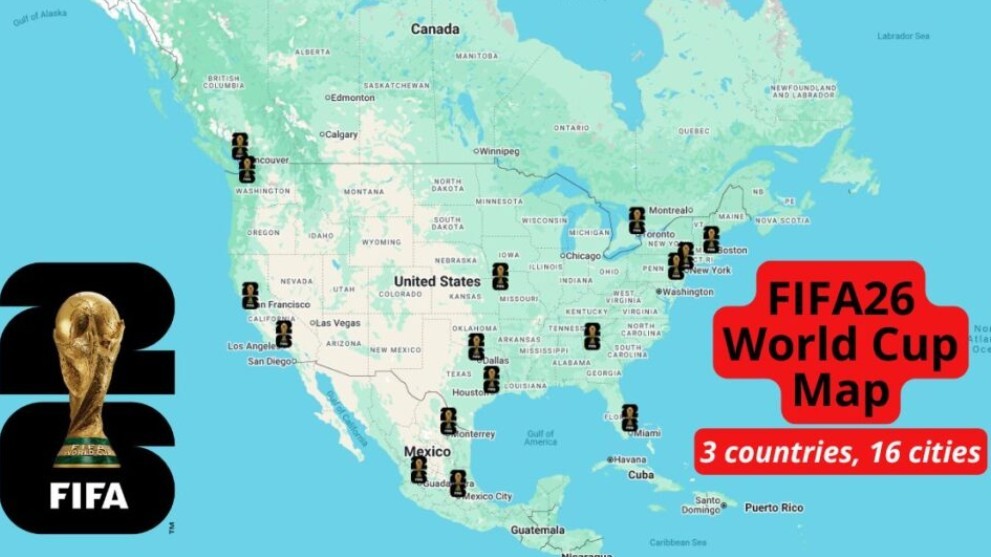
Then you start looking at the map for the FIFA World Cup 2026, and something shifts.
This isn’t one country. It’s three. It’s distances that feel more like intercontinental travel than a football trip. And for fans from the United Kingdom, the quiet, unglamorous question becomes the most important one:
Can you actually move between the United States and Canada without problems?
The answer is yes. But only if you understand the system properly.
Read more: Australia Fans Heading to World Cup 2026: What the Visa Rules Don’t Tell You
 |
| UK Fans Going to World Cup 2026 |
The Simple Version—And Why It’s Not That Simple
On paper, UK fans are in a good position.
You don’t need a traditional visa for short tourist visits to either country. Instead:
- The U.S. requires an ESTA
- Canada requires an eTA
That sounds reassuring. It’s also where many people stop reading.
And that’s exactly where mistakes begin.
The U.S. Side: ESTA Is Easy… Until It Isn’t
Most British travellers will enter the U.S. under the Visa Waiver Program. The process is digital, relatively quick, and familiar to anyone who’s flown across the Atlantic before.
But there’s a subtle misunderstanding that keeps coming up.
An ESTA is not permission to enter the country.
It’s permission to board a plane and ask for entry.
That difference only becomes real when you land, queue up, and speak to a border officer who has the final say.
For most fans, it’s a formality. For a small number, it becomes the most stressful part of the trip.
What matters isn’t just approval. It’s whether your story makes sense:
Why you’re visiting, how long you’re staying, and when you’re leaving.
Canada Feels Easier—But Don’t Switch Off
Canada’s eTA system is smoother, almost deceptively so.
You apply online, often get approved quickly, and move on with your plans. Compared to the U.S., it feels frictionless.
But the principle is the same.
Approval does not guarantee entry.
If your itinerary looks unclear or your travel plans don’t line up, questions will follow. And in a tournament where fans are moving constantly, clarity matters more than ever.
Crossing Between Countries
This is where World Cup 2026 becomes something new.
In previous tournaments, once you arrived, you stayed.
Here, you might cross borders more than once.
A group-stage match in the U.S.
Another in Canada.
A knockout game back in the U.S.
Each crossing resets the process.
You’re not “in the World Cup zone.” You’re re-entering a country, again and again.
That means:
- ESTA must remain valid for the U.S.
- eTA must remain valid for Canada
- Your travel plans must still make sense each time
It’s less like attending a tournament and more like managing a series of international trips stitched together by football.
The Mistake People Will Make—And Regret
It’s easy to get caught up in the excitement and start booking everything at once.
Flights. Hotels. Match tickets.
And only afterwards, almost as an afterthought, sorting travel authorization.
That order feels natural. It’s also backwards.
Because if something goes wrong—an ESTA issue, an unexpected delay, a complication you didn’t see coming—those bookings don’t become memories.
They become losses.
The smarter approach is quieter, less exciting, but far more effective:
Handle your ESTA and eTA first.
Wait for confirmation.
Then commit your money.
What Border Officers Actually Care About
There’s a myth that you need to prepare like you’re going to an interview.
You don’t.
But you do need to be clear.
If someone asks why you’re visiting, your answer shouldn’t sound improvised. If they ask how long you’re staying, you should know. If they ask where you’re going next, your plan should exist.
This isn’t about suspicion. It’s about coherence.
World Cup travel, especially across two countries, can look chaotic from the outside. Your job is to make it look structured.
Timing: The Quiet Advantage
The earlier you sort this, the more control you keep.
Not just over visas, but over everything else: flights, accommodation, flexibility.
A rough timeline that actually works:
- Check your passport early—well before the tournament
- Apply for ESTA and eTA at least 1–2 months ahead
- Only finalize major bookings once approvals are secured
It doesn’t feel urgent now. It will later.
The Situations That Change Everything
Most UK fans will have a straightforward experience.
But there are exceptions that matter:
- Previous visa refusals
- Certain travel histories
- Dual nationality complications
In these cases, you may not be eligible for ESTA and could need a full U.S. visa interview.
That’s not a small detour. It’s a different process entirely, and one that takes time.
What This World Cup Changes
There’s something subtly different about 2026.
The football will still be there. The noise, the emotion, the unpredictability—it doesn’t disappear.
But the journey around it becomes more complex.
You’re not just travelling to a tournament. You’re navigating systems, borders, and decisions that sit quietly behind the spectacle.
For some fans, that complexity will add to the adventure.
For others, it will be the part they remember most.
Final Thought
For supporters from the United Kingdom, getting into the FIFA World Cup 2026 isn’t the hardest part.
Getting in smoothly, moving freely, and avoiding unnecessary stress—that’s where the real difference lies.
And once you’re through that final checkpoint, standing in a stadium somewhere between Los Angeles, Toronto, or Dallas, none of this will feel complicated anymore.
But until then, it’s worth treating your travel plans with the same care as the matches you’re desperate not to miss.