Watch FIFA World Cup 2026 Worldwide - The Three Main Ways: TV, Streaming, And Youtube


It’s the Biggest World Cup Ever — And Watching It Has Never Been More Complicated
The FIFA World Cup has always been a shared global moment. Streets go quiet during kickoff. Friends gather in living rooms, bars, and cafés. Entire countries seem to breathe in rhythm with the game.
In 2026, that feeling returns on an even bigger scale.
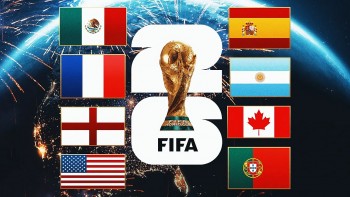
This will be the largest World Cup in history, with 48 teams and 104 matches played across North America.
But while the tournament is expanding on the pitch, the way we watch it is changing just as dramatically.
If you’re expecting to simply turn on your TV and find every match in one place, you might be surprised. Watching the World Cup today is less about finding a channel and more about navigating a small ecosystem of platforms.
The good news is that once you understand how it works, it becomes much easier.
Why You Can’t Watch the World Cup the Same Way Everywhere
There is no global “World Cup app” that works everywhere. FIFA sells broadcasting rights country by country, which means every region has its own official partners.
That’s why:
- A fan in London watches on BBC
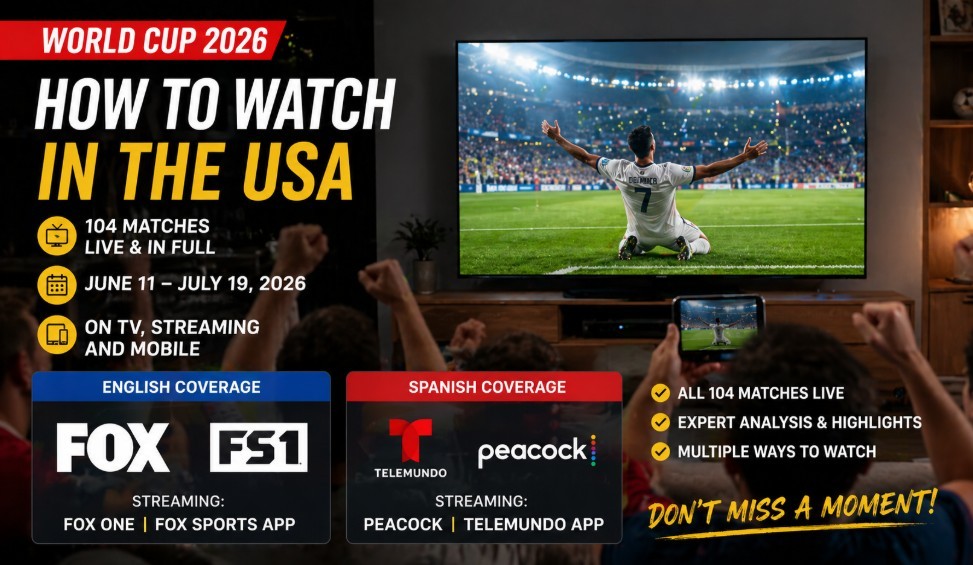
- A fan in New York uses Fox or Peacock
- A fan in Tokyo might switch between NHK and DAZN
It’s not confusing by accident. It’s designed that way.
For FIFA, this system maximizes global reach and revenue. For fans, it means one important rule:
Always start with your local broadcaster.
Read more: FIFA World Cup 2026 USA Host Cities: A Real Traveler’s Guide to All 11 Cities
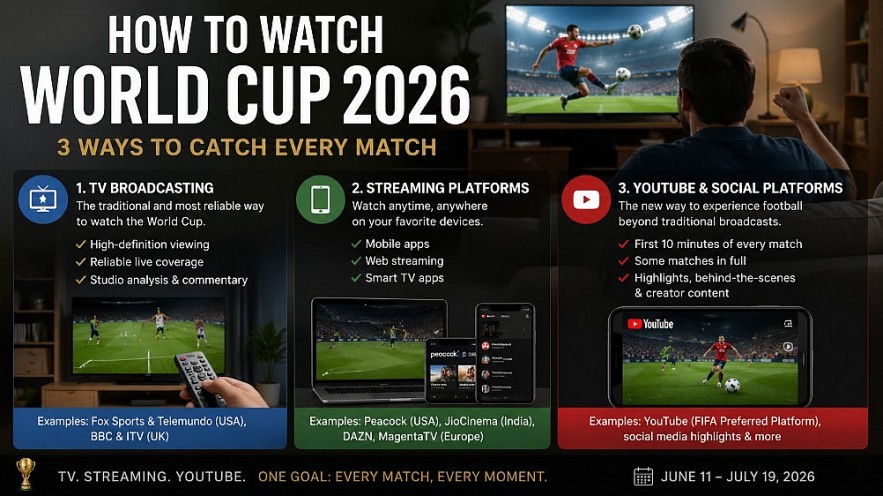 |
| The Three Main Ways to Watch the World Cup in 2026 |
The Three Main Ways to Watch the World Cup in 2026
1. Television Still Matters More Than You Think
Despite all the talk about streaming, television remains the backbone of World Cup coverage.
There is something reassuring about it. You turn it on, the picture is sharp, the commentary is stable, and you don’t worry about buffering at the worst possible moment.
In many countries, especially in Europe, public broadcasters still play a major role. If you’re in the UK, for example, BBC and ITV will likely carry most matches for free. That kind of access is becoming rare in global sports, and it’s worth appreciating.
2. Streaming Is No Longer Optional
If television is the foundation, streaming is now the front door.
Almost every broadcaster offers:
- A mobile app
- A web player
- Smart TV support
In the United States, Peacock gives full Spanish-language coverage. In India, JioCinema is expected to make matches widely accessible. In Germany, MagentaTV complements free TV channels with full tournament coverage.
The pattern is clear:
If you don’t download the app, you’re missing half the experience.
3. The Quiet Rise of YouTube and Social Platforms
One of the most interesting shifts for 2026 is happening outside traditional media.
FIFA has partnered with YouTube as a “preferred platform,” allowing broadcasters to stream short portions of matches and even some full games.
At first glance, this might not seem important. But it changes how fans discover matches.
You might:
- See the first few minutes on YouTube
- Catch a highlight on social media
- Then switch to the official broadcast
It’s a small shift, but it reflects a bigger idea:
The World Cup is no longer just watched. It’s followed, clipped, shared, and rewatched everywhere.
Free vs Paid: The Reality No One Tells You Clearly
One of the most common questions fans ask is simple:
“Will it be free?”
The honest answer is: it depends.
In Some Countries, Yes
Places like the UK and Australia still prioritize free access. Public broadcasters ensure that major matches are available to everyone.
If you live there, you’re lucky.
In Most of the World, It’s a Mix
In Europe, you often get:
- Free matches on national TV
- Full coverage on paid platforms
It’s a compromise that works reasonably well.
In Others, You’ll Need to Pay
In regions like the Middle East or parts of North America, full access often requires:
- Cable subscriptions
- Streaming packages
The upside is higher production quality. The downside is obvious.
FIFA+: Helpful, But Not a Complete Solution
FIFA’s own platform, FIFA+, is worth knowing about. It offers:
- Highlights
- Replays
- Behind-the-scenes content
But it is not a universal live-streaming service.
Think of it as a companion, not the main event.
What Watching the World Cup Actually Feels Like in 2026
There’s a quiet shift happening here that’s easy to miss.
Watching the World Cup used to be simple. One channel. One screen. One shared experience.
Now, it’s layered.
You might start a match on your TV, check stats on your phone, watch a replay on YouTube, and scroll reactions on social media during halftime.
It’s more fragmented. But it’s also more immersive.
And if you set things up right, it can feel even better than before.
Advice That Will Save You Frustration
This is where most guides fall short, so let’s keep it real.
1. Find Your Official Broadcaster First
This solves 80% of your problems immediately.
2. Install the App Before the Tournament Starts
Not during kickoff. Not five minutes before the match. Do it early.
3. Test Your Setup
Log in, check your connection, and make sure everything works. You don’t want to troubleshoot during a penalty shootout.
4. Expect Overlapping Matches
With 104 games, some will happen at the same time. Plan ahead.
5. Avoid “Too Good to Be True” Streams
They often fail at the worst moment. Always.
A Small Personal Recommendation
If you can, try to watch at least one match the “old way”:
Sit down. Turn off notifications. Watch the full 90 minutes without distractions.
Because for all the changes in technology, that feeling hasn’t changed at all.
Final Thought
The FIFA World Cup 2026 is not just bigger. It’s different.
It reflects how we watch everything now: across devices, across platforms, across moments.
But underneath all of that, the core experience is still the same.
A ball, a pitch, and billions of people watching at once.
If you prepare just a little, you won’t miss a single moment.
And when the tournament begins, none of the complexity will matter.
Only the game will.
World Cup 2026 TV & Streaming Guide by Country
| Country / Region | Broadcaster(s) | Streaming Platform(s) | Access Type | How to Watch |
|---|---|---|---|---|
| United States | Fox Sports, Telemundo | Fox Sports App, Peacock | Paid + Partial Free | Cable or streaming subscription |
| Canada | Bell Media (CTV, TSN, RDS) | TSN App, TSN+ | Paid + Partial Free | Cable or TSN subscription |
| Mexico | TelevisaUnivision, TV Azteca | ViX | Free + Streaming | Free TV + app |
| United Kingdom | BBC, ITV | BBC iPlayer, ITVX | Free | No subscription required |
| Germany | ARD, ZDF, MagentaTV | MagentaTV | Free + Paid | Free matches + full via subscription (FourFourTwo) |
| France | beIN Sports, M6 | beIN app | Free + Paid | Mixed model (FourFourTwo) |
| Spain | RTVE, DAZN | RTVE Play, DAZN | Free + Paid | Hybrid access (PC Tech Magazine) |
| Italy | RAI | RaiPlay | Free | Free TV + streaming (PC Tech Magazine) |
| Brazil | Globo, CazéTV, SBT | GloboPlay, YouTube | Free + Streaming | Some matches on YouTube (Wikipedia) |
| Argentina | Telefe, TV Pública | Telefe website/app | Free | Free-to-air (Wikipedia) |
| Japan | NHK, DAZN | DAZN | Free + Paid | Hybrid model (FourFourTwo) |
| India | Viacom18 | JioCinema | Free / Low-cost | App-based streaming (PC Tech Magazine) |
| China | CMG (CCTV) | CCTV apps | Free | National TV + digital (Wikipedia) |
| South Korea | JTBC | JTBC apps | Paid / Hybrid | TV + streaming (Wikipedia) |
| Vietnam | VTV | VTVGo | Free | TV + mobile app (VOV.VN) |
| Indonesia | TVRI | TVRI app | Free | Free national TV (Thairath English) |
| Singapore | Mediacorp | meWATCH | Free / Paid | App + TV (Thairath English) |
| UAE / MENA | beIN Sports | beIN CONNECT | Paid | Subscription required (World Cup Wiki) |
| South Africa | SABC, SuperSport | SABC+, DStv Stream | Free + Paid | Hybrid access (PC Tech Magazine) |
| Australia | SBS | SBS On Demand | Free | Free nationwide (GoalTheBall) |
| New Zealand | TVNZ | TVNZ+ | Free | Free streaming (FourFourTwo) |