The Truth Behind the AI 'Tom Cruise vs Brad Pitt' Fight: Could AI Actually Replace Actors?

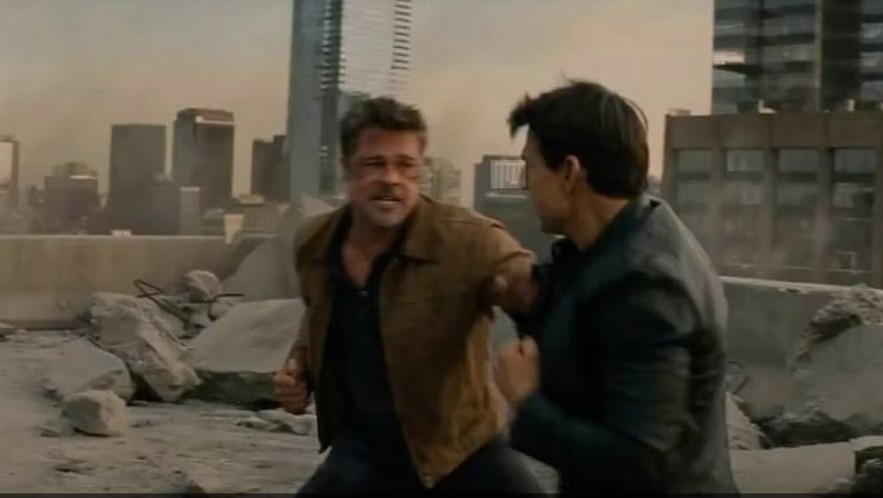 |
| Viral AI video of Tom Cruise fighting Brad Pitt |
A 15-second clip changed the tone of an entire industry.
The now-viral AI-generated video depicting Tom Cruise locked in a brutal rooftop fight with Brad Pitt looked like a scene pulled straight from a high-budget action thriller. The lighting was cinematic. The movements felt natural. The facial expressions were disturbingly accurate.
There was just one problem.
Neither actor was ever there.
The video was entirely generated by artificial intelligence.
And Hollywood is not laughing.
A Viral Clip That Felt Too Real
The clip was reportedly created using Seedance 2.0, a powerful generative video tool developed by ByteDance, the parent company of TikTok. With only a short text prompt, the system produced hyper-realistic visuals, synthetic voices, and choreography that mirrored blockbuster filmmaking.
What unsettled viewers wasn’t just the quality.
It was the speed.
What once required millions of dollars, full crews, motion capture technology, and months of post-production can now be approximated in minutes by a user with a laptop.
For the first time, mainstream audiences weren’t watching a crude deepfake. They were watching something that felt like a studio production.
That distinction matters.
Read more: Top 10 Plus Best AI Tools to Instantly Convert Text into Videos in 2026
Hollywood’s Existential Fear
The reaction inside the film industry has been swift and tense.
Executives, producers, writers, and actors are confronting a question that once felt theoretical:
If AI can generate convincing performances, what happens to performers?
Labor unions have been particularly vocal. SAG-AFTRA, which represents thousands of actors, has warned that the unauthorized use of performers’ likenesses undermines their ability to control their own image and earn a living.
The concern isn’t just about one viral clip. It’s about precedent.
If a model can convincingly simulate Cruise or Pitt today, what stops a studio, advertiser, or independent creator from generating entire films starring digital replicas tomorrow?
The implications stretch far beyond celebrity culture. Background actors, stunt performers, voice artists, and even child actors could find themselves digitally replaced.
Copyright, Consent, and the Law Struggling to Catch Up
Legal tensions are escalating.
The Motion Picture Association has criticized generative AI tools that allegedly train on copyrighted film content without authorization. Studios argue that training models on decades of films amounts to large-scale intellectual property exploitation.
Meanwhile, major companies including Disney have reportedly moved to protect their characters and archives from unauthorized AI replication.
But here is the uncomfortable truth: current copyright law was not built for generative AI.
Key unresolved questions include:
-
Does training on copyrighted films constitute infringement?
-
Who owns a digital likeness generated without consent?
-
Is an AI performance a derivative work?
-
Can a celebrity sue over a simulated performance that never actually happened?
In many jurisdictions, the answers are unclear.
This legal gray zone is fueling anxiety across the entertainment industry.
The Ethical Line: Technology vs. Human Identity
The controversy goes deeper than contracts and licensing.
Actors do not merely provide faces and voices. They bring lived experience, emotional nuance, instinct, and unpredictability. That human presence is central to storytelling.
AI challenges that assumption.
If audiences cannot distinguish between a human performance and a synthetic one, does authenticity still matter? Or does realism alone suffice?
There is also a consent issue. A performer’s likeness is not just a commercial asset. It is tied to personal identity. Seeing “yourself” on screen performing actions you never agreed to raises profound ethical concerns.
In the wrong hands, this technology could fabricate scandals, rewrite reputations, or manipulate public perception.
The Cruise-Pitt clip may look entertaining. But it demonstrates how easily reality can be simulated.
Read more: Can AI Video Generators Replace Human Creativity? A Creator’s Perspective
Could AI Actually Replace Actors?
Short answer: not yet.
AI can replicate appearance and approximate movement. It can mimic tone. But it cannot independently originate emotional truth, improvisation, or collaborative chemistry on set.
Still, economic pressure is real.
Studios face rising production costs. AI offers a tempting promise: fewer location shoots, fewer reshoots, fewer human variables.
The likely future is not total replacement but hybridization:
-
AI-assisted stunt doubling
-
Digitally extended performances
-
Synthetic extras in crowd scenes
-
Voice cloning for localization
The danger lies in how far that assistance expands.
History shows that once a cost-cutting tool proves viable, industries adopt it aggressively.
A Turning Point for Creative Ownership
The viral fight clip is not just a novelty. It marks a turning point.
Hollywood is now forced to redefine:
-
What counts as a performance
-
What constitutes authorship
-
Who owns a digital identity
-
How consent is preserved in synthetic media
Regulation will likely follow, but technology moves faster than legislation.
The deeper question is cultural:
Do audiences want films created by humans, or are they satisfied with simulations?
The answer may determine the next era of cinema.
Why This Moment Matters
For decades, movie stars symbolized something untouchable. Their presence was tied to physical performance, on-set collaboration, and human charisma.
Now, with a few lines of code, anyone can conjure a convincing illusion.
The AI-generated “Tom Cruise vs Brad Pitt” fight is not about two actors battling on a rooftop.
It is about the battle between technological acceleration and human creativity.
Hollywood has faced disruption before. Sound replaced silent film. CGI transformed visual effects. Streaming reshaped distribution.
But this may be different.
Because this time, the disruption targets the performer themselves.
And that strikes at the heart of cinema.