UK Bank Holidays 2027: The Dates that Matter, the Long Weekends Worth Planning

 |
| UK bank holidays 2027 dates |
What most people actually want is something more practical. Which dates apply where? Which weekends are worth booking around? What happens if you work part time? And are those days automatically paid leave? They are not, at least not by default.
Here’s the 2027 picture, without the clutter.
First, the key point: there is no single UK-wide list
Bank holidays are not identical across the UK. England and Wales share one calendar. Scotland has its own pattern, including 2 January and St Andrew’s Day, but not Easter Monday. Northern Ireland has extra dates too, including St Patrick’s Day and the Battle of the Boyne.
As of April 7, 2026, the official government listings for 2027 do not show any extra one-off nationwide holiday such as a jubilee-style special bank holiday. The official guidance also notes that dates can still be changed, or additional holidays declared, for special occasions.
Read more: Is the UK Really Heading Toward a 3-Day Work Week by 2027 - or the Wrong Idea?
England and Wales bank holidays in 2027
For England and Wales, the official 2027 bank holidays are:
Friday 1 January — New Year’s Day
Friday 26 March — Good Friday
Monday 29 March — Easter Monday
Monday 3 May — Early May bank holiday
Monday 31 May — Spring bank holiday
Monday 30 August — Summer bank holiday
Monday 27 December — Christmas Day substitute day
Tuesday 28 December — Boxing Day substitute day
That gives England and Wales eight bank holidays in 2027, with a very Monday-heavy calendar from spring onward. Christmas falls on a weekend that year, which is why the official days off move to 27 and 28 December.
Scotland bank holidays in 2027
For Scotland, the official 2027 list is:
Friday 1 January — New Year’s Day
Monday 4 January — 2nd January substitute day
Friday 26 March — Good Friday
Monday 3 May — Early May bank holiday
Monday 31 May — Spring bank holiday
Monday 2 August — Summer bank holiday
Tuesday 30 November — St Andrew’s Day
Monday 27 December — Christmas Day substitute day
Tuesday 28 December — Boxing Day substitute day
Scotland has nine bank holidays in the 2027 official list. The shape of the year is a bit different from England and Wales because Scotland gets 2 January and St Andrew’s Day, but does not get Easter Monday as a bank holiday.
Read more: UK Bank Holidays in 2026: Full Calendar, Key Dates and Meanings
Northern Ireland bank holidays in 2027
For Northern Ireland, the official dates are:
Friday 1 January — New Year’s Day
Wednesday 17 March — St Patrick’s Day
Friday 26 March — Good Friday
Monday 29 March — Easter Monday
Monday 3 May — Early May bank holiday
Monday 31 May — Spring bank holiday
Monday 12 July — Battle of the Boyne
Monday 30 August — Summer bank holiday
Monday 27 December — Christmas Day substitute day
Tuesday 28 December — Boxing Day substitute day
Northern Ireland therefore has ten bank and public holidays in 2027 on the official list, the highest of the three calendars. Nidirect also points readers to the GOV.UK list for those dates and notes that substitute days usually apply when the usual date falls on a weekend.
The long weekends worth circling now
This is the part people tend to care about once the date list is out of the way.
For England and Wales, the cleanest long weekends are 1 to 3 January, 26 to 29 March, 1 to 3 May, 29 to 31 May, 28 to 30 August, and the Christmas break built around 27 and 28 December. Those patterns come straight from where the 2027 holidays land on Fridays and Mondays.
For Scotland, the New Year stretch is the standout: because 1 January is a Friday and the substitute day for 2 January lands on Monday 4 January, many workers will look at a built-in four-day break before even touching annual leave. Scotland’s summer bank holiday also arrives earlier, on Monday 2 August, which matters for travel planning and local demand.
For Northern Ireland, the calendar is especially friendly if you like spreading out short breaks. You get the Easter long weekend, the two May bank holidays, a Monday 12 July holiday, a Monday 30 August holiday, and then the Christmas substitute days at the end of December.
The smartest annual leave plays in 2027
A plain calendar tells you when the holidays fall. A smarter calendar tells you where the value is.
In England, Wales, and Northern Ireland, Easter is the obvious one. Because Good Friday falls on 26 March and Easter Monday on 29 March, taking annual leave from Tuesday 30 March to Friday 2 April could turn that into a 10-day break from 26 March to 4 April. That is an inference from the official dates, but it is exactly the sort of booking pattern people use every year.
The two May bank holidays create another easy opening. Taking 4 to 7 May off after the Monday 3 May holiday could give you nine consecutive days away from work, from 1 to 9 May. The same logic works around the 31 May spring bank holiday if your workplace allows those dates.
Christmas is strong in every UK nation in 2027 because the substitute days fall on Monday 27 December and Tuesday 28 December. Based on the official calendar, booking 29 to 31 December off could create a nine-day stretch from 25 December to 2 January while only using three days of annual leave.
Read more: How Much Would You Earn on a 3-Day Work Week in the UK?
The bit many guides skip: bank holidays are not automatically extra paid days off
This catches people out every year.
In UK law, workers are entitled to 5.6 weeks of statutory paid holiday. But bank holidays do not have to be given as paid leave, and an employer can include them within that overall entitlement rather than on top of it. In other words, “bank holiday” and “extra paid day off” are not automatically the same thing.
That matters even more if you work part time or on a fixed shift pattern. ACAS notes that part-time workers still get their statutory holiday pro-rated, and employers should handle bank holidays fairly. Their guidance gives a simple example: when more bank holidays fall on Mondays, someone who normally works Mondays can end up using more of their leave on shutdown days than someone who does not. In 2027, that is especially relevant because so many bank holidays fall on Mondays.
A practical rule for travellers, parents and anyone booking ahead
Do not assume “UK bank holiday” means the whole UK stops on the same day.
If you are booking trains, family visits, childcare, or a short break, check the nation first. Scotland’s summer holiday is 2 August, not 30 August. Northern Ireland has 17 March and 12 July, while England and Wales do not. And if you are trying to line up school breaks, GOV.UK is clear that school term and holiday dates vary across the UK, so bank holidays are only part of the planning puzzle.
The bottom line
The official UK bank holidays 2027 calendar is already clear enough to plan around.
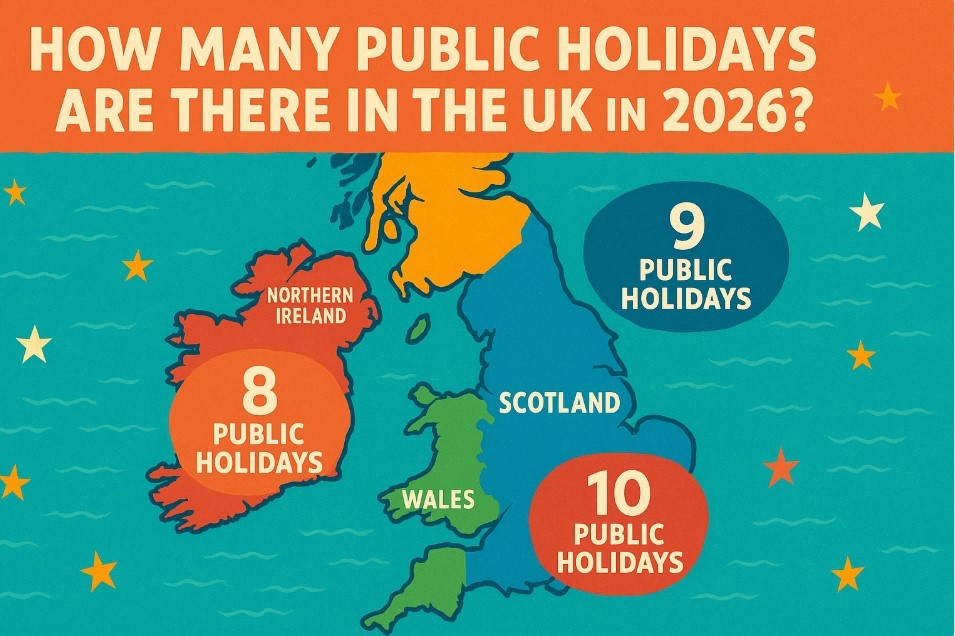
England and Wales have 8 bank holidays, Scotland has 9, and Northern Ireland has 10 on the current official list. The biggest opportunities for longer breaks sit around Easter, the two May bank holidays, and Christmas, especially if you are strategic with annual leave. But the other thing worth remembering is just as important: a bank holiday is a date on the public calendar, not a guarantee of paid leave in your contract.