California vs. New York Speed Cameras: Same Technology, Different Rules

Radar speed cameras are no longer controversial in New York, where automated enforcement has been part of daily driving for years. In California, however, the technology is just beginning to roll out — and the two states could not be taking more different approaches.
While both rely on radar-based systems to detect speeding, how violations are handled, how much drivers pay, and how aggressive enforcement is varies significantly.
Read more: California’s Radar Speed Cameras: Exact Locations, Fines, and How Tickets Really Work
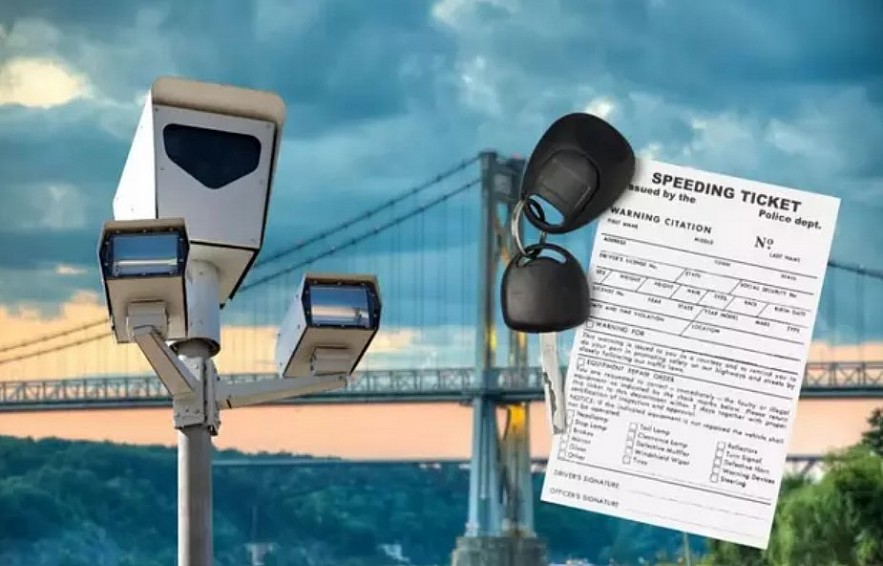 |
| Radar Speed Cameras - California vs New York |
Where Cameras Are Allowed
New York operates one of the most expansive speed camera programs in the country.
-
Cameras are active in school zones across New York City
-
Many operate year-round, not just during school hours
-
Locations are widespread and often rotate
California, by contrast, is highly restrictive.
-
Cameras are limited to specific high-injury corridors
-
Use is allowed in school zones and select city streets
-
On highways, cameras are only legal in active work zones
California law also requires clear advance signage, while New York drivers often encounter cameras with minimal warning beyond standard posted signs.
When Cameras Are Active
This is one of the biggest differences drivers notice.
In New York:
-
Speed cameras often operate 6 a.m. to 10 p.m.
-
Enforcement continues even when school is not in session
-
Drivers can receive multiple tickets per day in different zones
In California:
-
Enforcement hours are typically narrower
-
Many locations begin with warning-only periods
-
Cities must publish enforcement details in advance
California’s approach emphasizes predictability. New York’s emphasizes constant compliance.
Read more: How to Check Vehicle Tickets and Fines in the U.S: 7 Easy Options
Speed Thresholds: How Much Over Is Enough?
New York is strict.
-
11 mph over the speed limit triggers a ticket
-
There is no graduated buffer for higher speeds
-
A driver going 36 mph in a 25 mph zone is ticketed immediately
California builds in more tolerance.
-
Most cities start enforcement at 11–15 mph over
-
Higher speeds trigger higher fines
-
Minor speeding often results in no citation at all
This difference alone explains why New York issues millions of speed camera tickets annually, while California expects far fewer.
Fines and Financial Impact
New York uses a flat fine system.
-
Typical speed camera ticket: $50
-
No income-based adjustments
-
Repeat tickets add up quickly
California’s fines scale with speed and income.
-
$50 to $200 depending on how fast you were going
-
Low-income drivers qualify for reduced penalties
-
Some fines can be lowered to under $30
California lawmakers intentionally avoided a one-size-fits-all model.
Read more: What Does California’s New Speed Limit Law Mean for Drivers in 2026?
License Points and Insurance
Both states share one similarity here.
-
Speed camera tickets do not add points
-
Insurance companies generally do not treat them as moving violations
However, New York drivers often receive many more tickets per year, increasing overall cost even without points.
Privacy and Data Use
New York allows broader data retention and automation.
-
Images are processed quickly
-
Less emphasis on human review
-
Cameras are optimized for volume
California mandates tighter controls.
-
No facial recognition allowed
-
Images must be deleted after a short retention period
-
Human review is required before tickets are mailed
Privacy concerns delayed California’s program for years, while New York prioritized rapid deployment.
Revenue vs. Safety Debate
Critics in New York argue speed cameras function as a revenue tool, especially in dense urban neighborhoods. Supporters point to reduced speeding near schools.
California explicitly designed its system to avoid the revenue label.
-
Lower fines
-
Mandatory warning periods
-
Strict limits on camera placement
State officials consistently frame the program as a safety intervention, not a funding mechanism.
What This Means for Drivers
Driving in New York requires constant vigilance. Speed cameras are common, active most of the day, and unforgiving.
Driving in California, at least for now, allows more margin for error — but only outside targeted zones.
Drivers moving between states should adjust expectations quickly. What earns a warning in California could be an automatic ticket in New York.
Bottom Line
California and New York use similar radar speed camera technology, but their philosophies diverge sharply. New York enforces broadly and aggressively. California enforces narrowly and cautiously.
For drivers, understanding these differences isn’t academic. It directly affects how fast you drive, where you slow down, and how often you open your mailbox to find a ticket.