World Cup 2026: How Many Teams Are Playing, and Who Are They?

 Which Brazil Players Are Almost Guaranteed a Spot at the 2026 World Cup? Which Brazil Players Are Almost Guaranteed a Spot at the 2026 World Cup? |
 Top 10 Must-Watch Matches in the FIFA World Cup 2026 Group Stage Top 10 Must-Watch Matches in the FIFA World Cup 2026 Group Stage |
 |
| 2026 FIFA World Cup- Full List of 48 Qualified Teams |
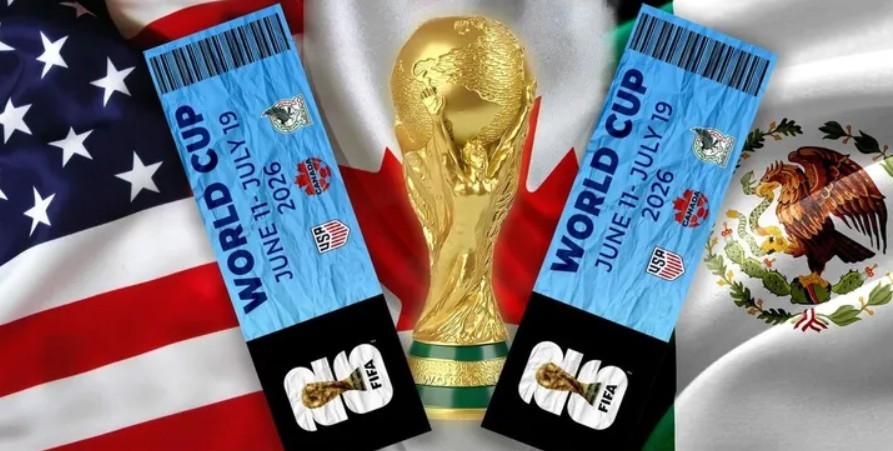
The 2026 FIFA World Cup will feature 48 teams, not 32. It is the first World Cup to use that expanded format, and it is also the first edition hosted by three countries: the United States, Mexico, and Canada. FIFA’s approved structure uses 12 groups of four teams, and the tournament runs from June 11 to July 19, 2026, with 104 matches in total. The top two teams in each group, plus the eight best third-place teams, move on to the Round of 32.
The full 48-team field is now set. FIFA’s latest qualified-teams update and Reuters’ April 1 roundup confirm that the lineup was completed after the final qualifying and play-off matches on March 31, 2026.
What follows is a full, reader-friendly guide to all 48 teams. Each entry stays simple and balanced: how the team got here, what its World Cup history looks like, and the one basic thing worth remembering.
Read more: What Happens If Iran Does Not Play at the 2026 World Cup? FIFA Rules, and Possible Scenarios
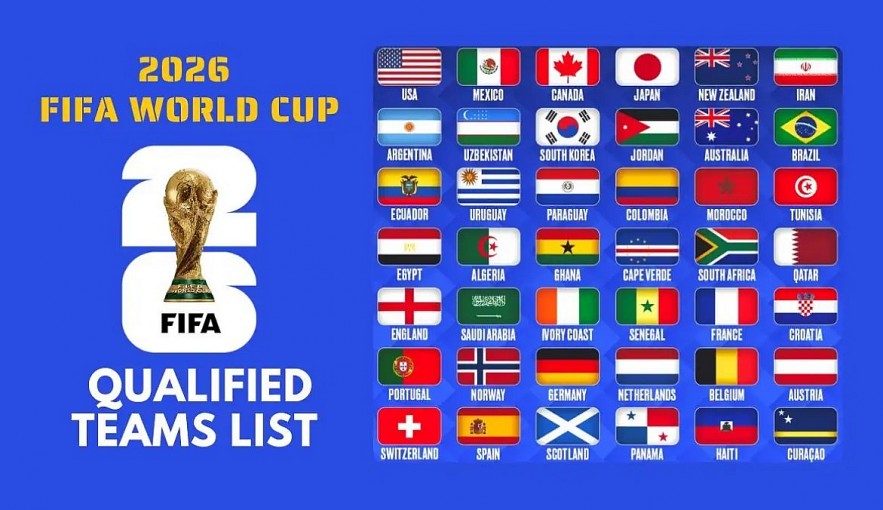
The full list of all 48 qualified teams
The 48 teams are: United States, Mexico, Canada, Japan, New Zealand, Iran, Argentina, Uzbekistan, South Korea, Jordan, Australia, Brazil, Ecuador, Uruguay, Colombia, Paraguay, Morocco, Tunisia, Egypt, Algeria, Ghana, Cape Verde, South Africa, Qatar, England, Saudi Arabia, Ivory Coast, Senegal, France, Croatia, Portugal, Norway, Germany, Netherlands, Belgium, Austria, Switzerland, Spain, Scotland, Panama, Haiti, Curaçao, Sweden, Türkiye, Czechia, Bosnia and Herzegovina, DR Congo, and Iraq.
Hosts and CONCACAF teams
United States
The United States qualified automatically as a host nation. Its best World Cup finish remains third place in 1930, and this tournament gives the Americans a chance to test whether home advantage can lift them beyond the familiar ceiling of the modern era.
Mexico
Mexico is also in automatically as a host. Its best World Cup result is the quarter-finals, reached in 1970 and 1986, and that history still shapes how the country measures success on home soil.
Canada
Canada enters automatically as a co-host. Its best finish is still the group stage, from 1986 and 2022, so the pressure here is basic and direct: can Canada finally turn qualification into a genuine tournament run?
Panama
Panama qualified on November 19, 2025. Its best World Cup performance is the group stage in 2018, which means 2026 is another opportunity to prove that its first appearance was the start of something, not a one-off.
Haiti
Haiti also qualified on November 19, 2025. Its best World Cup finish is the group stage in 1974, so this is one of the tournament’s longer-awaited returns.
Curaçao
Curaçao qualified on November 19, 2025 and will play at the World Cup for the first time. That makes it one of the clearest symbols of what the 48-team expansion changes: nations that once stood outside the door are now fully in the room.
AFC and OFC teams
Japan
Japan was one of the earliest teams to qualify, doing so on March 20, 2025. Its best World Cup finish is the Round of 16, reached four times, and that record reflects a team that is no longer just a regular qualifier but a serious knockout-stage contender.
New Zealand
New Zealand qualified on March 24, 2025. Its best result is the group stage, reached in 1982 and 2010, and its place in the tournament also marks a historic moment for Oceania, which now has a guaranteed World Cup berth.
Iran
Iran qualified on March 25, 2025. Its best World Cup finish is still the group stage, but repeated qualification shows how steady and established Iran has become in Asian football.
Uzbekistan
Uzbekistan qualified on June 5, 2025 and will make its first-ever World Cup appearance. For many readers, that is the headline fact: Uzbekistan is one of the genuine new faces of 2026.
South Korea
South Korea booked its place on June 5, 2025. Its best finish remains fourth place in 2002, and that still stands as one of the strongest World Cup records by an Asian team.
Jordan
Jordan qualified on June 5, 2025 and, like Uzbekistan, will play at the World Cup for the first time. It is one of the expansion era’s most meaningful success stories.
Australia
Australia qualified on June 10, 2025. Its best World Cup performance is the Round of 16, reached in 2006 and 2022, which makes Australia a team with enough experience to trouble stronger names.
Qatar
Qatar qualified on October 14, 2025. Its best World Cup finish is the group stage from 2022, and 2026 matters because it is Qatar’s first successful qualifying campaign after appearing previously as host.
Saudi Arabia
Saudi Arabia qualified on October 14, 2025. Its best result is the Round of 16 in 1994, and its World Cup reputation still rests on being difficult to read, disciplined at times, and capable of sharp tournament moments.
Iraq
Iraq claimed one of the final places on March 31, 2026 through the intercontinental play-offs. Its best finish is the group stage in 1986, so its return after a long absence is one of the more emotional stories in the field.
CONMEBOL teams
Argentina
Argentina qualified on March 25, 2025. It arrives as the defending world champion, and its best World Cup performance is obvious: titles in 1978, 1986, and 2022.
Brazil
Brazil qualified on June 10, 2025. It remains the only nation with five World Cup titles, and that alone is enough to place Brazil in any serious conversation about the favorites.
Ecuador
Ecuador qualified on June 10, 2025. Its best World Cup finish is the Round of 16 in 2006, and its modern identity is built on athletic intensity and a steady ability to stay in the race.
Uruguay
Uruguay qualified on September 4, 2025. It is one of the sport’s oldest giants, with World Cup titles in 1930 and 1950, and it almost always brings tournament stubbornness, edge, and a sense of proportion beyond its population size.
Colombia
Colombia qualified on September 4, 2025. Its best World Cup finish is the quarter-finals in 2014, and it enters 2026 as a side many opponents would rather avoid than underestimate.
Paraguay
Paraguay qualified on September 4, 2025. Its best finish is the quarter-finals in 2010, and its return adds another traditionally hard, compact South American team to the tournament.
CAF teams
Morocco
Morocco qualified on September 5, 2025. Its best World Cup finish is the semi-finals in 2022, still the deepest run ever by an African nation, so Morocco arrives with more than hope: it arrives with proof.
Tunisia
Tunisia qualified on September 8, 2025. Its best World Cup performance remains the group stage, but regular qualification has made Tunisia one of Africa’s most familiar tournament names.
Egypt
Egypt qualified on October 8, 2025. Its best World Cup finish is the Round of 16 in 1934, which is a reminder that its football history is older than many people assume.
Algeria
Algeria qualified on October 9, 2025. Its best World Cup finish is the Round of 16 in 2014, and its place in the field matters because Algeria often brings energy, emotion, and tactical disorder that can upset more polished teams.
Ghana
Ghana qualified on October 12, 2025. Its best result is the quarter-finals in 2010, and that run still defines Ghana’s place in World Cup memory.
Cape Verde
Cape Verde qualified on October 13, 2025 and will make its World Cup debut. It is one of the biggest breakthrough stories of the expanded tournament.
South Africa
South Africa qualified on October 14, 2025. Its best World Cup finish is the group stage, reached in 1998, 2002, and 2010, and this return restores a familiar African football nation to the main stage.
Ivory Coast
Ivory Coast qualified on October 14, 2025. Its best result remains the group stage, but the country’s talent production and competitive tradition mean it rarely feels like a small-side draw.
Senegal
Senegal qualified on October 14, 2025. Its best World Cup finish is the quarter-finals in 2002, and its combination of pace, physical strength, and tournament self-belief keeps it near the top of Africa’s modern pecking order.
DR Congo
DR Congo qualified on March 31, 2026 through the intercontinental play-offs. Its best World Cup finish is the group stage in 1974, when it appeared as Zaire, so 2026 marks a return after more than half a century.
UEFA teams
England
England qualified on October 14, 2025. It remains the nation that won the World Cup in 1966, and every England campaign is judged against that single, stubborn benchmark.
France
France qualified on November 13, 2025. Its best performances are its two titles, in 1998 and 2018, and it enters 2026 as one of the most naturally deep squads in the field.
Croatia
Croatia qualified on November 14, 2025. Its best finish is runner-up in 2018, and for a relatively small nation it has built one of the sharpest World Cup résumés in modern football.
Portugal
Portugal qualified on November 16, 2025. Its best World Cup finish is third place in 1966, and the 2026 campaign again carries the familiar question of whether great individual quality can finally turn into a title push.
Norway
Norway qualified on November 16, 2025. Its best World Cup result is the Round of 16, reached in 1938 and 1998, and its return gives Europe another side with enough attacking talent to change the tone of a group quickly.
Germany
Germany qualified on November 17, 2025. With World Cup titles in 1954, 1974, 1990, and 2014, it remains one of the tournament’s central powers even when form goes up and down.
Netherlands
The Netherlands qualified on November 17, 2025. Its best World Cup finish is runner-up, achieved in 1974, 1978, and 2010, which captures the old Dutch story in one line: elite, respected, but still waiting for a first title.
Belgium
Belgium qualified on November 18, 2025. Its best World Cup performance is third place in 2018, and even after its so-called golden generation, Belgium remains a team with real pedigree.
Austria
Austria qualified on November 18, 2025. Its best finish is third place in 1954, and it enters 2026 as one of the quieter European qualifiers that serious fans still tend to respect.
Switzerland
Switzerland qualified on November 18, 2025. Its best World Cup finish is the quarter-finals, reached in 1934, 1938, and 1954, and its profile is usually built on order, discipline, and close games.
Spain
Spain qualified on November 18, 2025. Its best World Cup result is the 2010 title, and it comes into 2026 with the status of reigning European champion.
Scotland
Scotland qualified on November 18, 2025. Its best World Cup showing is the group stage, but qualification itself matters because Scotland does not take these chances for granted.
Sweden
Sweden claimed one of the final places on March 31, 2026. Its best World Cup finish is runner-up in 1958, which keeps Sweden in the category of old European football nations with real tournament memory.
Türkiye
Türkiye also qualified on March 31, 2026. Its best World Cup finish is third place in 2002, and that remains a reference point for what this team can do when belief and momentum line up.
Czechia
Czechia qualified on March 31, 2026. Its best World Cup result is runner-up in 1934 and 1962, a record that connects the modern side to a much deeper football history than casual readers often notice.
Bosnia and Herzegovina
Bosnia and Herzegovina qualified on March 31, 2026. Its best World Cup finish is the group stage in 2014, so this is only its second appearance and an important return for the national team.
Official groups at the 2026 World Cup
The final draw has already placed the 48 teams into 12 groups. The groups are:
Group A: Mexico, South Korea, South Africa, Czechia
Group B: Canada, Switzerland, Qatar, Bosnia and Herzegovina
Group C: Brazil, Morocco, Scotland, Haiti
Group D: United States, Australia, Paraguay, Türkiye
Group E: Germany, Ecuador, Ivory Coast, Curaçao
Group F: Netherlands, Japan, Tunisia, Sweden
Group G: Belgium, Iran, Egypt, New Zealand
Group H: Spain, Uruguay, Saudi Arabia, Cape Verde
Group I: France, Senegal, Norway, Iraq
Group J: Argentina, Austria, Algeria, Jordan
Group K: Portugal, Colombia, Uzbekistan, DR Congo
Group L: England, Croatia, Panama, Ghana.
What stands out from the 48-team field
The first thing to remember is scale. This is the biggest World Cup ever: 48 teams, 12 groups, 104 matches, three host nations. That alone changes the rhythm of the tournament.
The second thing is access. The expanded field has opened the door to first-time qualifiers such as Uzbekistan, Jordan, Cape Verde, and Curaçao, while also bringing back long-absent teams such as Haiti, Iraq, and DR Congo. The 2026 tournament is not just larger. It is visibly broader.
The third thing is balance. The field still includes the old powers, from Argentina, Brazil, Germany, France, Spain, England, Portugal, and the Netherlands to strong challengers such as Morocco, Senegal, Japan, Uruguay, Croatia, and Colombia. Expansion has added new stories, but it has not removed the elite.
Bottom line
So, how many teams are in the 2026 World Cup?
The answer is 48.
And the full list is no longer a projection or a partial update. It is complete. The 2026 World Cup now has its full cast: traditional giants, regional regulars, returning nations, and four true debutants. That mix is exactly why this edition already feels different.
FAQs
How many teams will play in the 2026 World Cup?
48 teams will play in the 2026 FIFA World Cup.
Is this the first 48-team World Cup?
Yes. The 2026 tournament is the first men’s World Cup with 48 teams.
Who are the host nations?
The hosts are the United States, Mexico, and Canada.
Which teams are making their World Cup debut?
The debutants are Uzbekistan, Jordan, Cape Verde, and Curaçao.
When does the 2026 World Cup start and end?
The tournament starts on June 11, 2026 and ends on July 19, 2026.