What Happens If Iran Does Not Play at the 2026 World Cup? FIFA Rules, and Possible Scenarios



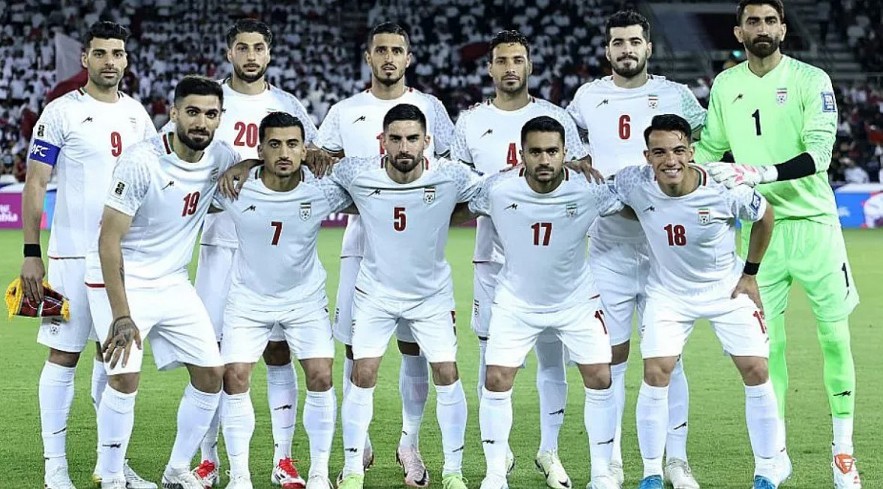 |
| Iran won’t play at 2026 Fifa World Cup in US |
FIFA still expects Iran to play
As of early April 2026, the official stance from FIFA has not changed. Iran remains on the confirmed list of qualified teams for the 2026 World Cup tournament, and the governing body continues to plan the competition with Iran included.
Gianni Infantino has publicly emphasized that there is only a “Plan A,” meaning all fixtures involving Iran national football team are expected to go ahead as scheduled.
That said, the question has not gone away. Political and logistical concerns have led to ongoing speculation about whether Iran could withdraw or be excluded. So it helps to understand what FIFA’s rules actually allow.
Read more: World Cup 2026: How Many Teams Are Playing, and Who Are They?
There is no automatic replacement rule
If Iran does not participate, many fans assume another team would simply take its place. It is not that simple.
FIFA regulations state that if a qualified team withdraws or is removed, FIFA may choose to replace it. The key word is “may.” This gives FIFA flexibility rather than forcing a single outcome.
In practice, the decision would depend on timing and context. If Iran withdrew well before the tournament, a replacement team would be likely. If the issue emerged late, especially after the draw or during the tournament, FIFA might avoid reshuffling and instead adjust the group structure.
Financial penalties would be immediate
If a team pulls out, the consequences start with money.
FIFA rules set minimum fines at:
- CHF 250,000 if the withdrawal happens more than 30 days before kickoff
- CHF 500,000 if it happens within 30 days of the first match
But those figures are just the baseline. The national federation could also be required to compensate FIFA and organizers for broader damages, including operational costs and lost revenue.
On top of that, the team would lose access to any World Cup-related financial rewards. In simple terms, walking away would be expensive.
What happens to the group if Iran withdraws?
This is where things get more complicated.
If Iran withdraws before the tournament starts, FIFA would likely either replace the team or adjust the group format. A replacement could come from the same confederation or from recent play-off teams, but FIFA is not required to follow a strict ranking rule.
If Iran withdraws after the tournament begins, FIFA regulations are clearer:
all of Iran’s match results would be declared null and void if the withdrawal happens before the group stage ends.
That means any matches already played would effectively be erased. Points, goals, and standings would be recalculated. It is messy, but it prevents unfair advantages for teams that already faced Iran.
Could matches be moved or relocated?
Yes, and this is often overlooked.
FIFA has the authority to move matches to different venues or even different countries if safety or political conditions require it. Since the 2026 World Cup is hosted by United States, Canada, and Mexico, there is already some built-in flexibility.
So the situation is not limited to a binary choice of “play or withdraw.” FIFA could adjust logistics while keeping Iran in the tournament.
The most realistic scenario right now
At this point, the most grounded expectation is still simple: Iran will play.
FIFA has shown no public indication of preparing a replacement plan, and tournament scheduling continues as normal. Removing a qualified team is a major step, and historically, FIFA avoids it unless absolutely necessary.
If something did change, the likely sequence would be:
- Formal withdrawal or exclusion
- Financial penalties
- FIFA decision on replacement or structural adjustment
There is no automatic script beyond that. Each step would be handled case by case.
Why this situation matters more in 2026
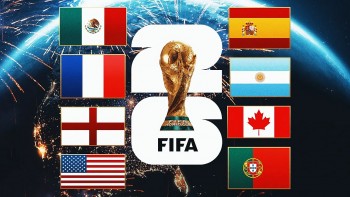
The 2026 tournament is different. It is the first World Cup with 48 teams, which makes the structure more complex and less forgiving to sudden changes.
A late withdrawal would not just affect one group. It could ripple across scheduling, broadcasting, and competitive balance. That is why FIFA’s cautious approach makes sense.
Bottom line
If Iran does not play at the 2026 World Cup, the outcome would depend heavily on timing and context. There would be fines, possible compensation claims, and a decision from FIFA on whether to replace the team or adjust the tournament.
But as things stand today, there is no indication that scenario will happen.
For now, the simplest answer remains the correct one: Iran is still expected to be there.