Winter Storm Regional Update: Snow, Ice, and Bitter Cold Across the U.S.

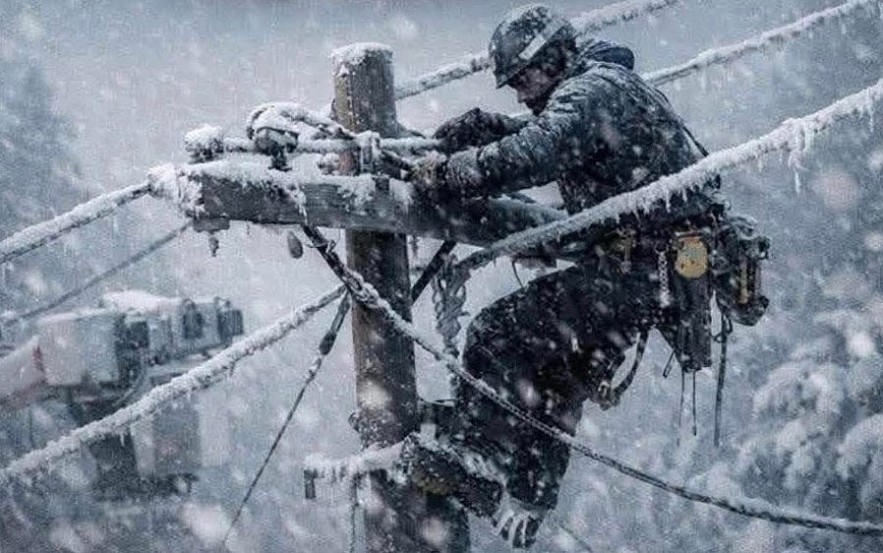 |
| A major winter storm continues to unfold across the United States |
A large and dangerous winter storm is unfolding across much of the United States, affecting tens of millions of people with heavy snow, freezing rain, and prolonged cold. Forecasters warn that impacts will vary by region but could last several days, even after precipitation ends.
Below is a region-by-region breakdown of the latest conditions and what residents should expect, based on updates from the National Weather Service and national media weather teams.
Read more:
- US Winter Storm This Weekend (Update): Snow, Ice, and Power Outages Intensify Across the U.S.
- Coldest Night of the Season: Rain, Snow Mix and Dangerous Cold Hit New York
Southern Plains (Texas, Oklahoma, Arkansas)
The storm first took hold in the Southern Plains, where freezing rain and sleet have created hazardous road conditions.
-
Northern and central Texas are seeing widespread ice accumulation, especially on bridges and overpasses.
-
Power outages are a growing concern as ice weighs down trees and power lines.
-
Travel is strongly discouraged, particularly overnight and early morning when temperatures are lowest.
Officials warn that icy conditions may persist even after precipitation ends due to lingering cold.
Midwest (Missouri, Illinois, Indiana, Ohio)
The Midwest is facing a mixed winter threat, with snow farther north and ice closer to the storm’s southern edge.
-
Snowfall of 6 to 12 inches is likely in parts of Missouri, Illinois, and Indiana.
-
Areas near the rain–snow line may see sleet or freezing rain, increasing accident risk.
-
Freight rail and highway travel are expected to face delays through the weekend.
Behind the storm, below-normal temperatures could keep roads icy into early next week.
Southeast and Tennessee Valley
In the Southeast, ice is the primary concern rather than snow.
-
Parts of Georgia, Alabama, Tennessee, and the Carolinas could see damaging ice accumulations.
-
Even small amounts of ice can cause widespread power outages in areas unaccustomed to winter weather.
-
Officials are urging residents to prepare for possible loss of electricity and limited travel.
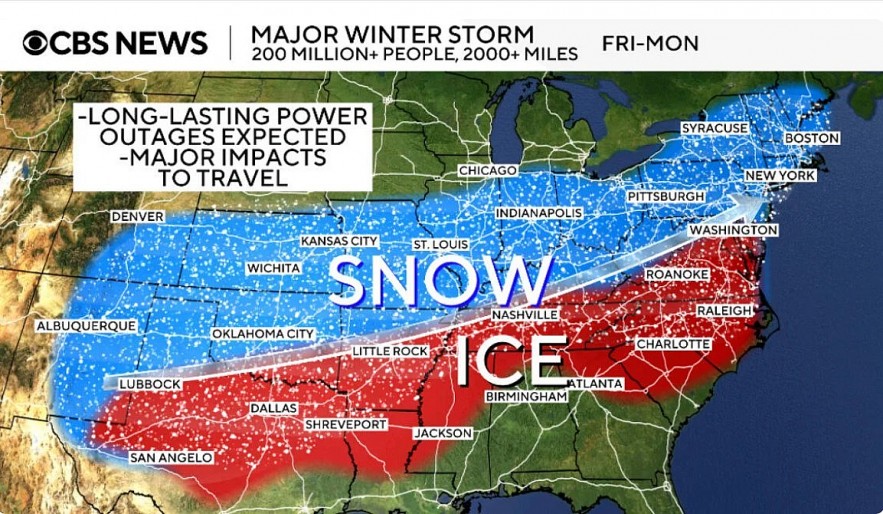 |
| Maps show where winter storm threatens to bring heavy snow, ice, brutal cold this weekend |
Mid-Atlantic (Virginia, Maryland, Washington, D.C.)
The storm is expected to intensify as it reaches the Mid-Atlantic late Saturday into Sunday.
-
Snowfall totals of 6 to 12 inches are forecast in many areas, with higher amounts in elevated terrain.
-
Ice may mix in at times, particularly in southern and western zones.
-
Hazardous travel conditions are likely through Sunday, with lingering impacts Monday.
Northeast (New York City, Pennsylvania, New Jersey)
The Northeast, including the New York City metro area, is bracing for significant snowfall.
-
NYC and surrounding areas could see 10 to 16 inches of snow, mostly falling from late Saturday night through Sunday.
-
Snowfall rates may reach 1 to 2 inches per hour, making travel difficult and slowing cleanup.
-
Airports in New York, New Jersey, and Pennsylvania are likely to experience delays and cancellations.
Cold air behind the storm may keep roads and sidewalks icy into Monday or Tuesday.
Read more: New York Faces Major Winter Storm: When Snow Will Hit, How Much to Expect, and What It Means for the City
New England
The strongest impacts may occur in New England, where colder air supports heavier snow.
-
Parts of Massachusetts, New Hampshire, and Maine could receive up to 18 to 24 inches of snow.
-
Gusty winds may lead to blowing and drifting snow, reducing visibility.
-
Travel disruptions could last several days in harder-hit areas.
Nationwide Impacts to Watch
-
Travel: Major roadways and airports across multiple regions are experiencing delays.
-
Power outages: Most likely where ice accumulation is greatest.
-
Extreme cold: Temperatures behind the storm remain well below normal, increasing health risks.
Officials caution that impacts may persist longer than the snowfall itself.
What Americans Should Do Now
-
Avoid unnecessary travel during peak storm conditions
-
Monitor forecasts and alerts from trusted sources
-
Prepare for power outages with food, water, and batteries
-
Check on elderly neighbors and vulnerable individuals
Trusted Sources for Ongoing Updates
-
National Weather Service: https://www.weather.gov
-
Weather.com: https://www.weather.com
-
AccuWeather: https://www.accuweather.com
-
Local TV station weather teams for city-specific impacts
The Bottom Line
This winter storm is creating dangerous conditions across a large portion of the U.S., with snow, ice, and cold affecting regions differently but significantly. Staying informed, prepared, and cautious will be critical as the storm continues to move east.