Why Mali and Burkina Faso Banned U.S. Citizens?

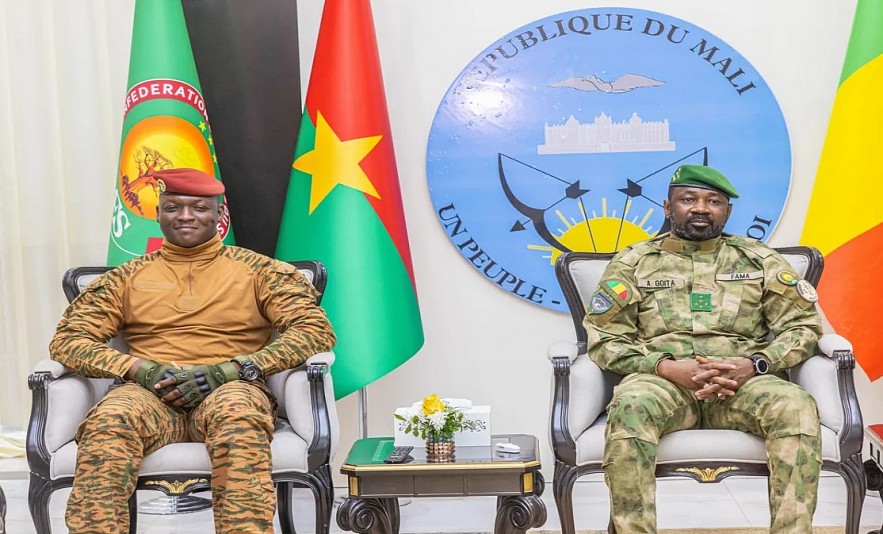 |
| The two sub-Saharan countries, both run by military governments, are members of a confederation that also includes Niger |
Mali and Burkina Faso announced they would bar U.S. citizens from entering their countries — a move both governments explicitly framed as reciprocal retaliation for new U.S. restrictions on Malian and Burkinabe travelers.
If you’re asking “Why would Mali and Burkina Faso ban Americans?”, the answer is simple on the surface — and more complicated underneath.
-
The immediate trigger: the United States expanded a travel-ban policy that fully restricts entry and visa issuance for citizens of Mali and Burkina Faso starting January 1, 2026.
-
The official explanation from Bamako and Ouagadougou: reciprocity — if your citizens can’t enter our country, ours won’t welcome yours.
-
The deeper drivers: a worsening diplomatic rift, military-junta politics, and a regional push to assert sovereignty amid persistent insecurity in the Sahel.
Here’s what actually happened, why it happened, and what it means now.
Read more: Full List of Countries That Have Banned or Suspended Visas for U.S. Citizens
What happened: a tit-for-tat travel ban
Mali and Burkina Faso imposed a travel ban on U.S. citizens after the U.S. government announced new entry restrictions placing both countries on a list subject to a full suspension of visas and entry.
Officials in both countries described the move as coordinated and grounded in the principle of reciprocity — a long-standing norm in international relations that treats equal restrictions as a matter of state dignity rather than escalation.
Why did the U.S. restrict Mali and Burkina Faso in the first place?
The U.S. decision stems from a presidential proclamation issued in mid-December 2025, set to take effect at the start of 2026.
The official U.S. rationale: vetting and security gaps
According to U.S. officials, Mali and Burkina Faso were added to the restricted list due to deficiencies in identity management, information sharing, and traveler vetting systems. American authorities argue that these gaps make it difficult to reliably assess visa applicants and manage border security risks.
In practical terms, the U.S. says it cannot consistently verify identities or background information in ways it considers sufficient for national security screening.
The broader context: instability in the Sahel
Beyond paperwork and databases, both Mali and Burkina Faso sit at the center of the Sahel, one of the world’s most volatile security regions. Armed extremist groups operate across borders, attacks have expanded, and governments struggle to control large rural areas.
That instability is a central part of the U.S. security argument: weak state control and limited administrative capacity raise red flags in Washington’s risk assessments.
Read more: List of 30 Nations Under Review as Trump Administration Weighs Expanded Travel Ban After National Guard Shooting
Why did Mali and Burkina Faso respond by banning Americans?
1) Reciprocity: the clean, public justification
Both governments emphasized reciprocity because it is politically powerful and easy to explain. It signals that they reject being singled out and insist on equal treatment under international norms.
In short: this ban is also a message — “We will not accept one-way restrictions.”
2) Sovereignty politics under military rule
Mali and Burkina Faso are governed by military juntas that came to power after coups. These governments have increasingly framed their legitimacy around resistance to external pressure, particularly from Western governments.
In that political environment, a U.S. travel ban is not seen merely as immigration policy. It becomes a symbol of stigma and external judgment — one that demands a visible response.
3) Low practical cost, high political payoff
The number of Americans traveling to Mali or Burkina Faso is already limited due to security concerns. That makes a ban on U.S. citizens relatively low-risk in economic terms, while delivering a strong domestic and international political signal.
Symbolically, the move punches far above its practical impact.
4) Diplomatic signaling to Washington and beyond
Reciprocal bans also function as leverage. Even if they don’t immediately reverse U.S. policy, they raise diplomatic costs and complicate cooperation on security, development, and regional diplomacy.
They also signal to other partners that Mali and Burkina Faso intend to chart a more independent course.
The bigger picture: a deteriorating U.S.–Sahel relationship
The reciprocal travel bans reflect a broader breakdown in relations between the United States and parts of the Sahel.
Military governments vs. Western expectations
Washington has repeatedly called for democratic transitions and raised concerns about governance and human rights. Sahelian military governments, in turn, often portray these demands as interference.
That tension has steadily reshaped diplomatic ties.
Competing security narratives
-
The U.S. view: instability and weak vetting systems create unacceptable risks.
-
The Sahelian view: security concerns are being used to justify isolation and unequal treatment.
The travel bans sit at the intersection of those competing narratives.
What this means now for travelers and businesses
For U.S. citizens
American passport holders should not assume entry into Mali or Burkina Faso. Reciprocal bans are typically enforced strictly, especially in politically sensitive moments.
For dual nationals and official travelers
Most travel-ban regimes include narrow exemptions or discretionary waivers, often for diplomats or essential personnel. But these are not guaranteed and should never be assumed without official confirmation.
For businesses and NGOs
Expect more friction: visa uncertainty, delayed travel, and increased reliance on third-country meeting hubs. Even symbolic bans alter risk calculations and operational planning.
Why the “Why” matters
This story is not really about tourism.
The U.S. restrictions are rooted in security screening policy and border control priorities. The response from Mali and Burkina Faso is about status, sovereignty, and political signaling.
In 2025, travel bans have become a diplomatic language of their own. Mali and Burkina Faso chose to respond to Washington in the same language — not because it changes global travel flows overnight, but because it changes the balance of respect they believe is at stake.
FAQs
Why did Mali and Burkina Faso ban U.S. citizens?
Because the U.S. imposed a full travel and visa ban on their citizens, and both governments chose to respond on a reciprocal basis.
When do the U.S. restrictions take effect?
January 1, 2026.
What reason did the U.S. give for the ban?
Concerns over security vetting, identity management, and information sharing, combined with instability in the Sahel.
Is the ban mostly symbolic?
Largely yes, but it carries real diplomatic and political weight.