Why Gas Prices Rise Fast, But Fall Slow? What is 'Rockets and Feathers'?

 Smart Ways to Save Money on Gas When Prices Are Rising Smart Ways to Save Money on Gas When Prices Are Rising |
 Best Day to Buy Gas in the U.S: Why Sunday Beats Midweek Best Day to Buy Gas in the U.S: Why Sunday Beats Midweek |
 5 Smart Ways to Save Fuel as Gas Prices Keep Climbing 5 Smart Ways to Save Fuel as Gas Prices Keep Climbing |
 |
| The "Rockets and Feathers" theory is simple: when oil prices spike, retail gas prices shoot up like a SpaceX Falcon 9 |
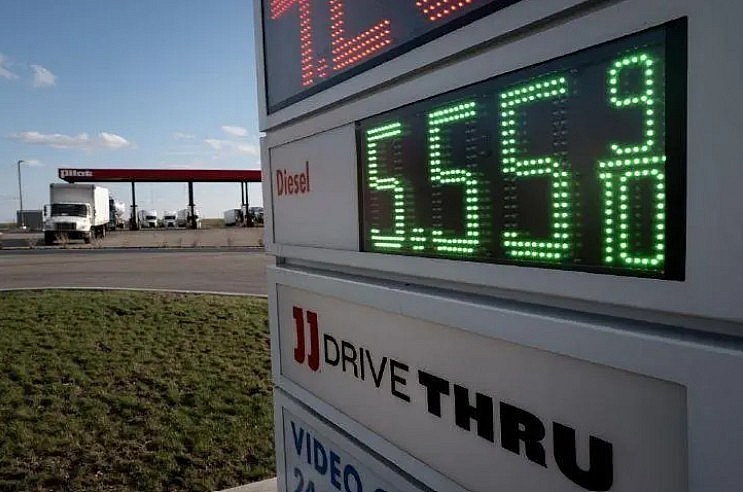
If you’ve been watching the commodities ticker this week, you’ve witnessed a miracle. Crude oil prices, the global pulse of energy, suffered a near-total cardiac arrest following the U.S.-Iran ceasefire announcement. On paper, the world just got a 15% discount on energy. But if you pulled into a Shell or Exxon station this morning, you likely saw the same stubborn $4.16 staring back at you.
This isn't a glitch in the Matrix. It’s a documented economic phenomenon known as "Rockets and Feathers." To understand why your wallet is still bleeding while Wall Street celebrates, we have to look past the headlines and into the messy, expensive reality of the local gas station.
Read more: The $4 Gap: Why U.S. Gas Prices Haven't Followed Oil’s Record Plunge
The Physics of Pricing
The "Rockets and Feathers" theory is simple: when oil prices spike, retail gas prices shoot up like a SpaceX Falcon 9. When oil prices crash, gas prices drift down like a stray feather in a light breeze.
In a perfect world, the two would move in lockstep. But the world of fuel retail is far from perfect. Unlike a stock market trade that happens in milliseconds, the gasoline in your car's tank represents a weeks-long journey. The fuel being pumped today was purchased at last week's "pre-ceasefire" prices—the peak of the crisis.
For a local station owner, cutting prices too early isn't just a loss of profit; it’s a gamble with survival. If they lower prices today but the ceasefire fails tomorrow, they won’t have enough cash on hand to buy their next shipment of "replacement" fuel. In the industry, we call this Replacement Cost Stress, and it's the primary reason your local station is playing the "wait and see" game.
The $4.16 Floor
While crude oil (WTI) has dipped toward the mid-$70s, the U.S. national average remains anchored at levels not seen since the 2022 shock. This disconnect is exacerbated by the Strait of Hormuz bottleneck. While the ceasefire suggests a reopening, insurance premiums for tankers haven't vanished overnight.
Furthermore, the U.S. refining capacity is currently stretched thin. We are entering the "Spring Transition"—the period where refineries switch from winter-grade to more expensive summer-grade blends. This seasonal shift acts as a structural floor, preventing gas prices from falling as far as the crude oil drop might suggest. Even if oil fell to $50 tomorrow, the "Summer Blend" mandate would keep you paying a premium at the pump.
Who Wins the Lag?
It’s easy to point the finger at "Big Oil," and while refinery margins (the "crack spread") are currently at healthy levels, the real friction is often hyper-local. In states like California, where the average sits at $5.93, state-specific taxes and carbon credits act as a secondary "gravity" that keeps the feather from ever reaching the ground.
Until the logistics of the Hormuz ceasefire materialize into actual tankers docking in Houston or Long Beach, retailers will remain defensive. They are pricing in the "risk of the unknown" rather than the "hope of the news."
The Bottom Line for Drivers
Expect the "feather" to take its time. Historically, it takes about two to three weeks of sustained low crude prices before the local station feels the competitive pressure to slash digits on the marquee.
If the peace holds, we might see the $3-range again by May. But for now, the disconnect between the global market and your local nozzle is a stark reminder: in the energy world, bad news travels at the speed of light, but good news travels by truck.