Where Are All 16 World Cup 2026 Stadiums: Capacity, Fun Facts

If you look at the list of stadiums for the FIFA World Cup 2026, it’s easy to focus on numbers: 16 venues, 3 countries, record capacity.
But the more you explore them, the more you realize this tournament isn’t just about scale. It’s about contrast. Each stadium carries a different mood, a different kind of crowd, even a different way of experiencing football.
Below is the complete list of all 16 stadiums, now with insider details, atmosphere notes, and small things fans often overlook.
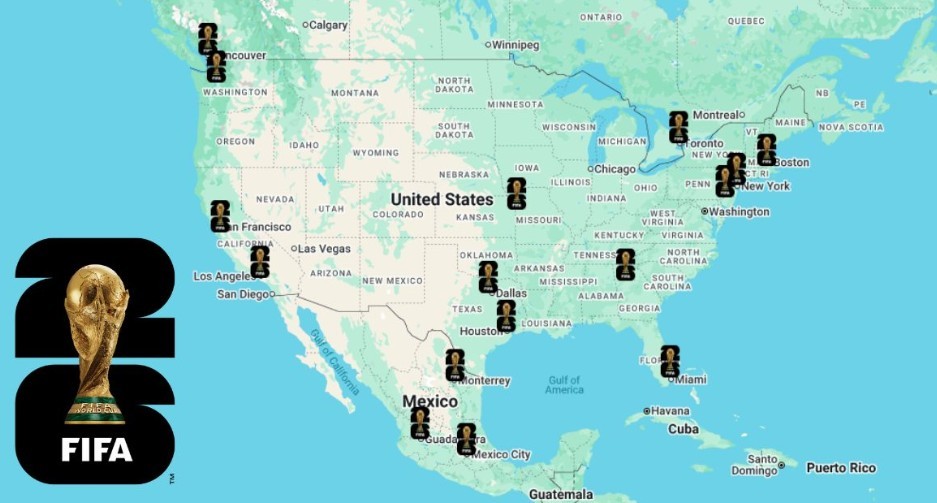
Host Cities and Stadiums by CountryCanada Vancouver – BC Place Stadium Toronto – BMO Field Mexico Mexico City – Estadio Azteca Guadalajara – Estadio Akron Monterrey – Estadio BBVA United States Atlanta – Mercedes-Benz Stadium Boston (Foxborough) – Gillette Stadium Dallas (Arlington) – AT&T Stadium Houston – NRG Stadium Kansas City – GEHA Field at Arrowhead Stadium Los Angeles (Inglewood) – SoFi Stadium Miami (Miami Gardens) – Hard Rock Stadium New York / New Jersey (East Rutherford) – MetLife Stadium Philadelphia – Lincoln Financial Field San Francisco Bay Area (Santa Clara) – Levi’s Stadium Seattle – Lumen Field |
1. MetLife Stadium (New York/New Jersey)
- Capacity: ~82,500 | Opened: 2010
- Fun fact: Built jointly by two NFL teams (Giants & Jets), which is rare
- What you’ll notice: The crowd here feels incredibly international
This is where the final will be played, and honestly, it makes sense. You don’t come here for beauty, you come for scale and symbolism. It feels like the entire world could show up and still fit in.
2. AT&T Stadium (Dallas, Texas)
- Capacity: Up to ~94,000
- Fun fact: The central video screen is one of the largest in the world
- What you’ll notice: Even people in the highest seats feel “close” to the action
There’s a moment when you walk inside and instinctively look up. It’s less a stadium and more a spectacle. Some purists might say it’s too flashy, but during a World Cup, that excess somehow works.
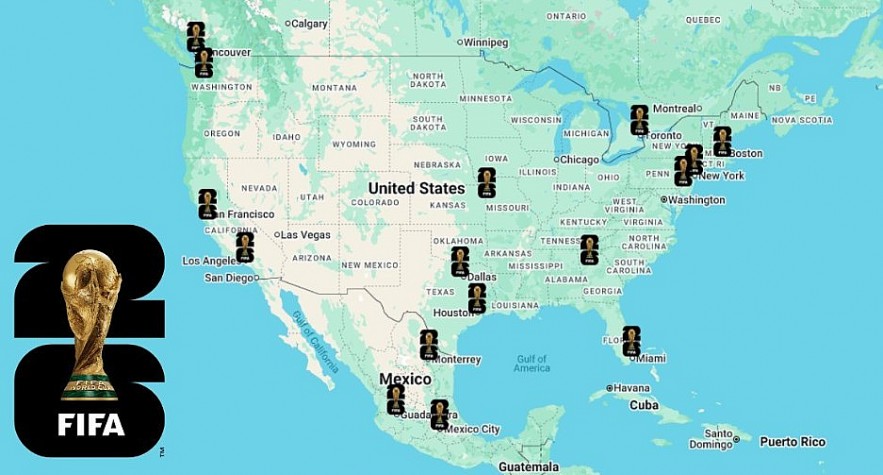 |
| The FIFA 2026 World Cup Map |
3. Mercedes-Benz Stadium (Atlanta, Georgia)
- Capacity: ~75,000
- Fun fact: The roof opens in 8 triangular panels like a camera aperture
- What you’ll notice: Food prices here are surprisingly fan-friendly compared to U.S. norms
It feels designed with fans in mind, not just television. That small difference becomes obvious once you’re inside.
4. SoFi Stadium (Los Angeles, California)
- Capacity: ~70,000+
- Fun fact: Built with a partially open roof to maintain airflow while covering the stadium
- What you’ll notice: The massive oval video board floating above the field
Watching football here might feel slightly surreal. It’s almost too perfect, like a simulation of a stadium rather than a traditional one.
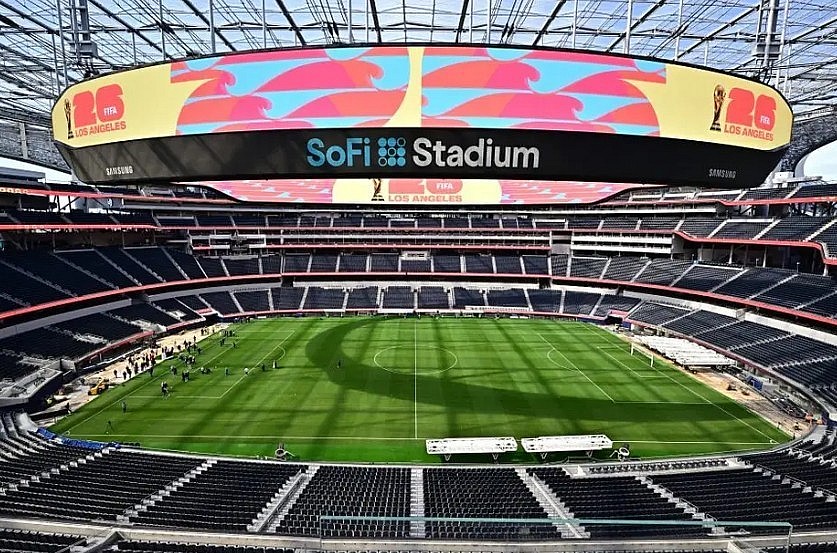 |
| SoFi Stadium in California will host World Cup games |
5. Levi’s Stadium (San Francisco Bay Area)
- Capacity: ~71,000
- Fun fact: One side of the stadium gets significantly more sunlight, which players have mentioned
- What you’ll notice: Efficient, clean, but not overly emotional
It’s the kind of place where everything works, but the magic depends heavily on the match itself.
6. Lumen Field (Seattle)
- Capacity: ~69,000
- Fun fact: Designed specifically to amplify crowd noise
- What you’ll notice: The sound hits you before you even see the pitch
This is probably the closest thing the U.S. has to a European-style football atmosphere. If you care about noise and intensity, this is one of the best venues in the entire tournament.
7. Arrowhead Stadium (Kansas City)
- Capacity: ~73,000
- Fun fact: Holds a Guinness World Record for loudest crowd roar (NFL game)
- What you’ll notice: Fans here stay loud from start to finish, not just big moments
There’s something refreshingly old-school about this place. It doesn’t try to impress visually, but emotionally, it delivers.
8. NRG Stadium (Houston)
- Capacity: ~72,000
- Fun fact: First NFL stadium with a retractable roof
- What you’ll notice: You barely feel the Texas heat inside
It’s not the most memorable visually, but when you’re watching a match in 35°C heat outside, you’ll appreciate it more than you expect.
9. Lincoln Financial Field (Philadelphia)
- Capacity: ~69,000
- Fun fact: Eagles fans are known for being among the most intense in the U.S.
- What you’ll notice: The crowd reacts emotionally to everything
If the match gets tense, this stadium amplifies that tension. It’s not always comfortable, but it’s never boring.
10. Gillette Stadium (Boston)
- Capacity: ~65,000
- Fun fact: Located about 45 minutes outside Boston, not in the city itself
- What you’ll notice: A more traditional, less flashy game-day experience
It feels grounded. No gimmicks, just football.
11. Hard Rock Stadium (Miami)
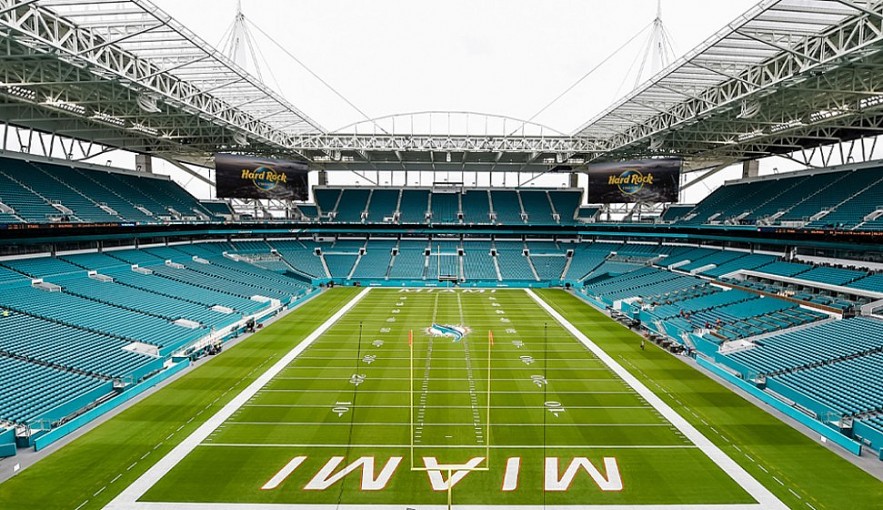 |
| Hard Rock Stadium – Home of the Miami Dolphins |
- Capacity: ~65,000
- Fun fact: Designed to provide shade for most seats, which matters in Florida
- What you’ll notice: A strong Latin American presence in the crowd
This might be the closest you’ll get to a South American World Cup atmosphere without leaving the U.S.
12. Estadio Azteca (Mexico City)
- Capacity: ~87,500
- Fun fact: Only stadium to host two World Cup finals (1970, 1986) and now a third tournament
- What you’ll notice: The altitude (over 2,200 meters) affects both players and fans
There’s no way around it, this is one of the most historic stadiums in football. You don’t just watch a game here, you feel history pressing down on you.
13. Estadio BBVA (Monterrey, Mexico)
- Capacity: ~53,000
- Fun fact: Nicknamed “The Steel Giant”
- What you’ll notice: The mountain backdrop behind the stadium
Few venues look this naturally beautiful. It feels like football placed inside a landscape painting.
14. Estadio Akron (Guadalajara, Mexico)
- Capacity: ~49,000
- Fun fact: Built with a design inspired by a volcano
- What you’ll notice: Steep stands that keep fans very close to the pitch
It’s compact, but that closeness creates intensity. Matches here could feel louder than expected.
15. BMO Field (Toronto, Canada)
- Capacity: ~45,000 (expanded)
- Fun fact: Originally a soccer-specific stadium before expansion
- What you’ll notice: Fans are very close to the action
It’s one of the smallest venues, but sometimes smaller is better. You feel everything more directly.
16. BC Place (Vancouver)
- Capacity: ~54,000
- Fun fact: Features a retractable roof supported by cables
- What you’ll notice: The calm, scenic setting outside contrasts with the energy inside
It’s a comfortable, almost relaxed environment, until the match starts.
A Thought That Stays With You
If you imagine traveling across all 16 stadiums, you start to notice something subtle:
No two venues feel the same.
Not just visually, but emotionally.
- Seattle is noise
- Mexico City is history
- Miami is culture
- Dallas is scale
And maybe that’s the real identity of World Cup 2026.
Not one atmosphere, but sixteen different ones, stitched together into a single tournament.