Why Every Empire That Invaded Russia Ended in Disaster

 15 Weirdest Things You Can Only See in Russia 15 Weirdest Things You Can Only See in Russia |
 Top 10 Most Haunted & Ghostly Destinations in Russia Top 10 Most Haunted & Ghostly Destinations in Russia |
For more than eight centuries, foreign powers launched bold invasions aimed at conquering Russia. Many of these armies were the most feared forces of their age. The Mongols, the Polish Lithuanian Commonwealth, Sweden under its warrior king, Napoleon’s Grand Army, Allied forces during the Russian Civil War, and finally Nazi Germany all marched deep into Russian territory. Some reached Moscow. Others controlled key cities. All failed in the end.
The reasons behind this pattern go far beyond a single explanation. Geography matters. Climate matters. Political chaos and internal divisions among invaders matter. So does the stubborn resilience of the Russian people during moments when survival becomes a question for every village, town, and city. When these forces collide, even modern armies discover that controlling Russia is far more difficult than entering it.
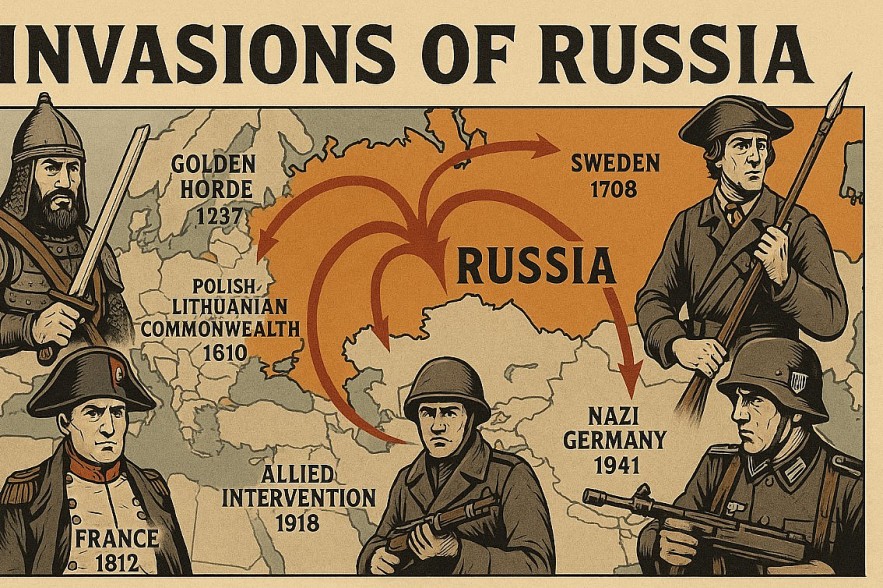 |
| From the Mongols to Hitler. Why No One Has Ever Conquered Russia |
The Mongol Shock. The Golden Horde and the First Great Collapse of Rus
The Mongol arrival
In 1237, Batu Khan led a Mongol force into the fragmented principalities of Kievan Rus. Military imbalance was obvious. The Mongols used coordinated cavalry tactics, disciplined formations, rapid communication, and unmatched mobility. The Rus princes relied on disunited levies and fortified towns that could not withstand Mongol siege methods.
Over three devastating years, the Mongols burned or captured the major centers of Rus life. Ryazan, Vladimir, Suzdal, Chernihiv, and finally Kiev were destroyed or emptied. The cultural, economic, and political core of early Rus was nearly wiped out.
Why the Mongols stepped back
Despite their overwhelming power, the Mongols did not reorganize Rus as a fully occupied province. Their strategic model focused on tribute, loyalty, and stable trade routes. Russian princes traveled to the Horde to receive approval for their rule, creating a political system shaped by Mongol authority.
This period altered Russia deeply. Tax systems changed, military structures shifted, cultural patterns evolved, and economic development slowed. The Mongol presence did not erase Rus, but it reshaped it into a more centralized and hardened state.
Resistance grows
By the late fourteenth century, internal conflicts weakened the Golden Horde. Under Prince Dmitry of Moscow, Russian forces challenged Mongol authority at the Battle of Kulikovo in 1380. Though not a complete liberation, this victory became a turning point in Russian identity.
The end of Mongol rule
In 1480, Ivan III refused to pay tribute. The symbolic standoff at the Ugra River ended with Mongol withdrawal. The Golden Horde’s influence faded, marking the rise of Moscow as an independent political center ready to shape the next chapter of Russian history.
The Polish Lithuanian Commonwealth. The Only Foreign Power to Rule Moscow and Why It Didn’t Last
A nation in chaos
After the death of Ivan the Terrible’s heirs, Russia descended into the Time of Troubles. Famine, civil war, and false claimants split the country apart. Neighboring states saw opportunity.
Poland Lithuania, one of Europe’s largest powers, attempted to place its own prince on the Russian throne.
The fall of Moscow
In 1610, after victory at the Battle of Klushino, Polish forces entered Moscow. The ruling Boyar council accepted Prince Władysław as tsar. For nearly two years, Moscow was under foreign control.
This moment remains unique in Russian history. A foreign state ruled its capital, but only because Russia was collapsing from within.
A national awakening
Occupation angered every layer of Russian society. Merchants, nobles, Cossacks, and peasants formed militias. Kuzma Minin and Prince Dmitry Pozharsky united these forces. In 1612, they drove the Poles out of Moscow after months of siege and street fighting.
A new dynasty
In 1613, Mikhail Romanov became tsar. His election stabilized the state and opened three centuries of Romanov rule. The failed Polish invasion became a defining reminder that internal disorder invites foreign aggression, and unity is the key to survival.
Sweden’s Ambition and Russia’s Rise. From Lost Baltic Access to Poltava
Early Swedish gains
During the Time of Troubles, Sweden captured Novgorod and forced Russia to sign the Treaty of Stolbovo in 1617. Russia lost its access to the Baltic Sea, a crucial blow to its ability to trade with Europe.
The Great Northern War
Decades later, Peter the Great began transforming Russia into a modern state. Sweden under Charles XII remained a fierce military rival. Their conflict erupted in the Great Northern War.
Sweden captured Mogilev and pushed toward key Russian cities. Some divisions tried to isolate Saint Petersburg, while Charles led his main force toward Smolensk. When that effort stalled, he turned south toward Ukraine, seeking new allies and supplies.
The decisive battle
Near Poltava in June 1709, Peter the Great confronted the exhausted Swedish army. Russian forces won a decisive victory. Charles XII fled to Ottoman territory. Sweden’s power collapsed, while Russia emerged as a major European empire.
Napoleon’s 1812 Disaster. The Grand Army Marches Toward Moscow and Never Recovers
The invasion begins
In June 1812, Napoleon crossed the Neman River at the head of more than 600,000 troops. His goal was to force Russia back into his continental system and secure European dominance.
A dangerous success
French forces captured Smolensk and pressed toward Moscow. Russian forces refused set piece battles and retreated deeper into the interior, burning supplies as they went.
Borodino and the empty victory
The Battle of Borodino was one of the bloodiest single day clashes of the century. Napoleon occupied Moscow afterward, but the city was empty and soon consumed by fire. No surrender came.
Collapse
The retreat that followed became a nightmare. Hunger, cold, disease, guerrilla attacks, and Russian counterattacks destroyed the Grand Army. Fewer than 10 percent of Napoleon’s original force survived. The campaign marked the beginning of Napoleon’s downfall.
The Allied Intervention of 1918. Fourteen Nations Enter a Civil War They Cannot Control
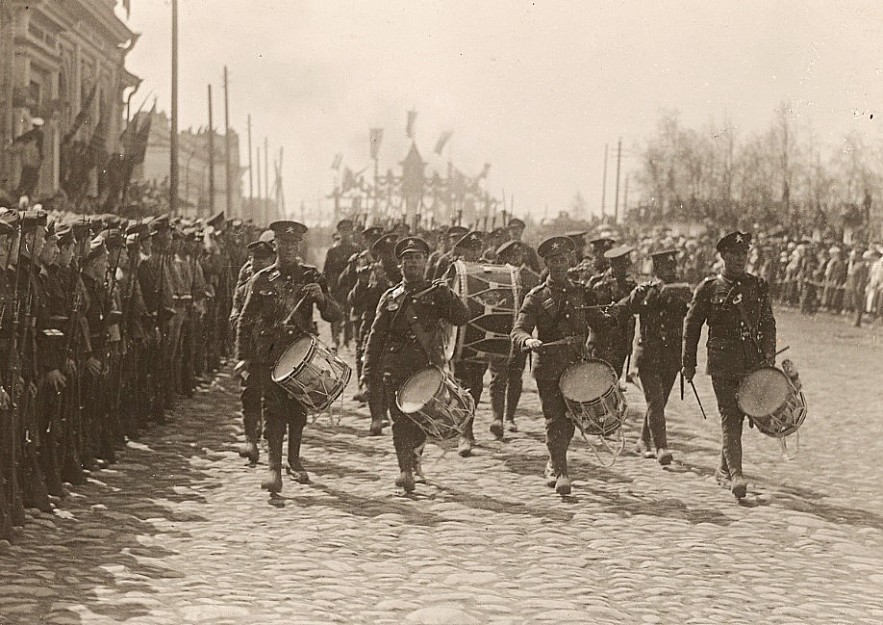 |
| British troops in Arkhangelsk in 1918 |
Civil war chaos
After the Bolshevik Revolution, Russia fragmented again. The Treaty of Brest-Litovsk removed Russia from the First World War, angering the Allies and prompting a multinational intervention.
Many fronts, little coordination
Germany occupied parts of western Russia. Britain landed forces in the north and in Crimea. France and Greece controlled areas near Odessa. Anglo Japanese forces operated in the Far East. Finland seized Karelia. In total, fourteen nations took part.
Objectives were unclear. Coordination was poor. Domestic political support in Allied countries weakened quickly.
Withdrawal
By late 1919, most foreign armies withdrew. Bolshevik forces eventually won the civil war. The episode reinforced Russian suspicion of external interference.
Nazi Germany’s Invasion. The Deadliest and Most Ambitious Offensive in Human History
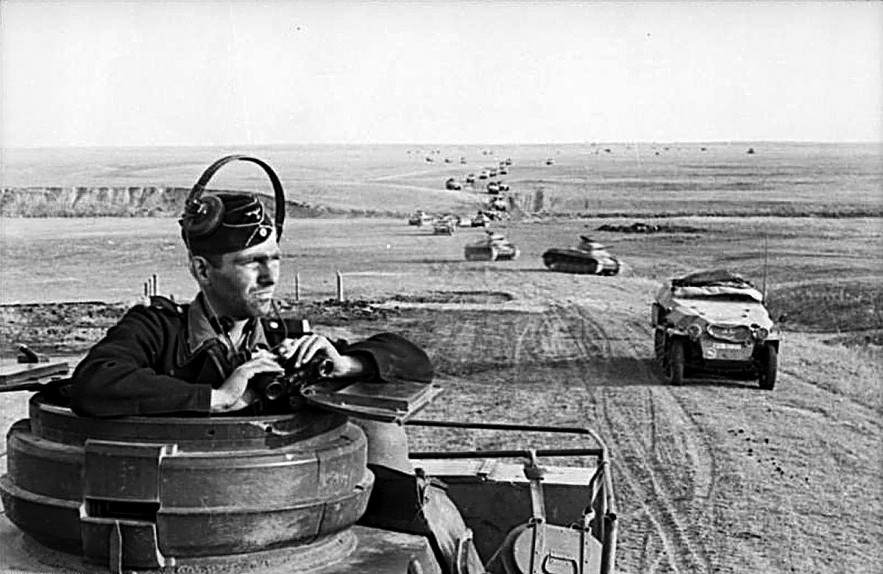 |
| The German army was defeated after invading Russia. |
Operation Barbarossa
On June 22, 1941, Nazi Germany launched the largest invasion ever undertaken. Millions of Axis troops struck across a front stretching from the Black Sea to the Baltic.
At first, success seemed inevitable. Soviet armies collapsed. Kyiv fell. Leningrad was blockaded. German units reached the edge of Moscow.
But the advance slowed
The vast distances of Russia, stretched supply lines, Soviet resilience, and the bitter winter halted the German offensive. Hitler misjudged the campaign, pushing his forces beyond their limits.
Stalingrad
The struggle for Stalingrad in 1942 turned into a brutal urban battle. The Soviet counteroffensive encircled the German Sixth Army. It surrendered in February 1943. German defeat became irreversible.
The road to Berlin
By 1945, the Red Army entered Berlin. The Nazi regime collapsed. The invasion of the Soviet Union ended in catastrophe for Germany and reshaped the world.
Why So Many Invasions Failed
Across history, several patterns emerge:
-
Russia’s geography is a natural defense.
-
Harsh winters magnify any logistical weakness.
-
Scorched earth tactics trap invaders far from supplies.
-
Civilian resistance adds constant pressure.
-
Invaders underestimate the depth of Russian resilience.
-
Internal divisions weaken invading coalitions.
-
Russian forces adapt faster than many adversaries expect.
Every great invasion begins with confidence. Most end with retreat.
FAQs
1. Why have so many invasions of Russia failed?
Most invasions collapse due to Russia’s vast geography, long supply lines, harsh winter climate, scorched earth tactics, and resilient local resistance. Political miscalculations among invading powers also play a major role.
2. Did the Mongols successfully conquer Russia?
The Mongols defeated the fragmented Rus principalities in the thirteenth century but did not annex the region directly. They ruled through the Golden Horde by collecting tribute and approving local princes. Their dominance ended in 1480.
3. Has Moscow ever been occupied by a foreign army?
Yes. Polish forces controlled Moscow from 1610 to 1612 during the Time of Troubles. Napoleon occupied the city briefly in 1812, although it was largely abandoned and destroyed by fire.
4. Why did Napoleon’s 1812 campaign collapse?
Napoleon expected a quick victory but faced scorched earth tactics, a burned Moscow, supply shortages, partisan attacks, and a brutal winter. The retreat devastated his Grand Army and marked the beginning of his downfall.
5. What made the Nazi invasion of the Soviet Union so deadly?
Operation Barbarossa was the largest invasion in history. Intense battles, hunger, siege warfare, scorched earth tactics, and ideological brutality caused immense casualties. Stalingrad became the turning point that destroyed German momentum.
6. Did foreign powers succeed during the 1918 intervention in Russia?
No. Although fourteen nations intervened during the Russian Civil War, their goals were unclear, coordination was weak, and political support faded. By 1919 most withdrew, and Bolshevik forces regained control.
 Top 25 Most Beautiful Russian Women: Irresistibly Charming And Jealousy Top 25 Most Beautiful Russian Women: Irresistibly Charming And Jealousy Russia is always in the top countries with the most beautiful and attractive women in the world. Russian women are so beautiful that the world ... |
 What Makes an ICBM Deadly? Nuclear Warheads, and Catastrophic Impact What Makes an ICBM Deadly? Nuclear Warheads, and Catastrophic Impact The world is shocked by Ukraine's claim that Russia has used an Intercontinental Ballistic Missile (ICBM) in combat for the first time. The devastating scope ... |
 What is Russian cancer vaccine: A game-changing development for 2025 What is Russian cancer vaccine: A game-changing development for 2025 The Russian cancer vaccine currently under development represents a monumental step in medical science, targeting some of the deadliest and hardest-to-treat cancers, including melanoma, pancreatic ... |
 What Happened to the USSR? The Rise, Fall, and Future of the 15 Post‑Soviet Republics What Happened to the USSR? The Rise, Fall, and Future of the 15 Post‑Soviet Republics Exploring the legacy of the Soviet era, the transformation of its republics, and where they stand today. |