Who Is Alejandro Rosales Castillo? Inside the Capture of a Former FBI Top Ten Most Wanted Fugitive

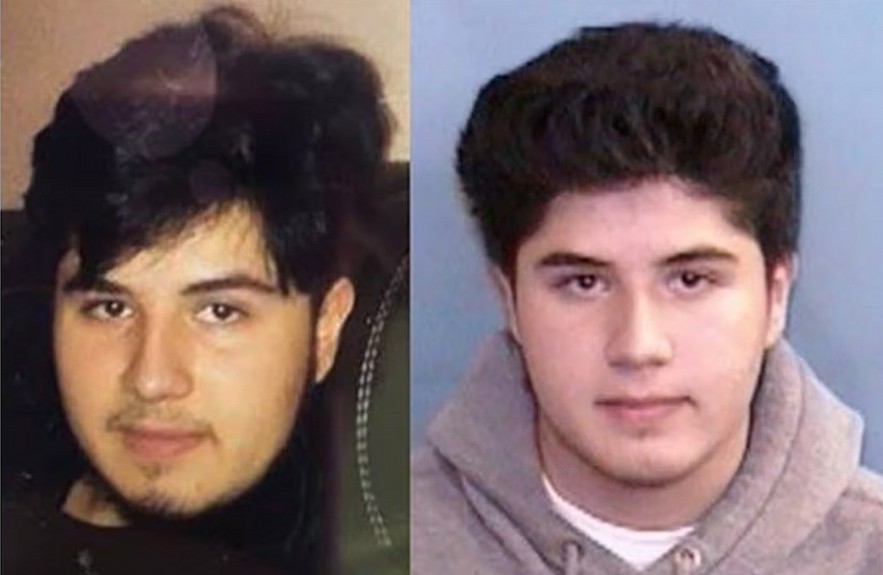 |
| FBI's Top 10 Most Wanted fugitive in 2016 Charlotte murder caught in Mexico after nearly 10 years |
For nearly ten years, Alejandro Rosales Castillo remained a symbol of unfinished justice in the United States. His name sat prominently on the FBI’s Ten Most Wanted Fugitives list, tied to a brutal 2016 homicide that shocked North Carolina and haunted investigators for nearly a decade.
In January 2026, that long pursuit finally ended when Mexican authorities arrested Castillo in Pachuca, Hidalgo, closing one of the most closely watched international manhunts in recent FBI history.
Read more:
- The FBI’s 10 Most Wanted Fugitives for 2026: Full Profiles, Charges, and Rewards
- Top 10 Most Wanted Fugitives in the U.S by FBI
Early Life and Family Background
Alejandro Rosales Castillo was born on November 26, 1998, in Arizona, to a Mexican-American family. Public records and court filings suggest a largely unremarkable upbringing. He was bilingual, spoke fluent English and Spanish, and maintained ties on both sides of the U.S.–Mexico border.
Friends and former acquaintances later described Castillo as quiet, reserved, and socially adaptable. There were no widely reported signs of violent behavior during his early teenage years. By his mid-teens, Castillo had relocated to Charlotte, North Carolina, where he worked in the restaurant industry — a move that would place him at the center of a case that would later span two countries.
The 2016 Murder That Sparked a National Manhunt
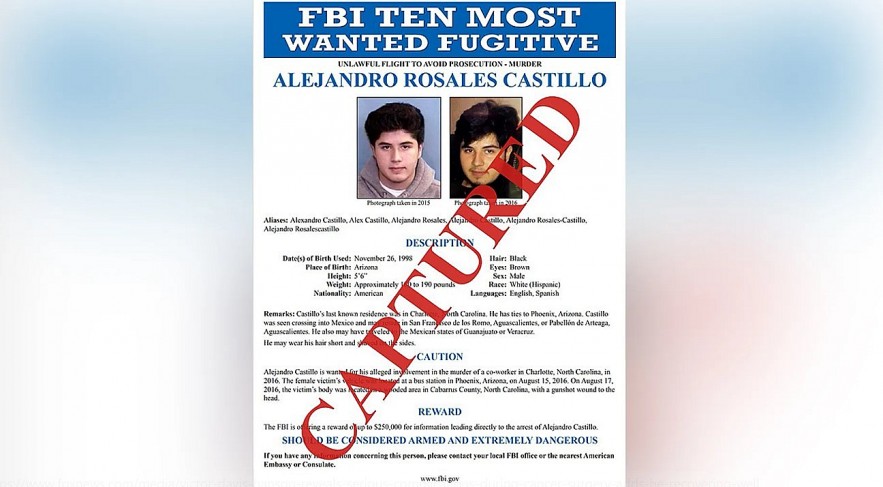 |
| Alejandro Rosales Castillo was arrested in Mexico Friday |
In August 2016, Castillo was 17 years old when authorities allege he murdered his co-worker, Truc Quan “Sandy” Ly Le, a 23-year-old woman who worked alongside him at a Charlotte-area restaurant.
According to investigators, Castillo and Le had previously been romantically involved. Court documents state that Le had loaned Castillo a significant amount of money, which he failed to repay. On August 9, 2016, Castillo allegedly contacted Le under the pretense of settling the debt.
Instead, prosecutors say he forced her to withdraw cash from an ATM before driving her to a remote wooded area in Cabarrus County, where she was shot and killed. Her body was discovered later that day.
Within days, Le’s vehicle was found abandoned at a bus station in Phoenix, Arizona. Surveillance footage reportedly captured Castillo traveling west and crossing into Mexico shortly afterward.
Flight From Justice and Federal Charges
A warrant for Castillo’s arrest was issued almost immediately. He was charged with first-degree murder in North Carolina, followed by a federal charge of unlawful flight to avoid prosecution.
By October 2017, the case had escalated nationally. The Federal Bureau of Investigation officially placed Castillo on its Ten Most Wanted Fugitives list, assigning him fugitive number 516. The FBI offered a reward of up to $250,000 for information leading directly to his arrest.
The designation underscored the seriousness of the crime and the belief that Castillo posed a continued risk while at large. He also became one of the youngest individuals ever added to the list, drawing widespread media attention.
Life on the Run in Mexico
Investigators believe Castillo spent most of his years on the run in Mexico, where he relied on family connections and used false identification to evade detection. Authorities say he lived quietly, avoided digital footprints, and moved periodically to stay ahead of law enforcement.
During his absence, the investigation continued to evolve. Two additional individuals connected to the case were arrested and charged — one as an accessory after the fact and another who voluntarily surrendered. Despite those developments, Castillo himself remained elusive.
The FBI’s Charlotte Field Office, working alongside local police and Mexican authorities, tracked leads for years, following tips, financial trails, and suspected sightings.
The Arrest in Pachuca, Mexico
The breakthrough came in mid-January 2026, when coordinated intelligence efforts led authorities to Castillo’s location in Pachuca, the capital city of Hidalgo state. Mexican law enforcement arrested him without incident.
U.S. officials confirmed that Castillo had been living under an assumed identity at the time of his arrest. He is now in Mexican custody and is expected to face extradition to North Carolina, where he will stand trial for murder.
FBI officials emphasized that the arrest was the result of sustained international cooperation — a reminder that fugitives, no matter how long they evade capture, are rarely beyond reach.
What Happens Next
Once extradited, Castillo is expected to face the original murder charge in North Carolina. Prosecutors may also revisit additional charges related to his decade-long flight from justice.
For the family of Truc Quan “Sandy” Ly Le, the arrest brings renewed attention to a case that has remained unresolved for nearly ten years. Law enforcement officials say the capture represents not just the end of a manhunt, but a critical step toward accountability.
A Case That Reflects Modern Fugitive Tracking
The pursuit of Alejandro Rosales Castillo highlights how modern fugitive investigations unfold in a globalized world. International borders, false identities, and long periods of silence can delay justice — but sustained cooperation and patience can still bring results.
As Castillo awaits extradition, his case stands as a reminder that inclusion on the FBI’s Most Wanted list is rarely symbolic. For investigators, it is a promise that the search does not end — no matter how long it takes.