The Muslim Brotherhood and CAIR: Origins, History, and the Hidden Stories

Though they emerged in very different contexts — one founded in Egypt in 1928, the other built in Washington, D.C. in 1994 — they share a similar fate: both have become symbols that stretch far beyond their original missions, admired by some and deeply mistrusted by others.
To understand why these groups are so controversial today, it helps to look back at how they formed, how they evolved, and the key stories that shaped public perception.
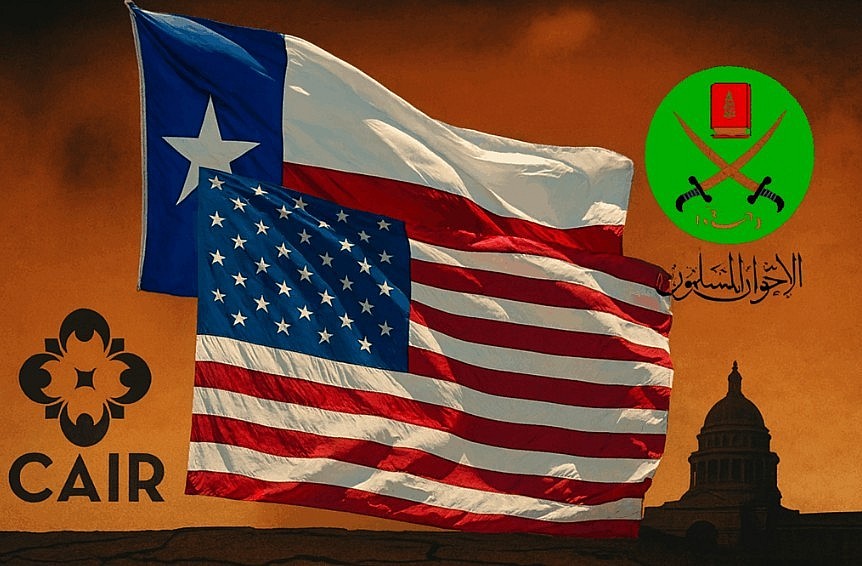 |
| CAIR and Muslim Brotherhood |
Part I: The Muslim Brotherhood — From Religious Revival to a Global Network
1. The Birth of a Movement: Egypt After World War I
The Muslim Brotherhood (Ikhwan al-Muslimin) was founded in 1928 by Hassan al-Banna, a young schoolteacher in the Egyptian city of Ismailia. At the time, Egypt was heavily influenced by British power. Traditional social structures were weakening under pressure from modernization and Western culture.
Al-Banna believed Muslims were losing their moral and social cohesion. His early vision wasn’t about elections or political control. Instead, he focused on reviving Islamic ethics through education, charity, and community support. His belief was simple and sweeping: Islam should guide all aspects of life.
An early story:
The movement started with just six men meeting in a small room near the Suez Canal. Within two years, it grew into a nationwide network offering schools, medical clinics, youth programs, and social services. The Brotherhood gained attention because it was close to the people — especially the working class and the urban poor.
2. Growth and Transformation: From Social Reform to Political Force
1930s–1950s: Rapid expansion and political tension
By the late 1930s, the Brotherhood had branches across Egypt. The group built clinics, cooperatives, athletic clubs, and publishing houses. As its popularity grew, so did government concern.
By the late 1940s, a secretive paramilitary wing had emerged inside the movement. Some members were implicated in political violence during a turbulent period in Egyptian history. This contributed to the government’s decision to dissolve the Brotherhood in 1948. Shortly afterward, Hassan al-Banna was assassinated — widely believed to be a reprisal by state security forces.
1950s–1970s: Repression and ideological shifts
Under President Gamal Abdel Nasser, the Brotherhood faced mass arrests and brutal repression. Prisons became breeding grounds for new ideological currents, most notably through Sayyid Qutb, who produced writings that emphasized the moral corruption of secular society and called for resistance. Some extremist groups later misused Qutb’s works to justify violence, even though mainstream Brotherhood leaders rejected that path.
1970s–2010: Political participation and gradual normalization
Under Egypt’s subsequent leaders, the Brotherhood operated semi-legally. It couldn’t form an official political party, but its members ran as independents and gained influence in parliament. The group built a reputation as a disciplined, socially rooted movement advocating gradual reform rather than revolution.
A little-known fact:
Despite being technically banned, Brotherhood-affiliated candidates often won more seats than many legal parties, simply because they had strong local networks built over decades of community work.
2011: The Arab Spring and a brief moment of power
After President Hosni Mubarak fell, the Brotherhood launched the Freedom and Justice Party. Their candidate, Mohamed Morsi, became Egypt’s first democratically elected president.
But the experiment was short-lived. Rising public frustration, political missteps, and tension with the military led to Morsi’s removal in 2013. The Brotherhood was banned once again and labeled a terrorist organization by the Egyptian government and several other regional powers.
3. Key Facts About the Muslim Brotherhood
-
It is not a single unified global organization; branches vary dramatically in ideology and behavior.
-
Many branches emphasize elections and community services; others have been accused of supporting violence.
-
Social welfare programs — schools, clinics, charities — have been essential to its popularity.
-
Its mix of religion, activism, and politics makes it difficult to categorize cleanly.
4. Why the Brotherhood Remains Controversial
The Brotherhood straddles a line between religious revival, political mobilization, and — in some periods — associations with violence. To supporters, it represents reform and resistance to dictatorship. To critics, it represents a political project cloaked in religion, seeking to reshape governments from within.
Its complexity is exactly what fuels debate.
Part II: CAIR — From a Small Office to the Best-Known Muslim Civil-Rights Group in America
1. Founding Context: Islamophobia in the Early 1990s
CAIR (Council on American-Islamic Relations) was established in 1994. At that time, American Muslims were facing rising suspicion, especially after the first Gulf War and a series of high-profile media portrayals that framed Muslims as threats.
The founders — Nihad Awad, Omar Ahmad, and Rafeeq Jaber — had backgrounds in community advocacy and media work. They believed two things were urgently needed:
-
A legal defense system for Muslims experiencing discrimination
-
A voice capable of challenging stereotypes in national media
Their early mission centered on civil rights, public education, and civic engagement.
2. Growth Through Advocacy, Litigation, and Media Work
Late 1990s–2001: Building a civil-rights network
CAIR opened chapters across the country, helping Muslims with cases involving workplace discrimination, school policies, airport profiling, and zoning issues for mosques.
A notable early case:
A middle-school girl in Oklahoma was barred from wearing her hijab to class. CAIR supported the family, and the case ended with a policy reversal. This became a model for later civil-rights protections involving religious attire.
Post-9/11: A surge in demand
After the September 11 attacks, hate crimes and suspicion toward Muslims skyrocketed. CAIR became a central hub for legal assistance, crisis communication, and community education. Journalists, lawmakers, and civil-rights organizations frequently turned to CAIR for comment and guidance.
During this period, CAIR grew into the largest and most visible Muslim advocacy group in the United States.
The 2007 controversy
During the Holy Land Foundation terrorism-financing trial, CAIR was listed as an “unindicted co-conspirator.” The designation carried no legal charges but had a lasting effect on public perception.
CAIR has repeatedly denied wrongdoing, calling the label politically motivated and pointing to the absence of any conviction.
3. Key Facts About CAIR
-
It has never been criminally charged or designated as a terrorist organization by the U.S. federal government.
-
It operates as a nonprofit dedicated to civil rights, public education, and legal advocacy.
-
Its attorneys have handled thousands of discrimination cases nationwide.
-
Some founders were connected to broader Muslim activism networks in the 1980s and 1990s, which continues to fuel speculation about links to global Islamist movements — a claim CAIR strongly rejects.
4. Lesser-Known Stories
-
Several landmark civil-rights guidelines used by federal agencies today were influenced by CAIR-connected cases.
-
CAIR’s work has indirectly strengthened protections for other minority faith groups, including Sikhs and Jews, in cases involving religious attire and workplace rights.
-
Many CAIR staff members come from legal and social-justice backgrounds, not religious or political movements.
Part III: Why These Two Organizations Are Constantly Linked — and Constantly Debated
Though the Muslim Brotherhood and CAIR operate in different worlds, they are often discussed together. The reasons include:
1. Ideological heritage
Some early American Muslim activists drew inspiration from global Islamic revival movements, including the Brotherhood. This historical overlap is often overstated but not entirely imagined.
2. Structural ambiguity
The Brotherhood’s decentralized structure makes it easy for critics to claim connections where none may exist. Some extend this suspicion to CAIR, despite a lack of legal or organizational linkage.
3. Post-9/11 political climate
Any large Muslim organization in the U.S. has faced heightened scrutiny for the past two decades — even when acting strictly within legal and democratic channels.
4. Blending religion with public life
Both groups work at intersections that make outsiders uneasy:
-
The Brotherhood blends religion with political activism.
-
CAIR blends religion with civil-rights advocacy.
That overlap makes them lightning rods for debate.
The Complex Legacy of Two Influential Movements
The Muslim Brotherhood and CAIR are not easy organizations to classify.
One is a nearly century-old religious and social movement that expanded across continents, endured suppression, and occasionally held political power.
The other is a U.S. civil-rights organization born out of a need to defend a minority community during periods of rising discrimination.
Their histories reflect two broader truths:
-
In the Muslim world, religion and politics often intertwine in ways outsiders find difficult to map.
-
In Western societies, Islam is frequently viewed through the lens of security, identity, and cultural anxiety.
Because of these overlapping dynamics, both groups have spent decades navigating admiration, suspicion, support, and criticism — often all at once.
FAQs
1. Is the Muslim Brotherhood a single unified organization across countries?
No. The Muslim Brotherhood is a broad movement with separate national branches that often operate independently. Some branches participate in elections and provide social services, while others adopt more confrontational or underground roles. There is no central global headquarters directing all activity.
2. Has the Muslim Brotherhood always been involved in politics?
Not initially. The movement began as a religious and social reform project focused on education and community welfare. Its political role expanded over time as it gained followers and became more influential in public life.
3. Is CAIR connected organizationally to the Muslim Brotherhood?
There is no confirmed organizational link. Critics often point to ideological overlaps from earlier decades, but CAIR has consistently denied any formal relationship. The U.S. federal government has never designated CAIR as part of the Brotherhood or as a terrorist entity.
4. What type of legal cases does CAIR usually take on?
CAIR’s legal work focuses on discrimination: workplace bias, school policies involving religious attire, mosque-zoning disputes, airport profiling, and hate-crime reporting. They also provide community training on civil rights and religious freedom.
5. Why did the Muslim Brotherhood gain so much influence in Egypt?
A major reason is its extensive social-service network. The Brotherhood built schools, clinics, welfare programs, and community centers in areas neglected by the state. This grassroots work gave it a loyal base long before it moved into formal politics.
6. Why is CAIR so frequently in the news?
CAIR often acts as the primary public voice for American Muslims during moments of national tension — hate crimes, discriminatory policies, international conflicts, or high-profile legal cases. Because of that visibility, the group regularly draws both support and criticism.
7. Why do some governments consider the Muslim Brotherhood a threat while others do not?
Views differ based on local politics. Some Middle Eastern governments see the Brotherhood’s political organizing as a challenge to their authority and have banned it. Other countries treat it as a legitimate political actor. These varied responses reflect national power dynamics rather than a single global assessment.