Germany Calendar 2026: Public Holidays, Festivals, and Special Days Guide

 |
| Germany Calendar 2026 |
Understanding the national calendar is essential for anyone living in, working with, or traveling to Germany. Unlike many countries, Germany operates under a federal system in which public holidays are divided between nationwide holidays and state-specific (regional) holidays. On top of this, Germany hosts some of the world’s most famous festivals, which strongly influence tourism, transportation, and business planning despite not being legal public holidays.
How Public Holidays Work in Germany
Germany consists of 16 federal states (Bundesländer). As a result:
-
Nationwide public holidays apply in all states
-
Regional public holidays apply only in selected states
-
Festivals and special days are culturally important but do not provide a legal day off
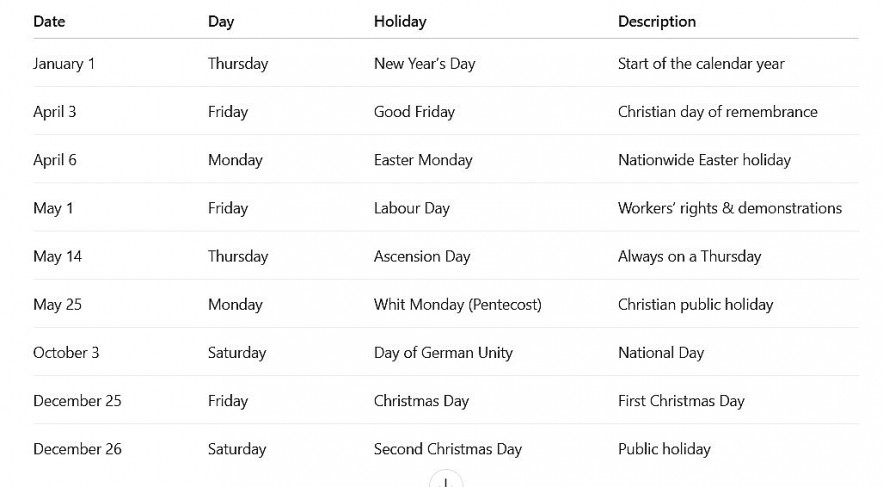
In 2026, Germany has exactly 9 nationwide public holidays.
Nationwide Public Holidays in Germany 2026
These holidays are observed across all 16 federal states, without exception.
Table 1: Nationwide Public Holidays 2026
 |
| Nationwide Public Holidays 2026 |
Note: Total nationwide public holidays in 2026: 9 days
Read more: 15 Most Popular Festivals and Carnivals in Europe in 2026: Dates, Highlights, and Travel Tips
Regional Public Holidays (State-Specific)
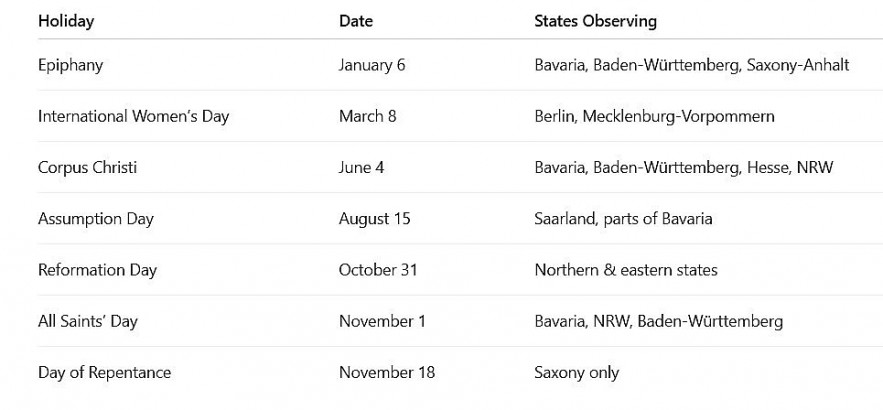
In addition to nationwide holidays, several public holidays apply only in certain states. Depending on where you live or work, the total number of public holidays can reach 13 days.
Table 2: Key Regional Public Holidays in 2026
 |
| Key Regional Public Holidays in 2026 |
Month-by-Month Overview of 2026
January
-
New Year’s Day (nationwide)
-
Epiphany (regional)
February
-
Valentine’s Day (cultural observance)
March
-
International Women’s Day (regional)
April – Easter Season
-
Good Friday (Apr 3)
-
Easter Monday (Apr 6)
Easter is one of Germany’s busiest travel periods, with strong impacts on transport and tourism.
May – Prime Holiday Month
-
Labour Day (May 1)
-
Ascension Day (May 14)
-
Whit Monday (May 25)
May is ideal for long weekends and vacation planning.
June
-
Corpus Christi (regional)
August
-
Assumption Day (regional)
October
-
Day of German Unity (Oct 3)
-
Reformation Day (Oct 31 – regional)
November
-
All Saints’ Day (regional)
-
Day of Repentance (Saxony)
December – Christmas Season
-
Christmas Day (Dec 25)
-
Second Christmas Day (Dec 26)
Major Festivals in Germany 2026 (Not Public Holidays)
Germany’s global cultural influence is closely tied to its festivals.
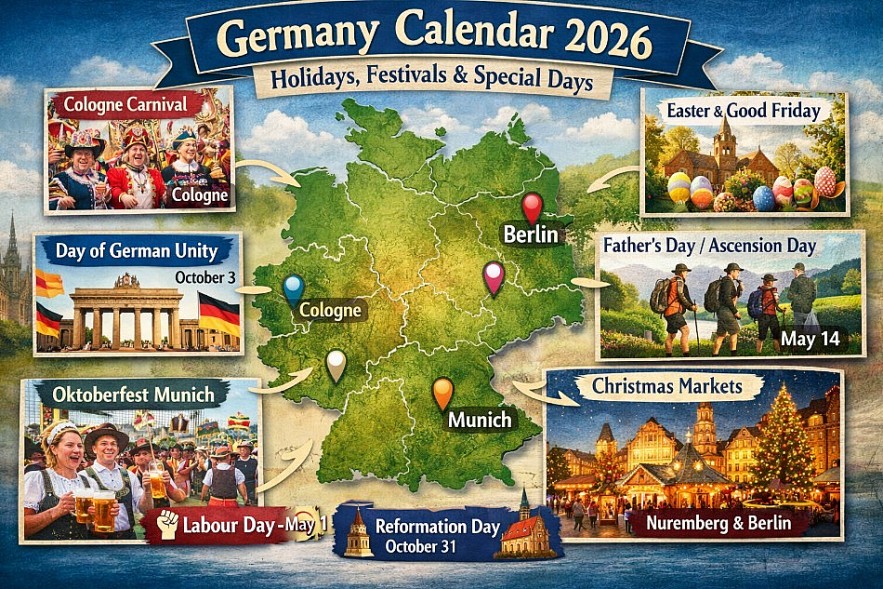
Cologne Carnival
Celebrated mainly in Cologne, Carnival peaks in February with parades, costumes, and street celebrations. It is one of Europe’s largest carnival traditions.
Oktoberfest
Held in Munich, Oktoberfest usually runs from late September to early October. It attracts millions of visitors and significantly affects hotel prices and transport across southern Germany.
Christmas Markets
From mid-November until December 24, traditional Christmas markets appear nationwide. Cities such as Nuremberg and Berlin are internationally renowned for their festive atmosphere.
Key Events
Day of German Unity – October 3, 2026
Germany’s only legally defined national holiday, this day commemorates the reunification of East and West Germany in 1990. In 2026, it falls on a Saturday, but nationwide celebrations, concerts, and official ceremonies still take place.
Easter Period – April 2026
Good Friday and Easter Monday form one of the most important religious and cultural holiday periods. Good Friday is a “quiet holiday” in many states, with restrictions on public entertainment.
Labour Day – May 1
Labour Day combines a public holiday with political demonstrations and union-led events, particularly visible in cities like Berlin.
Ascension Day and Father’s Day – May 14
Ascension Day coincides with Father’s Day in Germany, leading to widespread outdoor activities, regional travel, and strong demand for hospitality services.
Christmas Season – November to December
Christmas is a peak travel and retail season. While December 25 and 26 are public holidays, the broader Christmas market season plays a major role in tourism and local economies.
Special Observance Days (No Public Holiday)
These days are widely recognized but do not provide time off:
-
Valentine’s Day (February 14)
-
Mother’s Day (May 10, second Sunday of May)
-
Remembrance Day for Victims of National Socialism (January 27)
Practical Planning Tips for 2026
-
Employees: Combine May holidays with bridge days for extended breaks
-
Businesses: Expect staffing shortages around Easter, May, and Christmas
-
Travelers: Book early for Oktoberfest, Easter, and Christmas markets
-
HR & Payroll: Always verify state-specific holidays for compliance
Final Summary
The Germany Calendar 2026 includes:
-
9 nationwide public holidays
-
Up to 13 total public holidays, depending on the federal state
-
Globally significant festivals that shape tourism and business planning
Germany’s calendar reflects a balance of history, religion, labor rights, and cultural celebration. Understanding these dates is essential for accurate scheduling, strategic vacation planning, and successful travel in 2026.