Why Iran Does Not Surrender: The Shia Identity and the Persian Art of Endurance

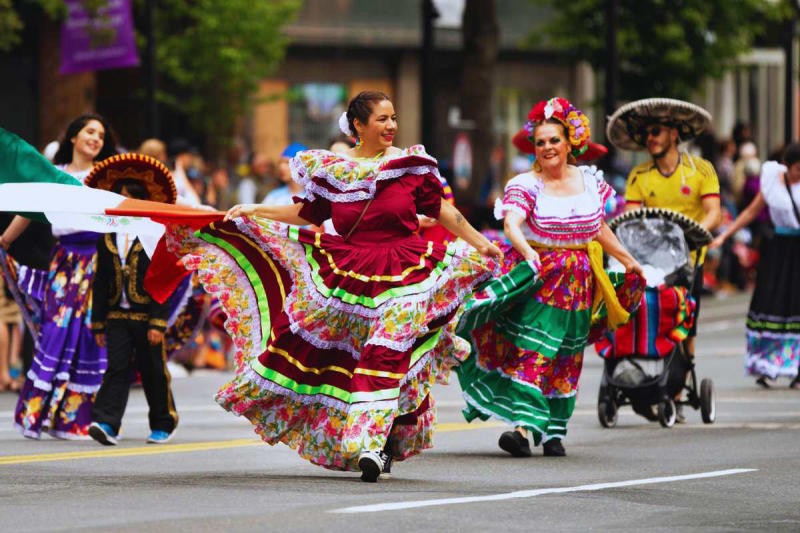
 How to Celebrate Persian New Year 'Nowruz': Traditions and Customs How to Celebrate Persian New Year 'Nowruz': Traditions and Customs |
 Top 25 Longest Wars/Conflicts in Human History Top 25 Longest Wars/Conflicts in Human History |
 15 Most Beautiful Iranian Women in the World: Mystical Allure And Richly Persian 15 Most Beautiful Iranian Women in the World: Mystical Allure And Richly Persian |
 |
| Iran’s resilience is not an accident. It is the result of a deeply rooted system where history, religion, and strategy reinforce each other. |
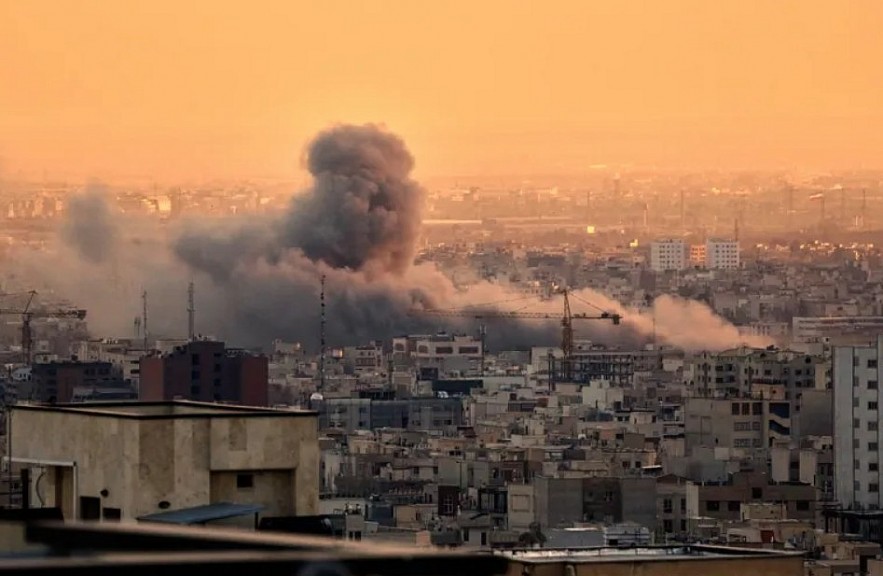
Leaders are gone. Cities are reduced to dust. Supply lines fracture. From a distance, the logic seems obvious: pressure accumulates, morale breaks, surrender follows.
But Iran does not collapse on cue.
And neither do many of the forces shaped by its worldview.
To understand why, we have to set aside the usual language of geopolitics and enter a different terrain, where history is not past, where suffering carries meaning, and where endurance itself becomes a form of power.
The Long Memory of a Civilization
Iran is not simply a country reacting to present threats. It is a civilization that remembers.
For more than 2,500 years, Persian identity has endured waves of conquest that would have erased most cultures. The armies of Alexander, the Arab expansions, the Mongol devastations, and later the pressures of modern empires all left their mark.
Yet something unusual happened each time: Persia bent, but did not dissolve.
Its language survived. Its literary canon deepened. Its administrative traditions adapted. Even when ruled by outsiders, Persia quietly reshaped them from within. This is not just resilience. It is absorption, transformation, and reassertion.
That long memory produces a particular kind of confidence. Not the loud, fragile confidence of immediate power, but a quieter certainty: we have been here before, and we will still be here after.
In that context, destruction loses its finality. It becomes an episode, not an ending.
The Safavid Choice: Identity as Strategy
The 16th century marked a decisive shift. The Safavid dynasty declared Shia Islam the state religion, setting Iran apart from a predominantly Sunni Muslim world.
This was not a minor doctrinal difference. It was a bold act of identity formation.
By choosing Shiism, Iran created a unifying narrative that fused faith with historical consciousness. It offered a framework where Persian memory and Islamic meaning reinforced each other rather than competed.
This fusion matters because it transforms belief into structure. Religion becomes not only a spiritual guide but also a social code and a political language.
Values such as honor, loyalty, and sacrifice are not optional virtues. They are embedded expectations, reinforced through education, ritual, and collective memory.
And once values are structured this way, they become durable under pressure.
Karbala: Where Defeat Becomes Victory
At the center of this worldview lies a single event that continues to echo across centuries: Karbala.
In 680, Imam Hussein stood against overwhelming force. He knew the outcome. The imbalance was absolute. Yet he chose to confront it.
What followed was not a battle in the conventional sense. It was a moral statement written in blood.
Hussein and his small group were killed. By any military measure, it was a defeat. But within Shia consciousness, Karbala reversed the meaning of victory itself.
Victory was no longer defined by survival or dominance. It was defined by fidelity to justice.
This shift is profound. It breaks one of the most basic assumptions in strategic thinking: that humans will ultimately choose survival over principle.
In the Karbala paradigm, survival without justice is empty. Sacrifice with purpose is fulfillment.
This is not an abstract idea discussed in texts. It is relived every year during Ashura. Through mourning rituals, processions, and storytelling, Karbala is continuously brought into the present.
It becomes a psychological inheritance.
Children do not just learn it. They feel it.
And over time, it reshapes how fear operates. Death loses some of its power as a deterrent. Suffering becomes legible, even meaningful.
The Paradox of Pain
Here lies the core paradox that outsiders often miss.
In most military doctrines, inflicting enough damage will eventually break the opponent’s will. Infrastructure collapses, casualties rise, and the cost becomes unbearable.
But in a system shaped by Karbala, pain does not function in the same way.
It can harden rather than weaken.
Loss can validate belief rather than undermine it.
This does not mean people do not suffer. They do. Deeply. But the interpretation of that suffering is different.
Instead of asking, “Is this too much to continue?” the question becomes, “What does this sacrifice mean?”
That shift changes everything.
It turns endurance into an active stance rather than passive survival.
From Theology to Strategy
What begins as theology evolves into a practical doctrine.
Iran and many groups aligned with it operate through asymmetric warfare not simply because they are weaker, but because it aligns with their worldview.
Decentralization, flexibility, and persistence mirror the logic of Karbala: you do not need to win quickly; you need to remain.
This is why targeted killings, airstrikes, and infrastructure destruction often fail to produce decisive outcomes. They address the visible layer of power but not its underlying logic.
Hezbollah’s ability to regenerate leadership structures, the Houthis’ persistence under prolonged bombardment, and the continued resistance in Gaza all point to the same pattern.
The details differ. The contexts vary. But the underlying grammar is familiar: endurance over immediacy.
Time as a Weapon
Perhaps the most underestimated factor is time.
Modern powers often operate under short-term pressures. Elections, public opinion, economic cycles. Success must be visible and measurable within limited windows.
In contrast, Iran and similar actors think in extended timelines.
Years. Decades. Generations.
When time is stretched this way, the meaning of loss changes. A setback today does not carry the same weight if the horizon extends far enough.
This creates an asymmetry that is not technological, but temporal.
One side seeks resolution. The other seeks continuation.
And in prolonged conflicts, continuation can be enough.
The Emotional Core of Resistance
It is tempting to reduce all of this to strategy, to treat it as a calculated system. But that would miss its emotional depth.
At its core, this is not just about doctrine. It is about dignity.
The refusal to bow is not only political. It is existential.
It says: we decide what defeat means.
It says: you can destroy our structures, but not our narrative.
It says: as long as we endure, we have not lost.
This emotional core is what gives the system its energy. Without it, the structure would not hold.
A Different Equation of Power
Iran’s resilience is not a mystery once you understand the equation it operates on.
It is built on three interlocking layers:
- A civilizational memory that normalizes recovery
- A religious philosophy that redefines sacrifice
- A strategic approach that prioritizes endurance over dominance
Together, they form a system where pressure does not automatically lead to collapse.
Instead, it often reinforces the very thing it seeks to break.
In a world still shaped by assumptions of quick victories and decisive endings, this creates a fundamental mismatch.
Because for Iran and those shaped by similar ideas, the goal is not to win in the way others define it.
The goal is to remain.
And in that framework, as long as they do, they have already succeeded.