The rural energy crisis Britain keeps pushing to the margins

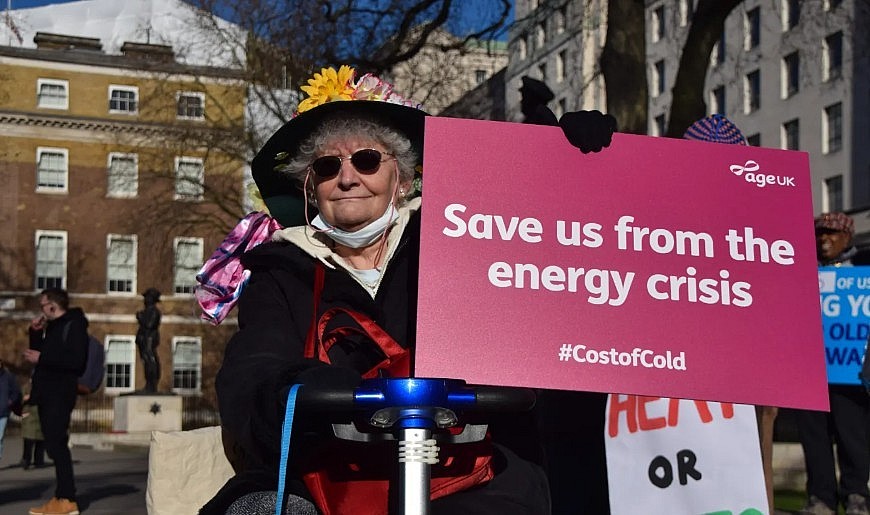 |
| A protester holds a ‘Save Us From The Energy Crisis’ placard during a rally in London |
The government can point to electricity bill support, but heating oil sits outside the cap. That matters because around 4 million homes across the country are not connected to the mains gas grid, and heating oil is still a core source of warmth for many of them.
In Northern Ireland alone, official and regulatory sources say oil heats roughly 500,000 homes, close to two thirds of households.
That is why the UK heating oil price spike 2026 has landed so hard in rural Britain. This is not just another inflation story. It is a story about people who have to buy heat in large lumps, often hundreds of litres at a time, and who cannot simply spread the cost neatly across a monthly bill.
In Northern Ireland, the latest Consumer Council figures show just how violent the move has been. On 8 April, the average price for 500 litres was £627.36, up £319.98 since 26 February. For 900 litres, the average was £1,122.73, up £586.01 over the same period. That is not a gentle rise. It is the sort of jump that changes a household’s month in one phone call.
And the anger is not only about the numbers. It is about the stories forming around them. The CMA said in March that it was examining heating-oil concerns after reports of sudden price hikes and customers struggling to obtain quotes, while ministers acknowledged “troubling reports” of cancelled orders and poor customer treatment. At the same time, the government announced more than £50 million in targeted help for low-income households using heating oil and said it intended to regulate the sector with new consumer protections.
That combination tells you everything. The crisis is serious enough that the watchdog is looking into market behaviour, and serious enough that ministers have had to create a support response outside the normal energy-cap conversation. Through the new heating oil support fund route, extra Crisis and Resilience funding is now being channelled through local authorities to help low-income households with heating-oil costs.
What makes this story cut deeper is where it is happening. Rural households are often older, harder to insulate, more expensive to heat and physically farther from help. In Northern Ireland, oil remains the dominant heating source especially in rural areas, and the Department of Finance has already warned that home heating oil continues to place disproportionate pressure on lower-income households.
This is where the phrase “heating or eating” stops sounding rhetorical. It becomes practical. Do you top up the tank now, before prices rise again, or leave money for food and hope the weather holds? Do you order a smaller amount, knowing smaller orders are usually worse value, or wait and risk running low entirely? The Northern Ireland Housing Executive’s own advice notes that many households struggle with the one-off cost of bulk deliveries and end up buying smaller, more expensive amounts.
What stays with you, reading through all this, is how invisible this version of the energy crisis can be to people in cities. A capped electricity bill at least feels like part of the national conversation. Heating oil does not. It sits outside the main frame, hitting people who are literally off-grid and politically easy to forget.
That is the real rural energy crisis UK. Not just high prices, but the feeling that the system was never really built with these households in mind.
And until heating oil is treated as more than a niche problem, every new shock will land the same way: first in the tank, then in the kitchen, and finally in the quiet calculations families make when nobody else is looking.