DHS Shutdown Threat: How 430 Airports and 2.5 Million Daily Travelers Could Be Affected

 |
| The government shutdown is putting a renewed spotlight on the cracks in the US aviation system |
A potential shutdown of the U.S. Department of Homeland Security (DHS) is once again raising concerns for air travelers across the country. While airports would remain open, the ripple effects could be felt at more than 430 commercial airports, where roughly 2.5 million passengers pass through security every day.
Here’s what that really means, and what travelers should expect if funding lapses.
Read more: What is the Government Shutdown: Update, Why do Happen, and Who Gets Affected
What Happens If DHS Shuts Down?
If Congress fails to approve funding, DHS would enter a partial shutdown. That affects agencies including the Transportation Security Administration (TSA) and the U.S. Coast Guard, both of which fall under DHS.
Airport security screening would continue. TSA officers are classified as essential personnel, meaning they are legally required to report to work even if they are not being paid.
The immediate impact would not be canceled flights. The bigger risk is operational strain that builds over time.
Why 430 Airports Could Feel the Pressure
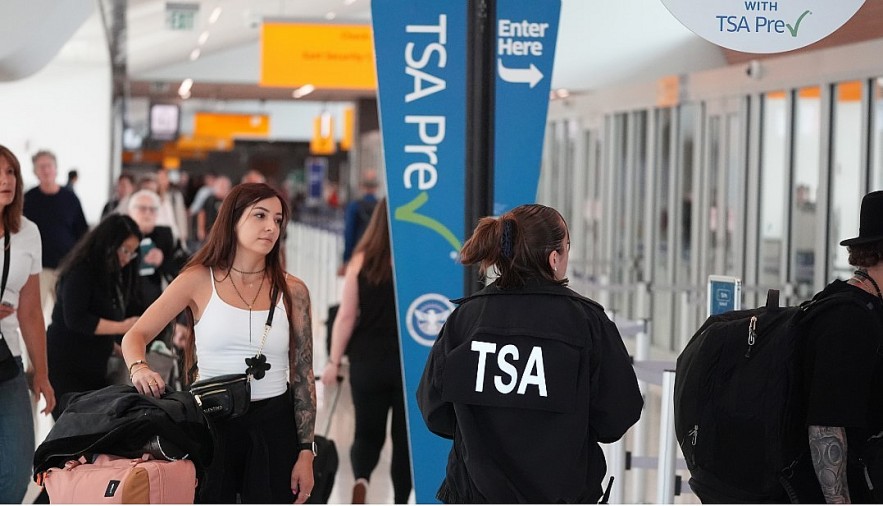
TSA screens approximately 2.5 million passengers each day at more than 430 commercial airports nationwide. That system runs on tight staffing models designed for efficiency, not redundancy.
If paychecks stop:
-
Some workers may call out sick.
-
Morale can drop quickly.
-
Overtime becomes harder to sustain.
-
Staffing gaps can create longer lines at checkpoints.
During previous shutdowns, absenteeism increased as officers struggled financially. Even small staffing shortages can cause long security lines during peak morning and evening travel periods.
In short, the system doesn’t need to collapse to create disruption. It just needs to slow down.
Could Flights Be Delayed?
Yes, especially if the shutdown drags on.
TSA slowdowns can create missed departures. But the greater risk comes if stress spreads to other parts of the aviation system.
During the record 43-day government shutdown in 2018–2019, operational strain contributed to widespread delays. At one point, the Federal Aviation Administration (FAA) ordered temporary flight reductions at major airports as staffing pressures mounted among air traffic controllers.
While FAA funding is handled differently and may not be directly impacted in this case, history shows that prolonged shutdowns can destabilize interconnected parts of the aviation system.
Air travel operates as a network. When one part slows down, the rest feels it.
What Travelers Might Notice First
If a shutdown begins, the effects would likely unfold in stages:
Stage 1: Business as usual
Security lines operate normally for several days.
Stage 2: Longer wait times
Higher absenteeism leads to fewer open lanes at busy airports.
Stage 3: Schedule strain
If delays compound, airlines may adjust flight schedules to maintain reliability.
The longer funding remains unresolved, the more likely the system shifts from inconvenience to disruption.
What This Means for Peak Travel Days
Airports already experience heavy traffic during:
-
Holiday weekends
-
Spring break travel
-
Monday mornings and Friday evenings
Under normal conditions, TSA adjusts staffing to handle these surges. During a shutdown, that flexibility shrinks.
For travelers, that means less margin for error. A 20-minute delay at security can easily turn into a missed flight when flights are full and rebooking options are limited.
What You Can Do Now
If a DHS shutdown begins and you have travel planned:
-
Arrive at the airport earlier than usual.
-
Avoid tight layovers when booking connecting flights.
-
Check your airline’s app frequently for real-time updates.
-
Consider TSA PreCheck or Clear if available to you.
-
Pack efficiently to speed up your screening process.
Preparation won’t eliminate risk, but it reduces it.
FAQs: DHS Shutdown and Air Travel
Will airports close during a DHS shutdown?
No. Airports will remain open. TSA officers are considered essential workers and must continue screening passengers.
Will TSA agents be paid?
They would be required to work without pay until Congress restores funding. They typically receive back pay after funding resumes.
Will flights be canceled immediately?
Not at the start. Flights generally operate normally in the early days of a shutdown. Risks increase the longer it lasts.
How many airports could be affected?
More than 430 commercial airports rely on TSA staffing.
How many passengers could be impacted?
TSA screens about 2.5 million passengers per day nationwide.
Is this the same as the 2018–2019 shutdown?
No situation is identical. However, that 43-day shutdown demonstrated how staffing pressures can escalate into nationwide travel delays if funding gaps persist.
Should I cancel my trip?
In most cases, no. Early shutdown periods typically cause minimal disruption. Monitor developments and allow extra time at the airport.
The Bottom Line
A DHS shutdown does not mean planes stop flying. It means the margin for smooth travel shrinks.
With 430 airports and 2.5 million daily travelers relying on TSA operations, even small disruptions can scale quickly. The longer a shutdown lasts, the more likely passengers will feel it in longer security lines, tighter connections, and potential delays.
For now, travelers should stay informed, build extra time into their plans, and watch how negotiations in Washington unfold.
Airports will stay open. The question is how efficiently they’ll run if the clock runs out.