2026 Predictions: AI, Climate, Economy, Geopolitics — What Will Shape the World?

 Top 10 Places Americans Flee To This Winter — #3 Is Unexpected Top 10 Places Americans Flee To This Winter — #3 Is Unexpected |
 Top 10 New Technology Trends for 2026 — AI, Automation, Robotics and More Top 10 New Technology Trends for 2026 — AI, Automation, Robotics and More |
A Year on the Edge of Transformation
Every December, the world looks ahead and asks the same question: What will define the year to come? But 2026 stands apart.
For the first time in decades, technology, climate, geopolitics, and economics are all shifting simultaneously — and at unprecedented speed.
Artificial intelligence is disrupting industries faster than governments can regulate. Climate change is no longer an abstract warning but a daily economic force. Conflicts in Eastern Europe, the Middle East, and Asia threaten to reshape global alliances. Supply chains remain fragile despite massive restructuring. Energy markets are volatile. Small U.S. banks face mounting pressure. And the global balance of power continues to tilt toward multipolar competition.
The world of 2026 will not evolve gradually.
It will pivot.
This is the definitive forecast of the forces most likely to shape the year — and the decade — ahead.
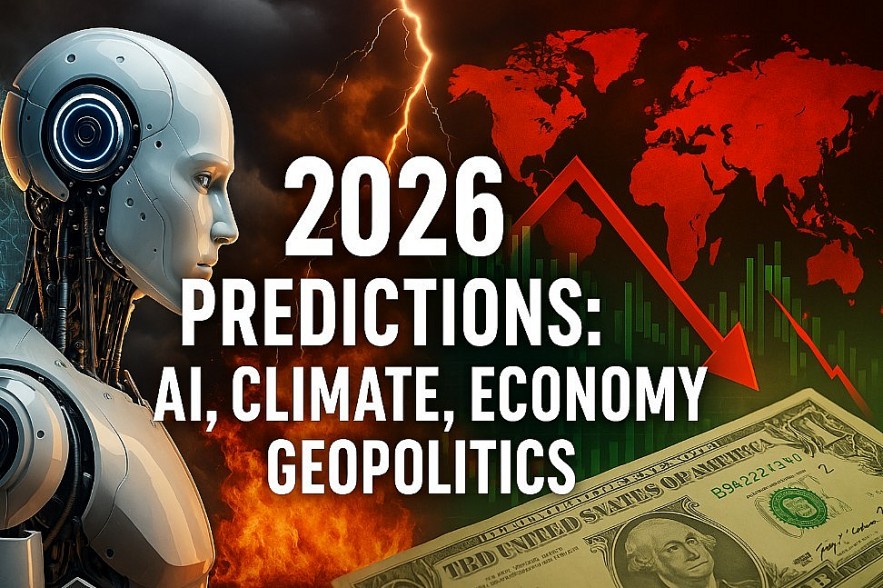 |
| The world entering 2026 is unpredictable |
1. Artificial Intelligence Becomes the Center of Global Competition
AI is no longer a technology story — it is a geopolitical and economic story.
By 2026, AI will shift from experimental to indispensable infrastructure in:
-
healthcare
-
finance
-
manufacturing
-
transportation
-
national security
-
logistics
-
education
-
government administration
But the most consequential transformation is organizational.
Prediction #1: AI Begins Replacing Middle Managers at Scale
The first major class of workers disrupted by AI isn’t factory workers — it’s middle managers.
These roles rely heavily on:
-
supervising workflow
-
assigning tasks
-
reviewing reports
-
coordinating communication
-
performance tracking
AI agents do all of this instantly, cheaply, and without burnout.
What this means for 2026:
-
Companies flatten organizational structures
-
Senior executives rely more on automated decision systems
-
Junior employees communicate directly with AI
-
Middle management compression becomes a global trend
-
Productivity rises, but job displacement accelerates
This shift will generate political and cultural friction throughout the U.S. and Europe, where middle management roles have historically anchored middle-class stability.
Prediction #2: Personal AI Ecosystems Replace Dozens of Apps
In 2026, AI becomes individualized.
Consumers adopt AI companions capable of:
-
financial planning
-
travel booking
-
emotional support
-
health coaching
-
tutoring
-
legal interpretation
-
scheduling
-
creative work
AI becomes as common as smartphones — but far more transformative.
Winners:
-
tech giants
-
chip manufacturers
-
cloud platforms
-
cybersecurity firms
Losers:
-
traditional software startups
-
junior administrative roles
-
content mills
-
non-AI service providers
2026 becomes the year the world realizes AI is not a tool — it is an ecosystem.
2. Climate Extremes Reshape Politics, Migration, and Economics
Climate change has shifted from long-term concern to near-term disruption.
The year 2026 is predicted to be the most politically consequential climate year in modern history.
Prediction #3: Extreme Weather Costs Will Reshape National Budgets
Expect more:
-
heatwaves
-
mega-droughts
-
catastrophic flooding
-
coastal storms
-
agricultural disruption
The U.S., China, India, Brazil, and the EU will pour billions into rebuilding infrastructure, hardening the grid, and subsidizing extreme-weather resilience.
Insurance companies withdraw from more regions.
Housing markets destabilize.
Federal and state governments face budget stress.
Climate becomes an economic story — not just an environmental one.
Prediction #4: Global Climate Migration Begins Accelerating
As heat and drought intensify, migration from:
-
South Asia
-
North Africa
-
Latin America
-
Sub-Saharan Africa
will spike. The U.S., Europe, and Australia will tighten immigration controls, while also needing labor for aging populations.
The tension between economic necessity and political resistance will define Western politics in 2026.
3. The Global Economy Enters a Period of Fragile Stability
After years of inflation, supply-chain breakdowns, bank failures, and geopolitical shocks, 2026 offers both promise and danger.
Prediction #5: The U.S. Economy Slows, but Avoids Full Recession
Consumer spending weakens, but AI-driven corporate efficiency boosts productivity.
Sectors likely to grow:
-
AI and automation
-
clean energy
-
defense manufacturing
-
robotics
-
semiconductor production
Sectors under pressure:
-
retail
-
commercial real estate
-
small regional banks
-
low-skill labor markets
But the biggest risk is hidden.
Prediction #6: The U.S. “Small Bank Crisis” Grows Worse
Hundreds of small and mid-size banks continue suffering from:
-
commercial real estate exposure
-
declining deposits
-
high interest rates
-
competition from fintech and mega-banks
By 2026:
-
Mergers accelerate
-
Bank failures increase
-
FDIC pressure grows
-
Lending tightens in rural and suburban America
This may widen the divide between big-city capital and small-town credit, shaping political outcomes.
Prediction #7: Supply Chains Shift Permanently to Multipolar Networks
COVID-19 broke global supply chains.
Geopolitics is reshaping them.
2026 sees a world divided into three manufacturing blocs:
-
U.S.–Mexico–Canada
-
China + Southeast Asia
-
EU–India hybrid supply networks
Key industries affected:
-
semiconductors
-
pharmaceuticals
-
rare earth minerals
-
EV batteries
-
agricultural production
Reshoring & near-shoring accelerate, raising costs but reducing vulnerability.
4. Global Geopolitics Hits Its Most Volatile Phase in 50 Years
Three flashpoints will dominate 2026:
Ukraine, Taiwan, and the Middle East.
Prediction #8: Ukraine Faces a Critical Turning Point
After years of grinding conflict, Ukraine’s survival depends heavily on Western aid, industrial mobilization, and artillery production.
Russia expands drone, missile, and ammunition output with support from:
-
Iran
-
North Korea
-
China (indirectly)
Expect:
-
slow front-line movement
-
intense drone warfare
-
grid attacks
-
political fatigue in Europe and the U.S.
2026 could determine whether Ukraine transitions to:
-
a frozen conflict,
-
a negotiated settlement,
-
or a prolonged war of attrition.
Prediction #9: Taiwan Tensions Increase as China Expands Military Pressure
China continues gray-zone operations:
-
naval encirclement exercises
-
airspace intrusions
-
cyberattacks
-
targeted economic coercion
The U.S. strengthens alliances with:
-
Japan
-
South Korea
-
Australia
-
the Philippines
But the risk is not outright invasion — it is strategic suffocation.
China will attempt to isolate Taiwan economically and psychologically.
The world watches not for a war, but for the moves that might make one inevitable.
Prediction #10: Middle East Volatility Disrupts Energy Markets Again
Conflicts involving Israel, Iran, Hezbollah, and proxy groups across the region create:
-
shipping risks in the Red Sea
-
oil price volatility
-
increased U.S. military presence
-
rising Russian and Chinese influence
By 2026:
-
Iran’s regional posture intensifies
-
Gulf states accelerate diversification
-
global oil markets see sustained uncertainty
Energy becomes the heartbeat of geopolitics once again.
5. The New Resource Race: Oil, Rare Earths, and Critical Minerals
Economic power is increasingly measured not by GDP, but by control of resources essential to AI, defense, and clean energy.
Prediction #11: Rare Earth Competition Reaches Breaking Point
China currently controls 60–70% of global rare-earth processing.
In 2026, the U.S., EU, Japan, and Australia will:
-
open new mines
-
build refining capacity
-
sign long-term supply deals with Africa and South America
-
impose export controls on tech minerals
Rare earths become the new oil — the most important input for:
-
EV motors
-
wind turbines
-
missile systems
-
smartphones
-
AI hardware
-
robotics
Expect intense geopolitical maneuvering.
Prediction #12: Oil Demand Doesn’t Collapse — It Shifts
Despite EV adoption, oil remains indispensable in:
-
aviation
-
petrochemicals
-
heavy transport
-
agriculture
-
manufacturing
By 2026:
-
the Middle East gains more pricing power
-
U.S. shale stabilizes but doesn’t boom
-
global energy transition slows due to cost
-
hybrid vehicles outperform EV growth in some markets
Energy instability will drive inflation spikes through 2026–2027.
6. The Climate–Economy–Security Feedback Loop
One of the most important 2026 megatrends is the convergence of:
-
climate stress
-
food shortages
-
energy volatility
-
migration waves
-
geopolitical conflict
These factors interact, creating a global feedback loop.
Examples:
-
Drought → crop failures → food inflation → political instability
-
Extreme heat → energy demand spikes → grid stress → economic pressure
-
Flooding → housing losses → insurance withdrawal → financial instability
-
Conflict → energy shocks → inflation → public unrest
Expect governments to adopt:
-
climate militarization
-
food security strategies
-
grid modernization
-
water infrastructure investment
-
resilient supply chains
2026 marks the year climate becomes a national security priority worldwide.
7. Technology and Society: A World Reshaped by AI Adoption
While AI promises economic growth, it also threatens:
-
job displacement
-
misinformation
-
surveillance
-
inequality
-
political manipulation
Prediction #13: AI Becomes the New Social Divide
Not rich vs poor.
Not left vs right.
But AI-literate vs AI-illiterate.
Workers, families, companies, and nations that adopt AI thrive.
Those who resist fall behind.
2026 becomes the year the world splits into two technological realities.
Conclusion: 2026 Is Not Just Another Year — It’s a Global Turning Point
The world entering 2026 is unpredictable, multipolar, technologically accelerated, and climatically unstable.
AI will challenge traditional institutions.
Climate will reshape economies.
Geopolitics will test global alliances.
The economy will experience volatility with moments of innovation.
Supply chains will continue reorganizing.
Energy markets will remain fragile.
Small banks may face collapse.
And major power rivalries will intensify.
2026 is a year of disruption — but also opportunity.
The countries, companies, and individuals who adapt early will define the next decade.
FAQs
1. Why are 2026 predictions more uncertain than previous years?
Because multiple global systems — climate, energy, geopolitics, AI, and finance — are changing simultaneously.
2. Will AI cause mass unemployment?
Not immediately, but it will accelerate elimination of managerial and repetitive tasks, pushing workers to reskill.
3. Which geopolitical regions are most at risk in 2026?
Taiwan Strait, Ukraine, and the Middle East.
4. Will inflation ease globally?
Partially — but energy shocks, climate damage, and supply-chain restructuring could trigger new waves.
5. Are U.S. small banks really at risk?
Yes. Commercial real estate exposure and competition with big banks put many mid-size lenders in danger.
6. What should individuals do to prepare for 2026?
Learn AI tools, diversify income, reduce debt, follow geopolitical news, and understand energy and climate trends.
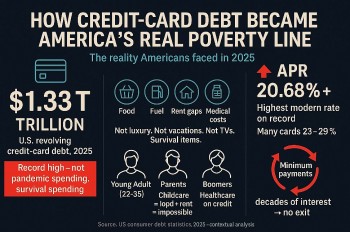 How Credit-Card Debt Became America’s Real Poverty Line How Credit-Card Debt Became America’s Real Poverty Line From groceries to rent, Americans used credit cards to survive in 2025. Explore why interest rates soared and what it means for 2026. |
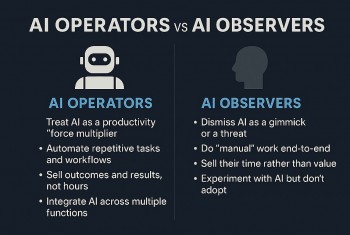 AI in 2025 and the Great Divide: Why Those Who Used It Won — and How 2026 Will Accelerate the Split AI in 2025 and the Great Divide: Why Those Who Used It Won — and How 2026 Will Accelerate the Split AI didn’t replace workers—it created a new class of high-earning operators. Discover how 2025 reshaped the U.S. workforce and what 2026 will mean for productivity. |
 List of 30 Nations Under Review as Trump Administration Weighs Expanded Travel Ban After National Guard Shooting List of 30 Nations Under Review as Trump Administration Weighs Expanded Travel Ban After National Guard Shooting The Trump administration is reportedly considering an expansion of its travel ban to more than 30 nations following the National Guard shooting. |
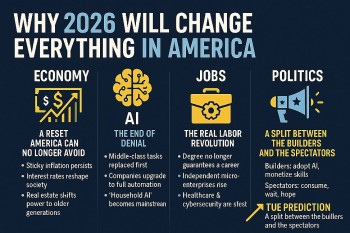 Why 2026 Will Change Everything in America — Economy, AI, Jobs, Politics Why 2026 Will Change Everything in America — Economy, AI, Jobs, Politics 2026 will redefine the United States. From AI automation and a shifting job market to economic recalibration and political upheaval, discover what’s coming next. |
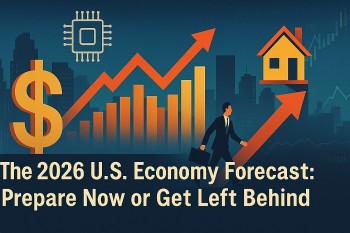 The 2026 U.S. Economy Forecast: Prepare Now or Get Left Behind The 2026 U.S. Economy Forecast: Prepare Now or Get Left Behind The 2026 U.S. economy faces rising debt, AI-driven disruption, a housing divide, shifting labor markets, and political uncertainty. Learn what to expect and how to ... |