What Is Somaliland - and Why Do Some Countries Treat It Like a Sovereign State?

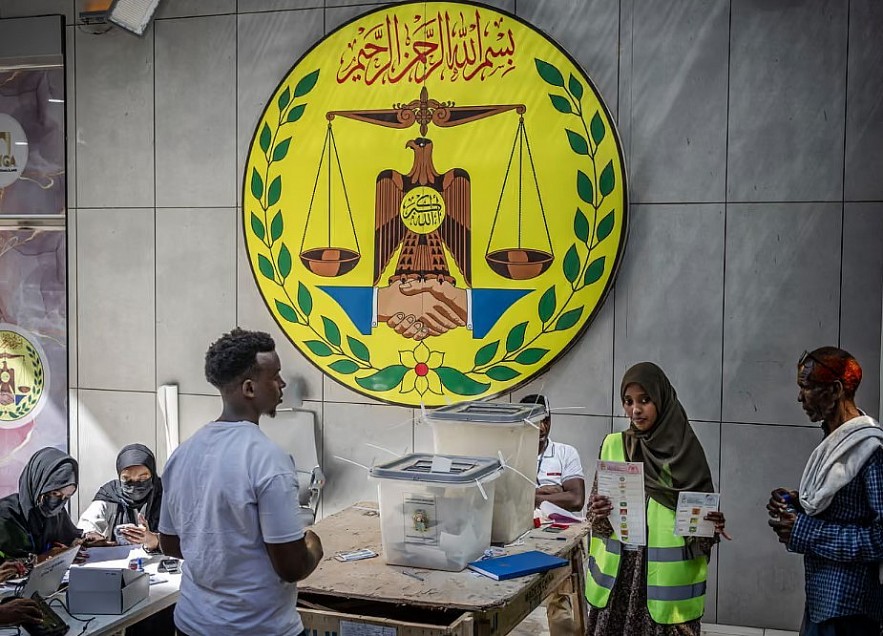 |
| Electoral commission officials monitoring a polling station in Hargeisa during the 2024 presidential election in Somaliland |
A country that exists in practice, but not on paper
For over three decades, Somaliland has lived in a strange political in-between. It governs itself like a country, defends its borders like a country, and votes like a country. Yet internationally, it has remained officially invisible, treated as a region of Somalia rather than a sovereign state.
That contradiction is no longer easy to ignore.
Recent diplomatic moves, renewed regional competition over ports and sea access, and growing global concern over Red Sea and Gulf of Aden security have pushed Somaliland back into the spotlight. For supporters, the argument is simple: Somaliland already meets the real-world tests of statehood. For critics, recognition risks opening a Pandora’s box of separatism across Africa.
At stake is not just Somaliland’s future, but how the international system defines sovereignty in fragile regions.
What exactly is Somaliland?
Somaliland is a self-declared republic in the northwestern part of internationally recognized Somalia. Its capital, Hargeisa, functions as a political and administrative hub, while Berbera, on the Gulf of Aden, anchors its economic and strategic relevance.
Crucially, Somaliland’s borders largely match those of the former British Somaliland Protectorate. This historical distinction underpins its legal and political claim that it is not “seceding” from Somalia, but rather reclaiming a sovereignty briefly merged and then lost.
Since declaring independence in 1991, Somaliland has maintained its own government, security forces, currency, and electoral system, operating independently from Mogadishu in almost every meaningful way.
A tale of two Somalias
The contrast between Somaliland and southern Somalia has long shaped international perceptions.
While Somalia endured decades of civil war, insurgency, and fragile federal arrangements, Somaliland focused inward. It relied on locally driven peace conferences, clan-based mediation, and incremental institution-building rather than externally imposed state models.
The result has been relative stability. Somaliland’s cities are safer, its political disputes more contained, and its governance more predictable than much of the region. That stability has become central to Somaliland’s argument: recognition would reward effective governance rather than perpetual dysfunction.
Democratic credentials that stand out in the region
One of Somaliland’s strongest claims to sovereignty lies in its political record.
Since the early 2000s, Somaliland has held multiple presidential, parliamentary, and local elections. Power has changed hands peacefully, including in the most recent presidential contest, where opposition candidate Abdirahman Mohamed Abdullahi (Cirro) defeated incumbent Muse Bihi Abdi.
In a region where elections often deepen conflict, Somaliland’s ability to absorb political competition without violence has become a calling card. International observers frequently point to this record when arguing that Somaliland behaves more like a state than many recognized countries.
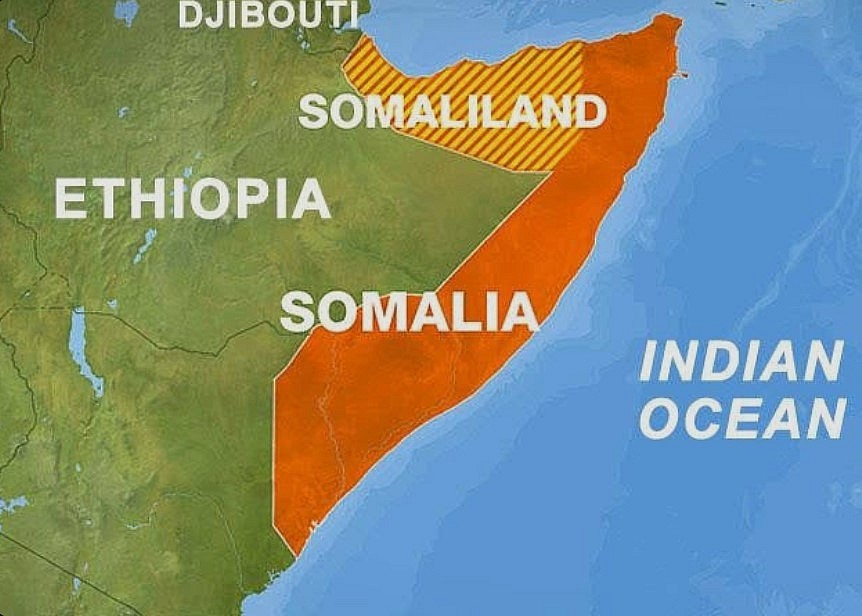 |
| Where is Somaliland |
The legal debate: why recognition is so hard
Under international law, statehood is usually assessed by four criteria: a defined territory, a permanent population, an effective government, and the capacity to conduct foreign relations. By these standards, Somaliland arguably qualifies.
So why the resistance?
The answer lies less in law than in politics. The African Union has long prioritized colonial-era borders to avoid endless territorial disputes. Recognizing Somaliland could embolden other separatist movements, from the Sahel to Central Africa.
Meanwhile, Somalia’s federal government views Somaliland as an integral part of its territory. Any recognition of Somaliland is seen in Mogadishu as a direct assault on Somalia’s sovereignty, making the issue diplomatically explosive.
Geography as destiny: why Somaliland matters now
Somaliland’s strategic value has surged as global attention returns to the Red Sea corridor.
The Gulf of Aden connects the Indian Ocean to the Suez Canal, carrying a significant share of global trade. Disruptions from conflict, piracy, or great-power rivalry have made reliable coastal partners more valuable than ever.
Berbera Port sits almost perfectly positioned along this route. Investments in port expansion, logistics, and transport corridors linking Berbera to landlocked Ethiopia have turned Somaliland into a quiet but critical node in regional trade planning.
This geography is one reason Somaliland keeps resurfacing in high-level diplomatic conversations, even without formal recognition.
Ethiopia, ports, and the diplomacy of sea access
One of the most consequential developments in recent years has been Somaliland’s engagement with Ethiopia, Africa’s second-most populous country and one of its fastest-growing economies.
Landlocked since Eritrea’s independence, Ethiopia has a long-term strategic need for reliable sea access. Agreements and memoranda involving Berbera have elevated Somaliland’s importance and triggered strong reactions from Somalia, which views such deals as violations of its sovereignty.
These tensions have drawn in regional mediators and external powers, underscoring a key reality: Somaliland’s territory is already shaping regional geopolitics, recognition or not.
The recognition question: a crack in the wall
For years, Somaliland faced a diplomatic wall: zero formal recognitions. Recently, that wall has shown signs of stress.
High-profile diplomatic engagement, upgraded representative offices, and reports of formal recognition discussions signal a shift in tone, even if most countries remain cautious. For Somaliland, even a single recognition carries symbolic weight. It breaks the psychological barrier and creates precedent.
For Somalia and its allies, the fear is momentum. Recognition tends to be contagious once it starts, especially if tied to security cooperation or economic interests.
What recognition would actually change
Recognition is often imagined as a magic switch. In reality, its effects are uneven.
What would change quickly:
-
Direct state-to-state treaties and agreements
-
Greater investor confidence, especially in ports and infrastructure
-
Easier travel, trade, and diplomatic engagement
What would not change overnight:
-
United Nations membership
-
African Union consensus
-
Somalia’s opposition to Somaliland’s independence
Recognition would be a beginning, not an endpoint.
The risks Somaliland faces
Pushing too hard, too fast carries risks.
A confrontational path to recognition could escalate tensions with Somalia, strain regional stability, and invite proxy competition among external powers. There is also the internal challenge of managing expectations. Recognition does not instantly solve unemployment, development gaps, or inequality.
Somaliland’s leaders must balance diplomatic ambition with the patience that has defined its political survival so far.
Why Somaliland’s case is different
Supporters argue Somaliland is not just another separatist claim.
It has:
-
A clear historical boundary
-
Three decades of uninterrupted self-rule
-
Demonstrated democratic legitimacy
-
A record of relative peace in a volatile region
In an international system that often rewards force, Somaliland’s nonviolent, institution-first approach stands out. The uncomfortable question for global policymakers is whether refusing recognition actually undermines the values they claim to support.
The road ahead
Somaliland’s future will be shaped by a mix of internal discipline and external opportunity.
If it continues to govern effectively, manage peaceful politics, and position itself as a reliable regional partner, the case for recognition will only grow stronger. Whether the world responds with courage or caution will say as much about global order as it does about Somaliland itself.
One thing is clear: Somaliland is no longer a forgotten footnote. It is a test case for how sovereignty, stability, and realism intersect in the 21st century.
FAQs: Somaliland as a Sovereign State
Is Somaliland an independent country?
Somaliland functions as a de facto independent state with its own government and institutions, but it is still recognized by most of the world as part of Somalia.
Why is Somaliland not widely recognized?
Most countries prioritize Somalia’s territorial integrity and fear that recognizing Somaliland could encourage separatist movements elsewhere in Africa.
Does Somaliland hold democratic elections?
Yes. Somaliland has conducted multiple competitive elections and has experienced peaceful transfers of power.
Why is Berbera Port so important?
Berbera sits on a key global shipping route and offers strategic access for landlocked countries like Ethiopia, increasing Somaliland’s geopolitical value.
Could Somaliland join the United Nations?
Only after broad international recognition and approval through UN processes. Recognition by individual states is a necessary but not sufficient step.