The 100-Mile Border Zone Explained: How Far ICE and Border Patrol Powers Really Go

 |
| What Is the 100-Mile Border Zone Under U.S. Law |
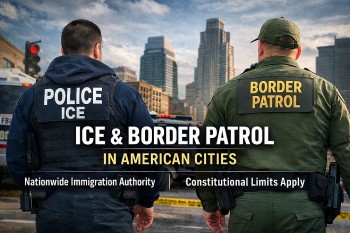
Seeing U.S. Border Patrol or Immigration and Customs Enforcement (ICE) agents operating in large American cities often raises alarm. Many people assume immigration enforcement is limited to border areas. In reality, federal immigration authority is nationwide—but not unlimited.
Understanding the 100-mile border zone helps clarify what powers exist, where they come from, and where the Constitution draws firm lines.
What Is the 100-Mile Border Zone Under U.S. Law?
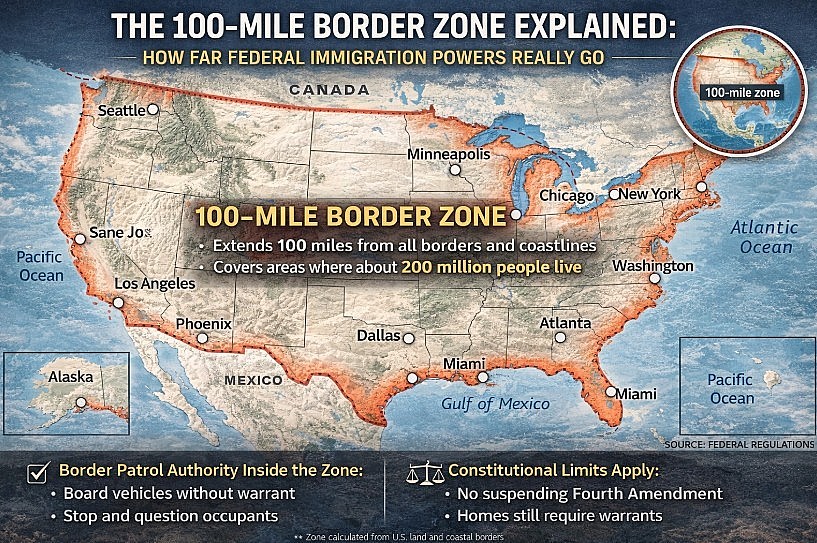
The 100-mile border zone is defined in federal regulations implementing the Immigration and Nationality Act (INA). It authorizes Border Patrol agents to exercise certain border-search–related powers within 100 miles of any external U.S. boundary, including land borders and coastlines.
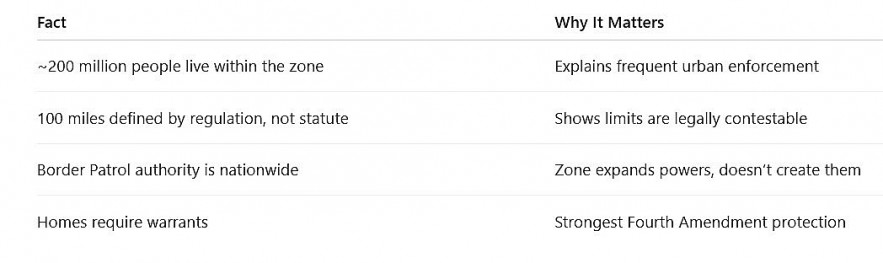
Because the U.S. has extensive coastlines, this zone includes most major metropolitan areas. According to data cited by the American Civil Liberties Union, roughly two-thirds of the U.S. population—about 200 million people—live within this area.
Read more:
- ICE Agents Explained: Who They Are, What They Do, and Why They’re Under Scrutiny
- Border Patrol Agents Explained: Who They Are, What They Do, and How They Differ from ICE Agents
Which Cities and States Fall Inside the 100-Mile Border Zone?
Because the zone extends 100 miles from all land borders and coastlines, it includes far more than border towns. In fact, many of America’s largest cities are fully or partially inside the zone.
Major U.S. Cities Inside the 100-Mile Zone
-
New York City – Entire city
-
Los Angeles – Entire city
-
Chicago – Inside zone due to proximity to Canada via the Great Lakes
-
Seattle – Entire city
-
San Francisco – Entire city
-
Boston – Entire city
-
Miami – Entire city
-
San Diego – Entire city
In total, nine of the ten largest U.S. metropolitan areas fall at least partly within the 100-mile border zone.
States Almost Entirely Inside the Zone
Some states are so close to borders or coastlines that nearly all residents live inside the zone, including:
-
Florida
-
Hawaii
-
Maine
-
New Hampshire
-
New Jersey
-
Connecticut
-
Massachusetts
Large portions of California, Texas, New York, and Washington are also included.
Common Misunderstandings• Myth: The border zone suspends constitutional rights. Reality: Courts consistently reject that idea. • Myth: Border Patrol cannot operate far from the border. Reality: Agents have nationwide authority, but fewer special powers. • Myth: Being questioned means you must answer. Reality: In most situations, you may remain silent. |
What Special Authority Exists Inside the 100-Mile Zone?
Within the zone, Border Patrol agents may, without a warrant:
-
Board buses, trains, boats, and airplanes
-
Briefly question occupants about citizenship or immigration status
However, these powers are not unlimited searches. Agents must still respect constitutional standards. Courts have repeatedly ruled that roving patrols and stops must be reasonable in scope and duration.
Importantly, homes are different. Entering a private residence still generally requires a judge-signed warrant or valid consent, even inside the border zone.
Key Data at a Glance
 |
| Key Data at a Glance |
What Changes Outside the 100-Mile Zone?
Outside the 100-mile zone, Border Patrol agents lose their special boarding and border-search authority. They do not lose their status as federal officers.
In cities far from the border, Border Patrol agents operate under the same general enforcement framework as ICE. This means they may:
-
Ask questions voluntarily
-
Detain someone based on reasonable suspicion of an immigration violation
-
Arrest someone with a reasonable belief that a federal offense occurred
They may not stop, search, or detain people arbitrarily.
Constitutional Limits Apply Everywhere
No matter where immigration enforcement occurs, constitutional protections remain fully in force:
-
Fourth Amendment: protects against unreasonable searches, seizures, and warrantless home entry
-
First Amendment: protects speech, protest, and recording officers in public spaces
-
Fifth Amendment: protects the right to remain silent
These rights apply to citizens and noncitizens alike.
FAQs
Does the 100-mile border zone come from the Constitution?
No. It comes from federal regulations interpreting immigration statutes, not the Constitution itself.
Can Border Patrol stop anyone inside the zone?
No. Stops must be reasonable and cannot be based solely on race, appearance, or accent.
Can ICE and Border Patrol work together in cities?
Yes. Joint operations are common, especially in targeted enforcement actions.
Do citizens have to carry proof of citizenship?
Generally, no. Citizens are not required to carry citizenship documents for routine encounters.
Can local police enforce immigration law?
Only in limited circumstances, usually through specific agreements or after lawful arrests.
Why This Matters Now
Urban immigration enforcement has increased visibility, legal challenges, and public debate. Knowing what the law actually allows—and forbids—helps people respond calmly, lawfully, and effectively during encounters with federal agents.
The 100-mile border zone expands certain powers, but it does not erase the Constitution.
Video: The Minneapolis man shot and killed by a Border Patrol agent