Full List: Sanctuary Cities and States Face Federal Funding Freeze Starting February 1, 2026

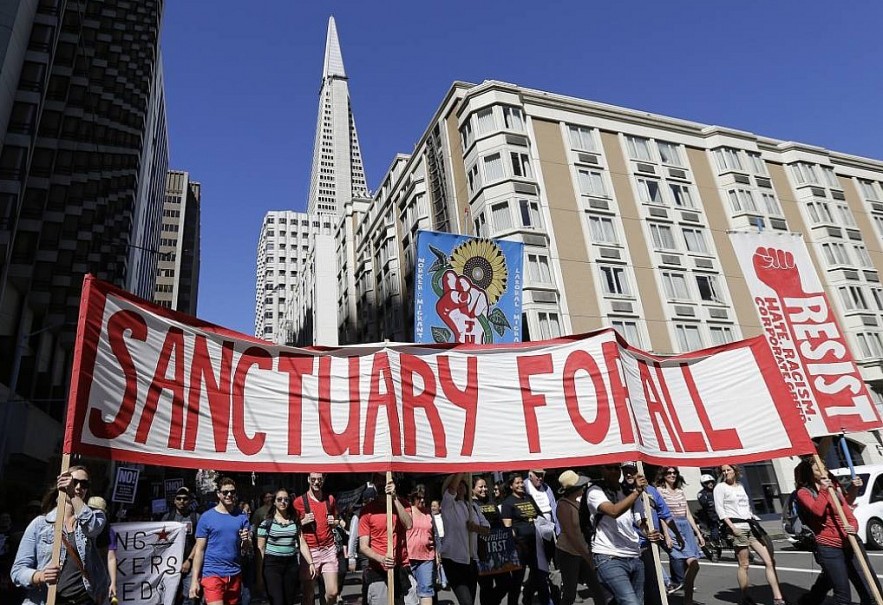 |
| US Court Bars Trump’s ‘Sanctuary’ City Funding Freeze |
The Trump administration plans to withhold federal funds from states and cities classified as “sanctuary jurisdictions” beginning February 1, 2026, escalating a long-running conflict between Washington and local governments over immigration enforcement.
The announcement, made earlier this month by Donald Trump, targets jurisdictions that limit cooperation with federal immigration authorities, particularly U.S. Immigration and Customs Enforcement (ICE). While the declaration signals a hardline approach to immigration policy in Trump’s second term, legal experts say its implementation is far from certain.
What Are Sanctuary Jurisdictions?
Sanctuary jurisdictions are states, counties, or cities that adopt laws or policies restricting how local officials assist federal immigration enforcement. These policies often prevent local police from honoring ICE detainer requests or sharing certain immigration-related information unless required by law or a court order.
Supporters argue that sanctuary policies improve public safety by encouraging undocumented immigrants to report crimes and cooperate with law enforcement without fear of deportation. Critics, including the Trump administration, argue that such policies interfere with federal law and allow individuals who should be deported to remain in the country.
Jurisdictions Identified as Sanctuary Areas
Based on prior determinations by the U.S. Department of Justice, the following jurisdictions have been identified as sanctuary jurisdictions due to their immigration policies.
States and Federal District
California, Colorado, Connecticut, Delaware, Illinois, Minnesota, Nevada, New York, Oregon, Rhode Island, Vermont, Washington, and the District of Columbia.
Counties
Cook County (Illinois), Baltimore County (Maryland), San Diego County (California), and San Francisco County (California).
Major Cities
Los Angeles, San Francisco, San Diego, Chicago, New York City, Philadelphia, Seattle, Portland, Denver, Boston, Newark, and Jersey City.
Administration officials have said the list may change if jurisdictions amend their policies or increase cooperation with federal authorities.
Why the Administration Is Moving to Cut Funding
The Trump administration argues that sanctuary policies undermine federal immigration enforcement and threaten public safety. The president has repeatedly said that federal taxpayer dollars should not support jurisdictions that, in his view, refuse to comply with federal law.
“This is about enforcing the law and protecting American communities,” Trump said, according to the New York Post. Administration officials have framed the funding freeze as a tool to pressure local governments into cooperating with ICE and other federal agencies.
The move aligns with broader immigration measures pursued during Trump’s second term, including expanded enforcement operations and increased federal oversight of local compliance.
What Happens on February 1, 2026?
According to the announcement, federal agencies would begin withholding or suspending certain federal funds to sanctuary jurisdictions starting February 1, 2026.
However, key details remain unclear:
-
Which specific federal grants or programs would be affected
-
Whether entitlement programs such as Medicaid, SNAP, or Social Security would be exempt
-
Whether the funding loss would be permanent or conditional
Previous efforts to cut off federal funds to sanctuary jurisdictions during Trump’s first term were repeatedly blocked by federal courts, which ruled that broad funding freezes exceeded executive authority and violated constitutional limits.
Legal analysts say similar challenges are almost certain this time.
Potential Consequences
Budget and Services
States and cities on the sanctuary list receive billions of dollars annually in federal funding for healthcare, transportation, housing, and public safety. Even partial funding disruptions could force local governments to delay projects, cut services, or seek alternative revenue sources.
Legal Battles
Several states and cities have already indicated they are preparing lawsuits, arguing that the administration cannot unilaterally withhold congressionally appropriated funds. Courts could issue injunctions preventing enforcement while cases are litigated.
Impact on Residents
While the policy targets government entities, its effects could be felt by residents across the board. Reduced funding could affect hospitals, public transit, housing assistance, and community programs, regardless of immigration status.
Political Fallout
The move is expected to deepen partisan divides. Republican leaders have largely applauded the announcement, while Democratic governors and mayors have condemned it as unconstitutional and politically motivated.
Outlook
Despite the firm February 1 deadline, the funding freeze may not take effect immediately. Court rulings, injunctions, and negotiations could delay or narrow its impact.
What is clear is that the announcement sets the stage for another major legal and political showdown over immigration enforcement and the balance of power between the federal government and the states.