Can Cuban Americans Invest in Cuba? What’s Changed and What Still Blocks It

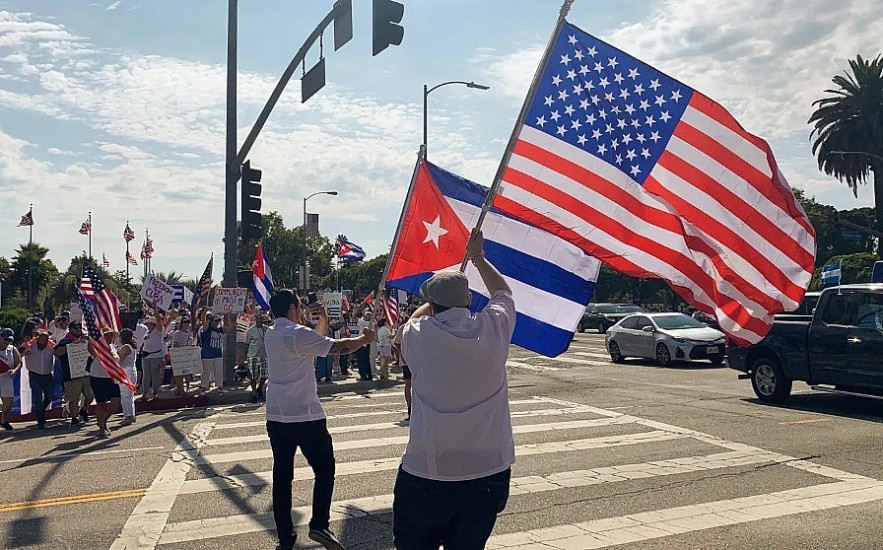 |
| Cuban Americans Demonstrate on Local Streets |
Cuba has started sending a clearer message to its diaspora: come back and invest.
For Cuban Americans, that raises a practical question. Can Cuban Americans invest in Cuba in 2026?
The short answer is: partly yes in theory, but still complicated in practice.
Havana is signaling more openness to private business and diaspora capital. But U.S. sanctions, enforced by the Office of Foreign Assets Control (OFAC), still limit how Americans can invest, send money, and do business on the island.
Understanding where those two systems meet and where they clash is key.
Read more:
- OFAC Cuba Rules Explained: What Americans Need to Know
- Is Cuba Safe for American Travelers Right Now?
- Can Americans Travel to Cuba in 2026? What’s Legal and What Isn’t
What Havana says vs what U.S. law still blocks
Cuba has been gradually expanding its private sector in recent years, allowing small and medium-sized private businesses (often called mipymes) to operate more openly. More recently, officials have indicated that Cubans living abroad may be allowed to own or invest in businesses on the island.
That’s the opening.
But here’s the constraint:
U.S. law does not freely allow Cuban Americans to invest in Cuba as they would in other countries.
Under current sanctions rules:
-
Direct investment in Cuban businesses is heavily restricted
-
Financial transactions involving certain Cuban entities are prohibited
-
Dealings with companies tied to the Cuban government or military are off-limits
So while Cuba may welcome diaspora investors, U.S. regulations still control what is legally possible from the American side.
Where opportunities may exist
Even with restrictions, there are limited pathways that could support some level of diaspora involvement.
These include:
-
Supporting privately owned Cuban businesses (not state-linked)
-
Providing goods or services that align with authorized categories
-
Structuring activities under “support for the Cuban people” provisions
In practice, this often looks less like traditional “investment” and more like small-scale support, partnerships, or indirect involvement.
For example, a Cuban American might:
-
Help fund a family-run restaurant or rental property
-
Provide equipment or supplies to a private business
-
Collaborate on services that benefit local entrepreneurs
But each of these must be carefully structured to avoid restricted transactions.
The biggest legal and practical risks
The gap between policy and reality is where most problems happen.
Here are the main risks to understand:
1. Misinterpreting what counts as legal investment
What Cuba allows and what U.S. law permits are not the same. Something legal in Havana may still violate U.S. sanctions.
2. Dealing with restricted entities
Many parts of the Cuban economy are still linked to state-owned enterprises. Accidentally doing business with a restricted entity can create legal exposure.
3. Payment and banking challenges
Financial channels between the U.S. and Cuba remain limited. Even permitted transactions can be difficult to execute in practice.
4. Lack of clear implementation rules
Cuba’s policy signals are evolving, but detailed, transparent frameworks for diaspora investment are still developing.
What this means for Cuban Americans right now
So, can exiles invest in Cuba today?
Yes, but only in narrow, carefully defined ways. And often not in the traditional sense of equity investment or large-scale business ownership.
The reality in 2026 looks like this:
-
Cuba is opening the door politically and economically
-
The U.S. is still controlling the legal framework
-
The overlap between the two is limited but not zero
That creates a small but real window for diaspora involvement, especially at the small business and community level.
Why this matters going forward
Cuba’s outreach to its diaspora is not just symbolic. It reflects deeper economic pressure on the island, including shortages, declining tourism, and limited access to foreign capital.
For the United States, any shift in enforcement or policy could quickly expand or restrict these opportunities.
That means this topic is likely to evolve.
If Cuba formalizes clearer investment rules, or if the U.S. adjusts sanctions policy, the landscape could change significantly. For now, though, caution and clarity matter more than speed.
FAQ
Can Cuban Americans invest in Cuba in 2026?
Yes, but only in limited ways that comply with U.S. sanctions. Traditional investment models are still restricted.
What is diaspora investment in Cuba?
It refers to Cubans living abroad supporting or investing in businesses on the island, often in small private enterprises.
Is it legal to own a business in Cuba as a Cuban American?
Cuba may allow it in some cases, but U.S. law can still restrict how that ownership or investment is structured.
What is the safest way to get involved?
Focus on supporting private, non-state businesses and ensure all activities comply with U.S. regulations.