$1,000 for Babies in 2026? The Truth Explained and How to Claim It




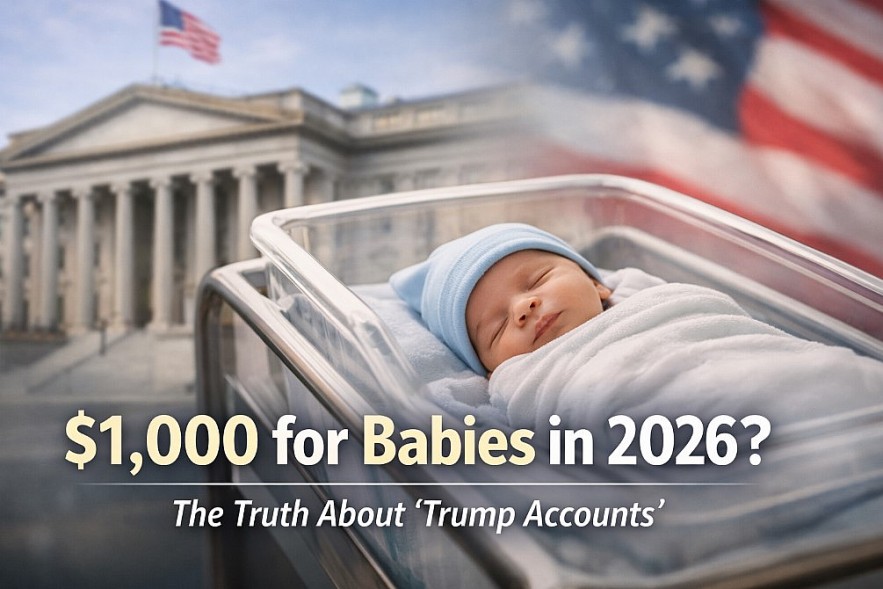 |
| The Truth About $1,000 ‘Trump Accounts’ for Babies in 2026 |
In late 2025, headlines and viral posts began circulating a bold claim: every baby in the United States will automatically receive $1,000 in a so-called “Trump account” in 2026. The idea sparked excitement among parents — and confusion among taxpayers.
So what’s real, what’s exaggerated, and what do families actually need to know?
What Are “Trump Accounts”?
“Trump Accounts” is a popular media label for a new federally created savings and investment account for children, established under major tax legislation signed into law in July 2025.
These accounts are long-term, tax-advantaged savings vehicles, designed to help families build wealth for future milestones such as education, homeownership, starting a business, or retirement.
They are not cash giveaways and not standard bank accounts.
How the $1,000 Actually Works
The widely shared claim that babies will simply “get $1,000” in 2026 is misleading.
Here’s what the law actually provides:
-
The federal government authorizes a one-time $1,000 seed contribution for eligible children.
-
The child must be born between 2025 and 2028.
-
A Trump Account must be opened on the child’s behalf by a parent or legal guardian.
-
The account does not appear automatically at birth.
-
Contributions and investment activity begin around mid-2026, after regulatory systems are fully implemented.
In short: The $1,000 is real — but only if parents take action.
Who Qualifies for the $1,000 Contribution
To qualify, all of the following must apply:
-
The child must be a U.S. citizen.
-
The child must have a valid Social Security number.
-
The child must be born within the eligibility window.
-
A Trump Account must be formally established using IRS-approved procedures.
Parents or guardians are responsible for opening the account and submitting the required documentation.
What Parents Can and Cannot Do With the Money
This Is Not Immediate Cash
The $1,000 deposit is invested in approved market-based funds, typically tied to broad U.S. stock indexes.
The funds are intended for long-term growth, not short-term spending.
Withdrawals before adulthood may trigger penalties or tax consequences.
Additional Contributions Are Allowed
Once the account is active:
-
Parents or guardians may contribute up to $5,000 per year.
-
Employers may contribute limited amounts on behalf of employees’ children.
-
Investment gains grow under tax-advantaged rules, similar to other federal savings programs.
Common Myths — Debunked
“Every baby automatically gets $1,000 in 2026.”
False. The account must be created by a parent or guardian.
“This is free money parents can spend anytime.”
False. The funds are locked into long-term investment rules.
“Trump Accounts replace college savings plans.”
False. Financial experts see them as one tool, not a replacement for 529 plans or other savings strategies.
Tax and Financial Considerations Parents Should Know
While the $1,000 seed contribution itself is not taxable income, parents should be aware of:
-
Gift-tax reporting requirements if relatives contribute large sums.
-
Investment risk, since returns depend on market performance.
-
Limited flexibility compared with some existing savings plans.
Financial planners generally advise families to evaluate Trump Accounts as part of a broader financial plan, not a stand-alone solution.
Criticism and Policy Debate
Supporters argue the program gives every eligible child a financial head start.
Critics counter that:
-
Families with higher incomes are more likely to maximize contributions.
-
Financial literacy gaps could widen long-term wealth inequality.
-
The benefit may be modest without sustained family contributions.
The debate mirrors long-standing discussions about asset-building policies in the U.S.
Bottom Line
Yes, the $1,000 Trump Account provision is real.
But no, babies are not automatically handed cash in 2026.
Instead, the program offers a government-seeded investment account that requires enrollment, planning, and long-term thinking. For families who take advantage of it, the benefit could grow significantly over time — but only with informed participation.
The key takeaway for parents:
If you want your child to receive the $1,000, you must open the account and follow the rules.