'2026 Is the New 2016’: Meaning, Origins, and What This Viral Trend Says About Society


 |
| 2026 Is the New 2016 |
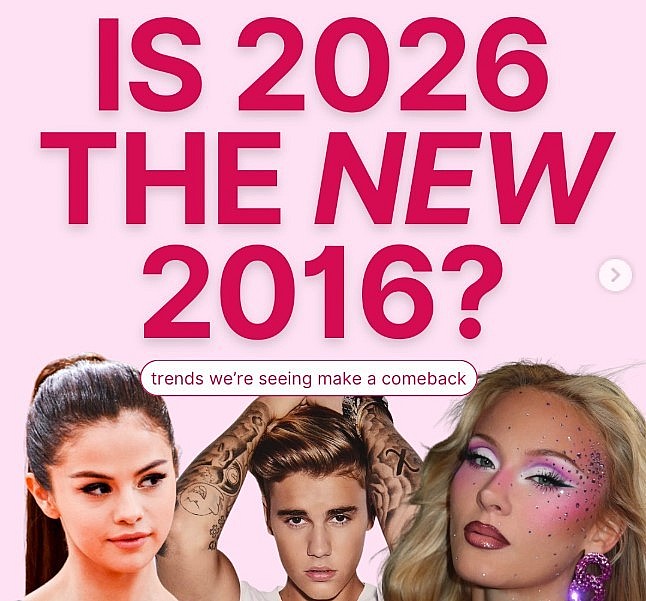
Across TikTok, X, Reddit, and online culture forums, a phrase has quietly gained traction: “2026 is the new 2016.”
It sounds simple, even flippant. But behind it sits a layered cultural sentiment about fear, nostalgia, technology, and a growing sense that the world is approaching another turning point.
This trend is not a literal prediction. It is a collective feeling. And that is precisely why it resonates.
What Does “2026 Is the New 2016” Mean?
At its core, the phrase suggests that 2026 feels emotionally and socially similar to 2016.
Not because the same events will repeat, but because the atmosphere feels familiar:
-
A sense of being on the edge of something big
-
Rising tension paired with uncertainty
-
The feeling that “things are about to change,” for better or worse
In short, people are saying: We’ve been here before.
Why 2016? Why Does That Year Matter So Much?
To understand the trend, you have to understand how 2016 lives in collective memory, especially for Millennials and Gen Z.
1. 2016 as a Cultural Turning Point
For many, 2016 marked the moment when:
-
Political polarization accelerated
-
Online discourse became harsher and more tribal
-
Optimism about the future began to crack
It was widely perceived as the year when “normal” ended and a more unstable era began.
2. The Internet Before the Shift
Culturally, 2016 is remembered as:
-
A more playful, less commercialized internet
-
Fewer algorithms dominating attention
-
Memes that felt spontaneous rather than strategic
-
Social media that still felt human
In hindsight, 2016 has become symbolic of the last pre-crisis digital moment, even if reality was more complex.
3. Emotional Nostalgia, Not Historical Accuracy
The affection for 2016 is less about facts and more about how people felt:
-
Less exhausted
-
Less anxious
-
More hopeful about the future
That emotional memory is what gives the year its power.
Why 2026—and Not 2024 or 2025?
The choice of 2026 is deliberate, even if unconsciously so.
A. The Ten-Year Psychological Cycle
Humans naturally interpret history in decade-long patterns:
-
2006 → 2016 → 2026
A ten-year gap feels meaningful, even when it’s not analytically precise.
B. A Sense of “Pre-Impact”
Many people describe the mid-2020s as a transition phase:
-
Post-pandemic fatigue
-
Economic instability
-
Rapid technological acceleration
2026 feels like the moment when consequences fully arrive.
C. Technology at a Breaking Point
Artificial intelligence, deepfakes, algorithmic control, and digital surveillance are advancing faster than regulation or social adaptation.
Just as 2016 preceded the darker side of social media, 2026 is perceived as the moment when unchecked technology could permanently reshape society.
 |
| 2026 Is the New 2016 |
What Is This Trend Really Reflecting?
1. Collective Nostalgia
This is not just missing youth. It is longing for:
-
A world that felt more understandable
-
A future that felt less threatening
Nostalgia becomes a coping mechanism when the present feels unstable.
2. Global Burnout
The trend often appears alongside phrases like:
-
“I’m exhausted.”
-
“Nothing feels real anymore.”
-
“We peaked already.”
It captures a generation worn down by overlapping crises.
3. A Search for Meaning Through Patterns
When uncertainty rises, people look for historical parallels.
Naming a moment helps reduce fear, even if the comparison is imperfect.
Is This a Negative Trend?
Not necessarily.
The Pessimistic Interpretation
Some see it as:
-
Fatalistic
-
A belief that history will repeat its worst mistakes
-
A sign of cultural stagnation
The Cautiously Optimistic Interpretation
Others see awareness as power:
-
We recognize the warning signs earlier
-
We understand how systems failed last time
-
We still have agency
If 2016 was when things went wrong unknowingly, 2026 could be when choices are made consciously.
So What Is the True Nature of This Trend?
“2026 is the new 2016” is not prophecy.
It is diagnosis.
It reveals:
-
Anxiety about the direction of society
-
Fear of technological overreach
-
Exhaustion from constant disruption
-
And a deep desire for course correction
Ultimately, the trend says less about 2026—and more about how people feel right now.
Final Thought
Every generation looks for a moment that explains its unease.
For many today, that moment is 2016—and the fear is that another turning point is approaching.
Whether 2026 becomes a repeat or a reset remains unwritten.
But the conversation itself is a signal worth paying attention to.