What Is Mardi Gras in the U.S? History, Dates, Traditions, and Fat Tuesday Explained

 |
| The History and Traditions of Mardi Gras in America |
Mardi Gras, often called Fat Tuesday, is one of the most vibrant and complex cultural celebrations in the United States. While many people associate it mainly with colorful parades, beads, and street parties, Mardi Gras is rooted in centuries of religious tradition, European influence, and local American culture. In the U.S., it represents not just a single day, but an entire season of community rituals, performances, and shared identity.
This article offers a clear, accurate, and in-depth overview of Mardi Gras in the United States: its origins, timeline, major locations, customs, symbols, food, and how it is experienced today.
Read more: Mardi Gras Day: Date, Time, Traditions
What Is Mardi Gras?
The term Mardi Gras comes from French and literally means “Fat Tuesday.” It refers to the final day of celebration before Lent, a 40-day period of fasting and reflection observed in many Christian traditions leading up to Easter.
Historically, Mardi Gras was a day to consume rich foods such as meat, butter, sugar, and eggs before the dietary restrictions of Lent began. Over time, this religious observance evolved into a broader cultural celebration known as Carnival, marked by music, masquerade, feasting, and public revelry.
In the United States, Mardi Gras commonly refers to both:
-
Fat Tuesday itself, and
-
The entire Carnival season, which begins weeks earlier.
Origin of Mardi GrasMardi Gras originates from European Carnival traditions, particularly in France, where pre-Lenten celebrations marked the final days of feasting before Lent. The custom dates back to the Middle Ages and was closely tied to Catholic religious practice. Mardi Gras was brought to North America by French settlers in the late 17th and early 18th centuries. The earliest recorded celebrations in the present-day United States took place along the Gulf Coast, especially in French colonial settlements such as Mobile and later New Orleans. Over time, these religious observances evolved into organized public festivals featuring parades, masked balls, and community celebrations, forming the foundation of modern Mardi Gras in America. The argument for Mobile being the first American location to celebrate the holiday stands on the fact that the city was founded in 1703 before New Orleans, which was founded in 1718. |
When Does Mardi Gras Take Place?
Mardi Gras follows the Christian liturgical calendar, so its date changes every year.
-
The Carnival season begins on January 6, known as Twelfth Night or Epiphany.
-
It ends on Mardi Gras Day (Fat Tuesday), the day before Ash Wednesday, which marks the start of Lent.
Because Easter moves each year, Mardi Gras can fall anytime from early February to early March. In many U.S. cities, especially in the Gulf Coast region, celebrations intensify during the final two weeks before Fat Tuesday.
Where Mardi Gras Is Celebrated in the U.S.
New Orleans: The Most Famous Celebration
New Orleans is internationally recognized as the heart of Mardi Gras in the United States. The city’s celebration is defined by large-scale parades, elaborate floats, masked riders, and a highly organized system of social clubs known as krewes.
Mardi Gras in New Orleans is not a single event but a carefully scheduled season involving dozens of parades, neighborhood traditions, and private balls. Each year, millions of visitors join locals along parade routes, especially in areas like Uptown and the French Quarter.
Mobile: America’s Oldest Mardi Gras
While New Orleans is the most famous, Mobile holds a unique distinction. Mardi Gras celebrations there date back to the early 1700s, making it the oldest organized Mardi Gras celebration in the United States.
Mobile’s version is more family-oriented and community-focused, with many traditions passed down through local mystic societies. The city emphasizes pageantry and history over spectacle, offering a different but equally authentic experience.
Other U.S. Cities
Several other cities celebrate Mardi Gras with their own local flavor, including:
-
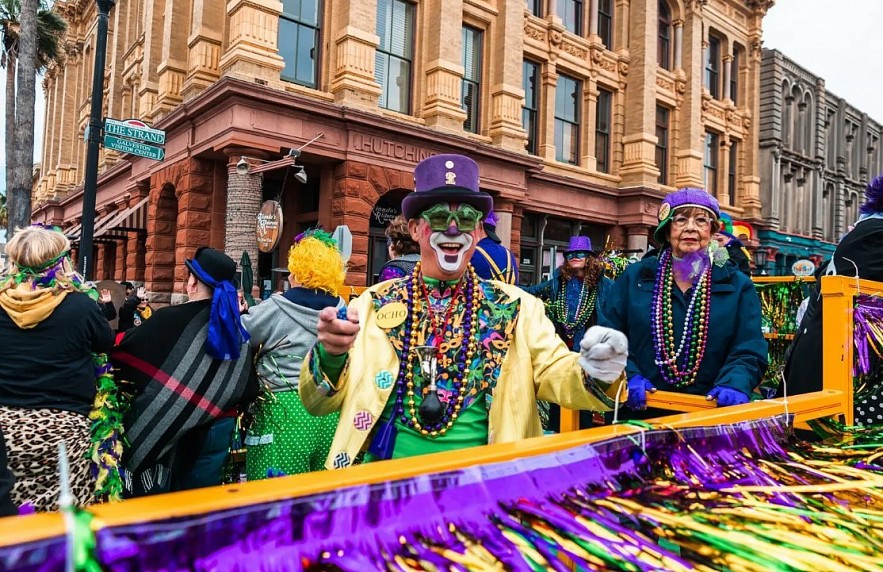
Galveston, Texas
-
Lake Charles, Louisiana
-
Baton Rouge, Louisiana
Each city adapts Mardi Gras to its size, culture, and community values.
Krewes: The Backbone of Mardi Gras
A defining feature of Mardi Gras in the United States is the krewe. A krewe is a private social organization responsible for planning parades, designing floats, selecting themes, and hosting formal balls.
Krewes can be:
-
Historic or newly formed
-
Large or small
-
Open or invitation-only
Each krewe develops its own identity, symbols, and traditions, which adds depth and variety to the overall celebration.
Parades, Floats, and “Throws”
Parades and Floats
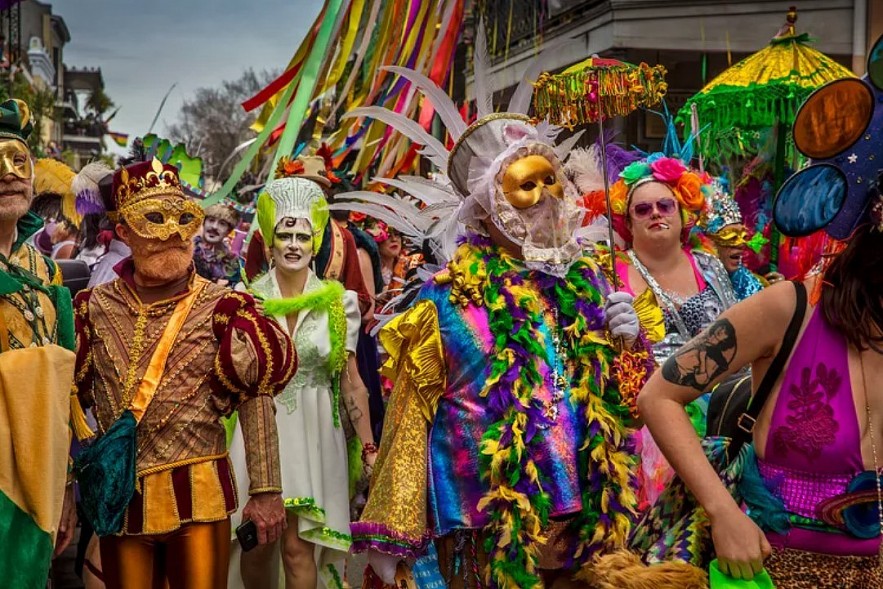
Mardi Gras parades feature massive floats decorated around annual themes. Riders often wear masks, preserving anonymity and emphasizing equality during the celebration.
Throws
One of the most interactive traditions is the practice of throws. Riders toss items to spectators, including:
-
Beaded necklaces
-
Plastic cups
-
Commemorative coins (doubloons)
-
Small toys or handmade items
Catching throws is a central part of the Mardi Gras experience, especially for families and children.
Colors and Symbols
In New Orleans tradition, Mardi Gras is associated with three main colors:
-
Purple – justice
-
Green – faith
-
Gold – power
These colors appear everywhere during Carnival season, from decorations and costumes to cakes and merchandise.
Masks are another key symbol, representing freedom of expression and the temporary suspension of social boundaries.
Food and Drink Traditions
King Cake
The most iconic Mardi Gras food in the U.S. is the King Cake. This oval-shaped pastry is often filled with cinnamon or cream cheese and decorated in purple, green, and gold sugar.
Traditionally, a small object is hidden inside the cake. The person who finds it is often expected to buy the next cake or host a gathering, keeping the celebration going.
Carnival Cuisine
Beyond King Cake, Mardi Gras is associated with rich, indulgent foods, reflecting the idea of enjoying abundance before Lent.
 |
| Everything to Know About Mardi Gras |
Social Rules and Safety
Because Mardi Gras takes place in public spaces, cities enforce specific rules to keep celebrations safe:
• Glass containers are often prohibited along parade routes
• Certain parade areas have regulations on seating and ladders
• Streets may close for extended periods
Visitors are encouraged to respect local neighborhoods, follow city guidelines, and plan transportation carefully.
Common Misunderstandings About Mardi Gras
• “Mardi Gras is just one wild party.”
In reality, it is a season with religious roots, structured organizations, and deep community involvement.
• “Only New Orleans celebrates Mardi Gras.”
Several U.S. cities have long-standing and meaningful Mardi Gras traditions.
• “It has no religious meaning today.”
While modern celebrations are often secular, Mardi Gras remains closely tied to the Christian calendar.
How Mardi Gras Is Celebrated in the United States
In the United States, Mardi Gras is celebrated primarily through parades, public gatherings, and seasonal traditions. Organized social groups known as krewes host parades featuring decorated floats, masked riders, and the tossing of throws such as beads and commemorative items to spectators.
Food is central to the celebration, with King Cake symbolizing the Mardi Gras season and commonly shared at homes, schools, and workplaces. While Mardi Gras Day (Fat Tuesday) marks the peak of festivities, celebrations often span several weeks, emphasizing that Mardi Gras in the U.S. is a seasonal cultural event, not just a single day.
| In modern America, Mardi Gras serves multiple roles at once. It is a tourist attraction, a religious marker, an economic driver, and a powerful symbol of local identity. For residents of Gulf Coast cities, Mardi Gras is less about excess and more about tradition, craftsmanship, and shared history. |
FAQs About Mardi Gras in the United States
What does “Fat Tuesday” mean?
It refers to the final day of indulgence before the fasting period of Lent begins.
Is Mardi Gras a public holiday in the U.S.?
It is not a federal holiday, but some cities and schools close or operate on reduced schedules.
Do you need tickets to attend Mardi Gras parades?
Most parades are free and open to the public.
Is Mardi Gras family-friendly?
Yes, many parades and neighborhoods are designed specifically for families, especially outside late-night areas.
Why are people masked during Mardi Gras?
Masks symbolize equality and allow participants to temporarily step outside normal social roles.