RFK Jr.’s Dinosaur Hunt With Jeffrey Epstein: How Science Trips Became Epstein’s Unlikely Path to Influence


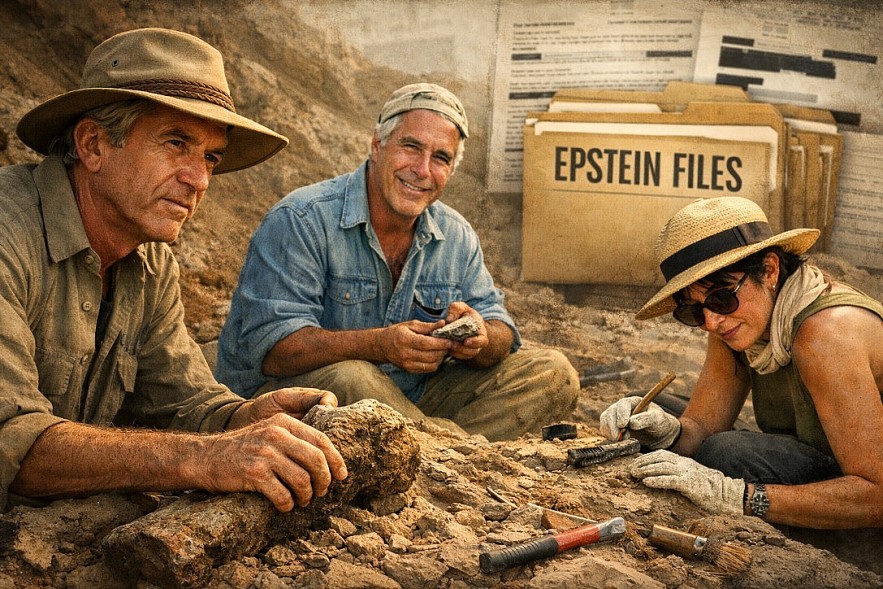 |
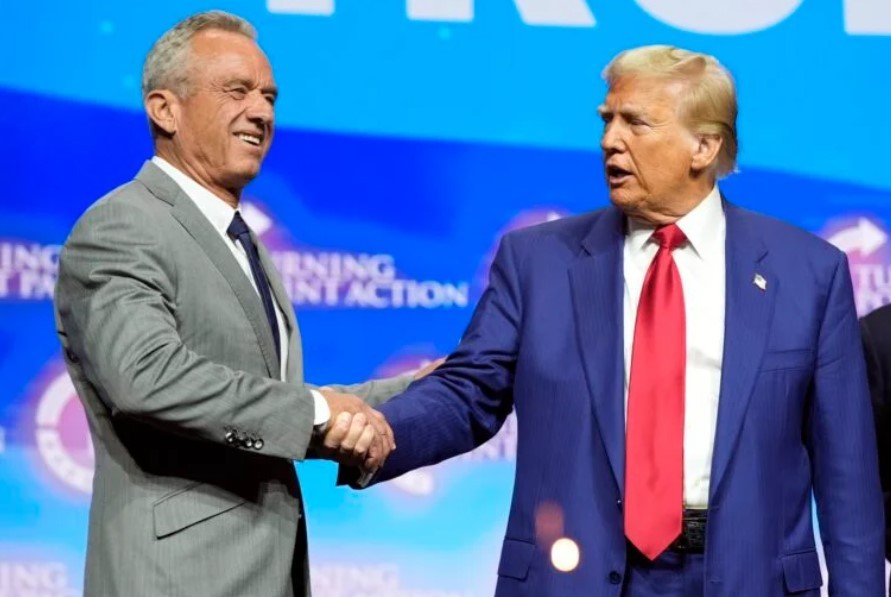
| Robert F. Kennedy Jr.'s fossil hunting trip with Jeffrey Epstein and Ghislaine Maxwell is mentioned in the Epstein Files. Photo Illustration by: KnowInsiders |
Long before Jeffrey Epstein became globally infamous, he was quietly building relationships in unexpected places. One of the most unusual examples resurfaced recently: a dinosaur fossil–hunting trip in South Dakota that included Robert F. Kennedy Jr. and Ghislaine Maxwell.
Kennedy has acknowledged that around 2012, he joined Epstein and Maxwell on private land in South Dakota to search for dinosaur bones.
The trip actually took place in South Dakota, on the Pine Ridge Indian Reservation, where collecting fossils on reservation land without explicit tribal permission is considered looting.
According to Kennedy, the trip was centered on science and nature, involving fossil exploration rather than socializing or business. He has said he was unaware of Epstein’s criminal behavior at the time.
Read more:
- Congress Gets Unredacted Epstein Files - Will Americans Ever See the Full Truth?
- Who is Robert F. Kennedy Jr., Secretary of HHS: Personal Life, Career, and Net Worth
Importantly, Kennedy has stressed that he never visited Epstein’s private Caribbean island, Little Saint James, and that he ended any association once the full extent of Epstein’s actions became known. There is no evidence or allegation linking Kennedy to Epstein’s crimes.
| In one email, Epstein writes to Maxwell about a trip involving “dinosaur and fossill hunitng (sic) with jack horner on the ranch, found 90 million year old clams and fossils.” |
While the trip itself may appear harmless, it offers insight into how Epstein operated. After his 2008 conviction, Epstein increasingly aligned himself with scientific research and intellectual pursuits. He funded academic projects, supported laboratories, and hosted scientists and thinkers. These activities helped him appear curious, respectable, and philanthropic.
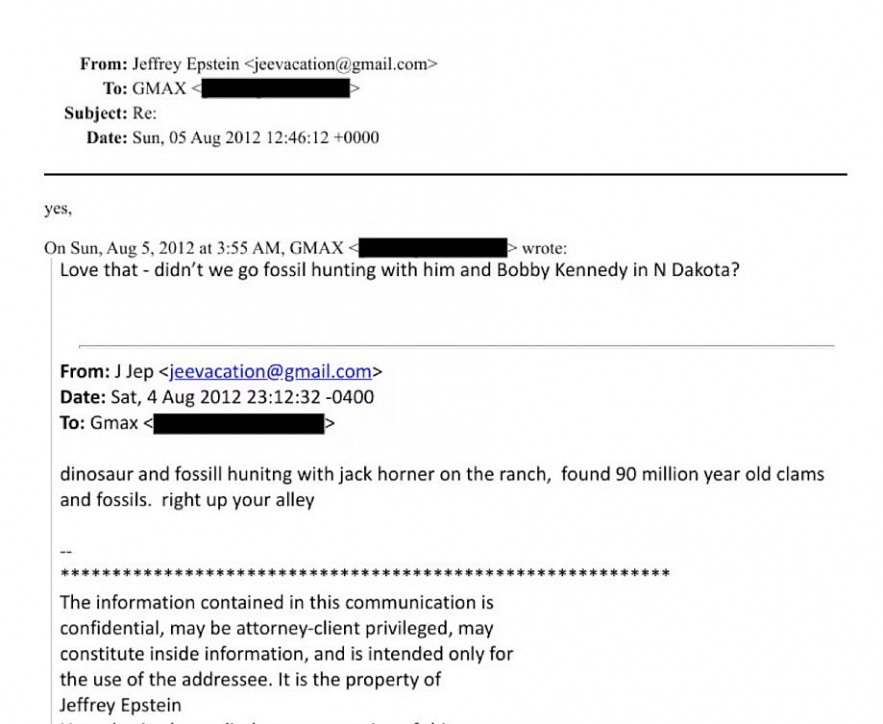 |
| An email exchange between Maxwell and Epstein about the fossil hunting trip |
Maxwell was central to this strategy. She often facilitated introductions and organized events that placed Epstein alongside academics, politicians, and public figures who saw him less as a financier and more as a patron of ideas. Fossil hunting, neuroscience discussions, and private science gatherings became part of that image.
Investigations over the years suggest these interests were not incidental. They allowed Epstein to enter circles far removed from nightlife or finance, reducing suspicion and broadening his network. Science, in effect, became social currency.
Read more: The New Epstein Photo That Shocked: Men at Work, a Bikini-Clad Woman Crawling Beneath the Table
The resurfacing of Kennedy’s account comes amid renewed scrutiny of Epstein’s relationships following recent federal document releases. Together, these disclosures are prompting a broader reassessment of how Epstein maintained influence despite mounting allegations.
The South Dakota fossil hunt illustrates a recurring pattern. Epstein did not rely solely on secrecy or wealth. He relied on legitimacy — carefully constructed through intellectual curiosity and association with respected figures. In that sense, the trip is less about dinosaurs than about access, and how easily it was granted.