Jewish Americans Today: Identity, Politics, and Diversity in a Changing Landscape

 |
| The story of Jewish Americans |
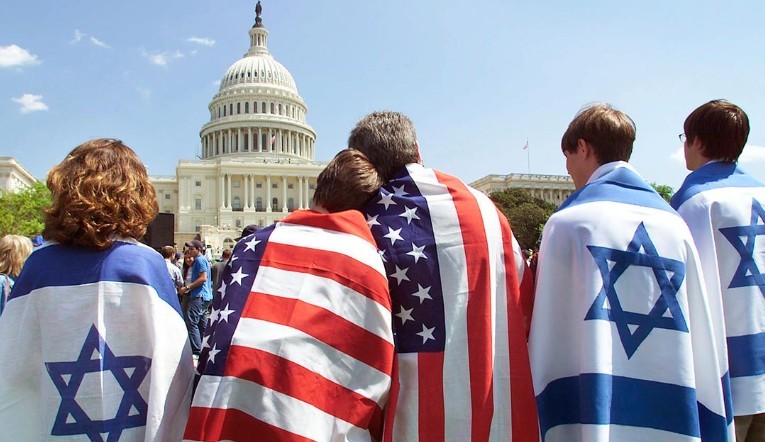
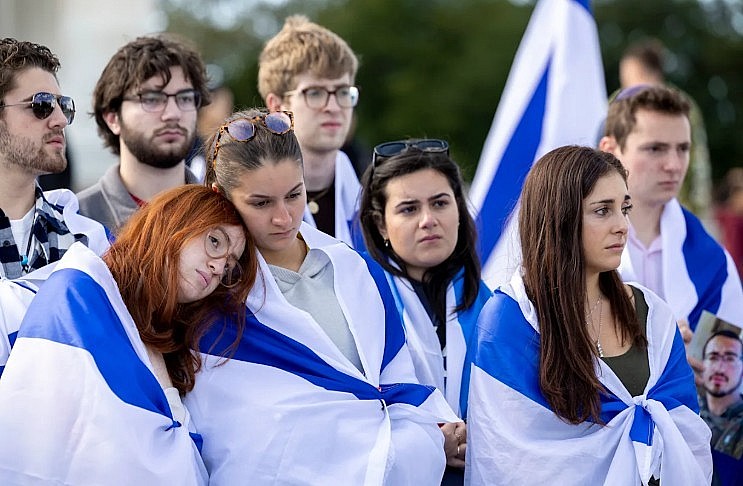
The story of Jewish Americans in 2026 is one of diversity, evolution, and complexity. With an estimated 7.5 million Jews living in the United States, America is home to the largest Jewish community outside Israel. But beyond the numbers lies a far more nuanced reality—one that challenges outdated stereotypes and reflects a community far from monolithic.
Read more:
- Top 17 Countries with the Highest Jewish Population (Updated)
- 3 Jewish Secrets to Getting Rich of All Time
- Top 10 Most Beautiful and Famous Jewish Women in the World
A Community Beyond Religion: Secular vs Religious Identity
One of the most important things to understand about Jewish Americans today is that being Jewish is not only about religion.
Research from the Pew Research Center shows that Jewish identity in the U.S. spans a wide spectrum:
-
Some identify as religiously observant, attending synagogue regularly and following Jewish law
-
Others describe themselves as culturally or ethnically Jewish, with little or no religious practice
-
A growing number identify as “Jews of no religion”, yet still maintain a strong connection to Jewish heritage
This diversity reflects broader trends in American society, where religious affiliation is declining overall. Among younger Jewish Americans in particular, identity is often expressed through culture, history, family, and values rather than formal religious observance.
At the same time, Orthodox Jewish communities—while smaller in number—are growing faster due to higher birth rates and strong communal structures. This creates a dynamic internal balance between tradition and modernity.
Political Diversity: Not a Single Voting Bloc
Jewish Americans have long been associated with liberal politics in the United States, but the reality in 2026 is more complex.
Historically, a majority of Jewish voters have leaned toward the Democratic Party, often prioritizing issues such as civil rights, immigration, healthcare, and the separation of church and state. However, Jewish Americans are not politically uniform.
Key trends include:
-
Generational differences: Younger Jews are often more progressive, while older generations may hold more centrist views
-
Religious variation: Orthodox Jews tend to lean more conservative, while secular and Reform Jews are more likely to lean liberal
-
Issue-based voting: Concerns such as antisemitism, economic policy, and foreign policy influence voting behavior differently across subgroups
In recent election cycles, analysts have noted subtle shifts, with some segments of the Jewish population showing increased openness to Republican candidates, particularly on issues related to Israel and security.
Still, the broader picture remains one of pluralism rather than uniformity—a reflection of the wider American political landscape.
Shifting Views on Israel
Perhaps the most significant change within the Jewish American community in recent years is the evolving relationship with Israel.
For decades, strong support for Israel was a unifying feature of Jewish American identity. Today, however, that support is becoming more nuanced and, in some cases, more critical.
According to surveys by the Pew Research Center:
-
Many Jewish Americans continue to feel a deep emotional connection to Israel
-
At the same time, younger generations are more likely to question Israeli government policies, particularly regarding Palestinians
-
Political polarization in the U.S. has also influenced how Israel is viewed domestically
This shift does not necessarily indicate declining connection—but rather a more complex and diverse set of perspectives.
Within the community, debates about Israel now often reflect broader conversations about democracy, human rights, and national identity.
A Diverse and Evolving American Community
In 2026, Jewish Americans represent a community shaped by history but constantly evolving in response to modern realities.
They are:
-
Religiously diverse
-
Politically varied
-
Culturally rich and globally connected
From New York to Los Angeles, from traditional neighborhoods to secular urban centers, Jewish life in America continues to adapt while maintaining deep historical roots.
Understanding Jewish Americans today means recognizing that there is no single narrative—only a mosaic of identities, beliefs, and experiences.
The Bigger Picture
As debates around identity, politics, and global issues continue, Jewish Americans remain an integral part of the broader American story.
Their diversity is not a contradiction—it is their defining feature.
And in a time of rapid social change, that diversity may be their greatest strength.