F-35 Lightning II: Capabilities, Stealth Power & Combat Strength




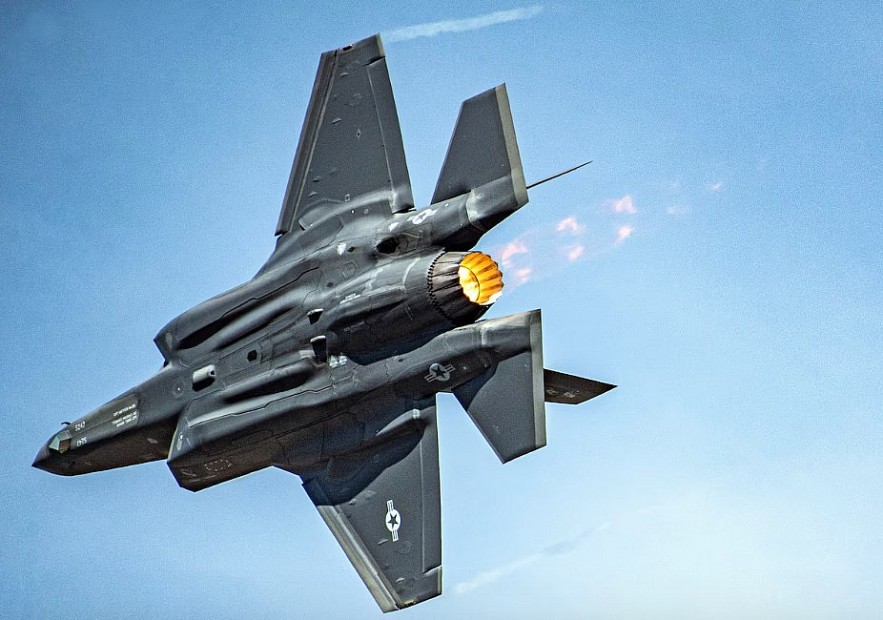 |
| The F-35 is not just an American fighter—it is a global stealth network used by allied nations |
Recent reports that a U.S. F-35 Lightning II may have been struck and forced into an emergency landing in the Middle East have reignited global interest in one question: just how powerful is the F-35?
Despite the headlines, the aircraft remains one of the most advanced and survivable combat systems ever built. Understanding its true strength requires looking beyond isolated incidents and into the technology that defines modern air warfare.
What Makes the F-35 So Powerful?
The F-35 is not simply a fighter jet—it is a flying network node, designed to dominate across air, land, sea, and cyber domains.
Stealth That Redefines Survival
Unlike older jets, the F-35 is engineered to avoid detection entirely rather than outrun threats. Its radar-absorbing materials and unique shape drastically reduce its radar cross-section, allowing it to:
-
Penetrate heavily defended airspace
-
Strike high-value targets undetected
-
Exit before enemy systems can respond
In practical terms, this means most adversaries may never know the F-35 is there until it is too late.
US F-35 fighter jet likely struck by Iran, forced to land at Middle East air base:
Sensor Fusion: The Pilot Sees Everything
One of the F-35’s greatest advantages is its sensor fusion system, which integrates data from radar, infrared sensors, satellites, and other aircraft into a single, coherent battlefield picture.
The pilot doesn’t just fly—they command information dominance.
-
360-degree awareness via Distributed Aperture System (DAS)
-
Real-time threat detection and tracking
-
Data sharing with allied forces
This turns the F-35 into a central intelligence hub in the sky, not just a shooter.
Advanced Weapons and Internal Payload
To preserve stealth, the F-35 carries weapons internally:
-
AIM-120 AMRAAM (beyond-visual-range air combat)
-
AIM-9X Sidewinder (close-range dogfighting)
-
JDAM & precision-guided bombs (ground strikes)
This allows it to engage targets from long distances while remaining nearly invisible.
Electronic Warfare: Invisible Shield and Sword
The F-35’s electronic warfare suite can:
-
Jam enemy radar
-
Disrupt missile guidance systems
-
Conduct cyber-electronic attacks
In many scenarios, it can neutralize threats without firing a single missile.
Multirole Flexibility
Unlike the F-22 Raptor, which focuses primarily on air superiority, the F-35 is designed for:
-
Air-to-air combat
-
Deep strike missions
-
Intelligence, surveillance, reconnaissance (ISR)
-
Close air support
This versatility makes it the backbone of U.S. and allied air forces.
Why Recent Reports Don’t Change the Big Picture
The reported incident—where an F-35 was possibly struck but successfully landed—highlights something often overlooked:
Survivability is not just about avoiding hits, but surviving them.
Even in contested environments, the aircraft’s design emphasizes:
-
Damage tolerance
-
Advanced warning systems
-
Pilot safety
Crucially, no confirmed case exists of a U.S. F-35 being shot down in combat as of 2026.
How Much Does a Stealth Fighter Really Cost?
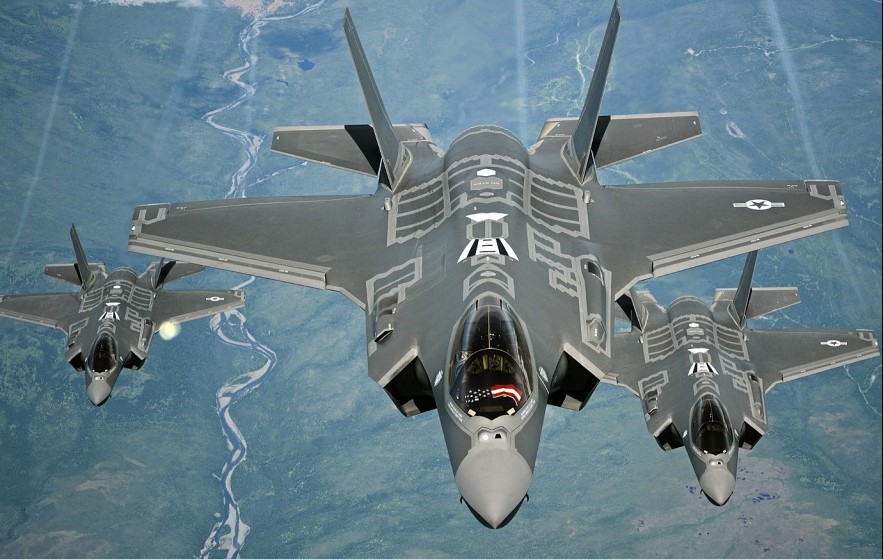 |
| The cost of the F-35 Lightning II varies depending on the variant and what is included in the contract |
The F-35 Lightning II is not only one of the most advanced fighter jets in the world—it is also among the most expensive.
As of 2025–2026, the price varies depending on the variant. The conventional takeoff version, F-35A, costs around $82–85 million per aircraft, while the short takeoff F-35B is significantly higher at about $109 million, and the carrier-based F-35C averages roughly $102 million. However, when factoring in engines, support systems, and mission equipment, the realistic cost per jet typically rises above $100 million.
Over its full service life, including maintenance and operations, each F-35 can cost hundreds of millions of dollars—making the overall program the most expensive in military history.
Which Countries Operate the F-35?
Beyond its price, the F-35’s true significance lies in its global reach. Developed by Lockheed Martin, the aircraft has become the backbone of allied air power, with more than a dozen countries operating or acquiring it as of 2026.
In addition to the United States, key operators include the United Kingdom, Italy, the Netherlands, Australia, Norway, Denmark, Canada, Japan, South Korea, and Israel—along with newer European adopters such as Belgium, Poland, the Czech Republic, and Switzerland. Each country integrates the F-35 into a shared defense network, allowing real-time data exchange, coordinated missions, and standardized logistics across NATO and allied forces.
In essence, the F-35 is more than just a fighter jet. Its price reflects not only cutting-edge stealth technology and advanced weapons systems, but also access to a powerful global combat ecosystem. For many nations, investing in the F-35 means securing both technological superiority and strategic alignment in an increasingly complex security environment.
The Real Power of the F-35
The F-35’s strength lies in a simple but transformative concept:
Win the battle before the enemy even understands the fight has begun.
It combines stealth, data dominance, precision strike, and electronic warfare into a single platform—something no previous generation achieved at this scale.