Green Card Travel Rules Update: New Airport Biometric Systems and 19 Countries Under Review




Starting December 26, 2025, the United States has implemented a major update to its travel and border control system, expanding biometric identity checks for lawful permanent residents (green card holders) and other non-U.S. citizens. The changes introduce more standardized photo-based verification at airports and other ports of entry and exit, while a separate immigration review policy places 19 countries under increased scrutiny. Together, these developments mark one of the most significant shifts in green card travel procedures in recent years.
Read more: U.S. Cuts Work Permit Validity to 18 Months, Raising Anxiety Among Green Card Applicants
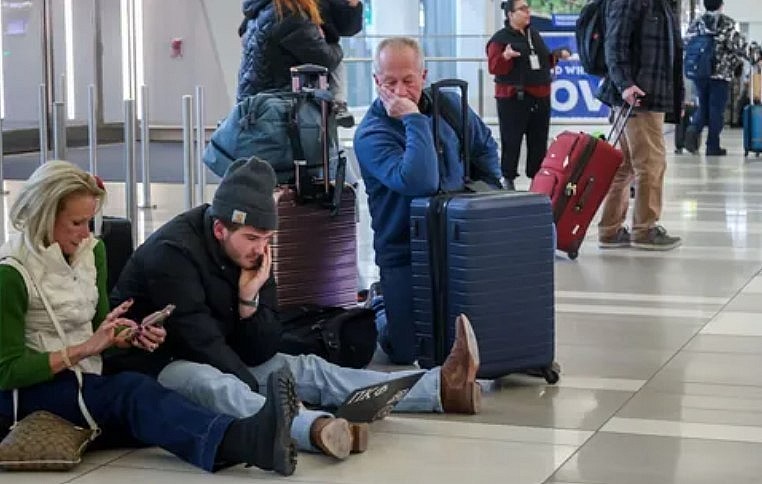 |
| New restrictions and immigration protocols issued by the Department of Homeland Security (DHS) go into effect on Friday |
What Has Changed for Green Card Holders?
Under the updated rule, U.S. border authorities may now routinely collect facial photographs from green card holders both when entering and when leaving the United States. This applies across a broader range of locations and travel scenarios than before.
The policy is administered by U.S. Department of Homeland Security through its border enforcement arm, U.S. Customs and Border Protection.
Key changes at a glance
-
Photo capture at entry and exit becomes standard for non-U.S. citizens, including permanent residents.
-
Age-based exemptions no longer apply to facial photos, even though they may still exist for other biometric data.
-
Biometric collection is no longer limited to select airports, with authority extended to additional departure locations in specific situations.
-
The system supports expanded identity matching, reducing reliance on manual document checks alone.
For most travelers, the process is designed to be quick. However, individuals whose identity cannot be immediately verified may experience additional screening.
New Biometric Systems at U.S. Airports
The updated travel rules rely on a facial comparison platform widely deployed by CBP, often referred to as the Traveler Verification Service (TVS). The system compares a live photo taken during inspection or boarding with existing government-held images linked to immigration and travel records.
Where travelers may encounter biometric checks
-
Arrival inspection booths at U.S. airports
-
Departure and boarding gates, integrated with airline systems
-
Certain land borders and seaports, depending on infrastructure and traffic volume
The goal is to create a more complete biometric entry-exit record, something U.S. authorities have pursued for years to better track overstays and confirm lawful departures.
Does the Update Apply to U.S. Citizens?
The rule primarily targets non-U.S. citizens. U.S. citizens may encounter biometric systems at some airports, but participation is handled differently. According to official policy language, photos of U.S. citizens captured for identity verification are not retained long-term and are discarded shortly after confirmation of citizenship.
The 19 Countries Under Increased Focus
Alongside biometric changes, a separate policy development has drawn attention to 19 countries whose nationals may face additional immigration review. This stems from internal guidance issued by U.S. Citizenship and Immigration Services following a presidential proclamation and related security directives.
The 19 countries
Afghanistan; Burma (Myanmar); Chad; Republic of the Congo; Equatorial Guinea; Eritrea; Haiti; Iran; Libya; Somalia; Sudan; Yemen; Burundi; Cuba; Laos; Sierra Leone; Togo; Turkmenistan; Venezuela.
What “increased scrutiny” means in practice
For green card holders connected to these countries, the impact can include:
-
More detailed questioning during border inspection
-
Higher likelihood of referral to secondary inspection
-
Requests for clarification on immigration history, travel patterns, or documentation
While the policy does not constitute a travel ban, immigration lawyers have noted that travelers from these countries may face longer processing times and greater uncertainty, particularly if they have pending immigration filings or a complex history.
What Green Card Holders Should Do Before Traveling
The updated rules do not remove the right of permanent residents to travel, but preparation is now more important than ever.
1. Carry complete and valid documents
-
Valid passport
-
Physical green card (Form I-551)
-
Extension notices or temporary proof of status, if applicable
2. Allow extra time at the airport
Biometric systems are fast when everything matches, but technical issues or identity mismatches can slow the process.
3. Expect a photo when leaving the U.S.
Many travelers are surprised to learn that biometric capture now applies at departure, not just on arrival.
4. Travelers linked to the 19 countries should be cautious
If you fall into this group, consistency in records matters. Any discrepancies in names, dates, addresses, or prior travel can trigger delays. Legal advice before international travel may be prudent, especially for those with pending cases.
Privacy and Data Retention
U.S. authorities state that biometric data is handled under federal privacy and records rules.
-
U.S. citizen photos are retained only briefly for verification purposes.
-
Non-U.S. citizen biometric records, including those of green card holders, may be stored for extended periods within DHS systems, consistent with national security and immigration enforcement policies.
FAQs: Green Card Travel and Airport Biometrics
Do green card holders have to undergo biometric checks every time they travel?
In most cases, yes. Facial photo capture is now a routine part of entry and, increasingly, departure from the U.S.
Are children and elderly travelers exempt?
Not from photo capture. Age-based exemptions mainly apply to certain non-facial biometrics.
Does this apply only to airports?
No. The authority extends to land borders, seaports, and some non-traditional departure locations.
What happens if the biometric system cannot verify me?
You may be directed to manual inspection or secondary screening. This does not automatically mean a problem with your status.
Is the focus on 19 countries a new travel ban?
No. It reflects enhanced review and screening, not a blanket prohibition on travel.
Should green card holders from the 19 countries avoid travel?
There is no universal rule, but those with pending applications or prior immigration issues should consider professional advice before leaving the U.S.
Bottom Line
The U.S. government’s expanded biometric entry-exit system represents a structural change in how green card travel is monitored. For most permanent residents, the difference will be limited to more frequent photos and occasional delays. However, for travelers connected to the 19 countries under heightened focus, the current environment brings greater scrutiny and less predictability, making careful preparation essential.
 How To Apply For A Green Card in the US With The Simple Ways How To Apply For A Green Card in the US With The Simple Ways The US green card is considered the key to immigration. Since then, the common question many people have is how to get a green card ... |
 What Is A Green Card or Permanent Resident Card in the U.S What Is A Green Card or Permanent Resident Card in the U.S Many people hope one day to be able to call the United States home. Insights into the US green card system and related data are ... |
 What Is US Green Card? How Many People Have Received US Green Card? What Is US Green Card? How Many People Have Received US Green Card? How far do you know about US green card? Do you know how many people receive US green card every year? |